Legislative Update
Dear friends and neighbors,
I hope you had a joyful and refreshing Easter weekend, filled with time well spent alongside family and friends. I was especially grateful to sneak away to Duluth and enjoy some quality time with my own family, it was a wonderful reset.
Coming back to the Capitol this week, it was hard not to smile with the sunshine and warmer temperatures greeting us. After a long Minnesota winter, those first hints of spring always feel extra rewarding! It may come with a bit of rain this weekend, but temperatures in the upper 60s will still be a welcome change. I hope you’re able to get outside, enjoy it when you can, and soak up a little bit of that spring feeling anyway.
Back in St. Paul, we didn’t waste any time getting back to work. With just six weeks left in the legislative session, there’s no easing back into things.
So, let’s dive into a few updates from the week!
A Tax That Misses the Mark
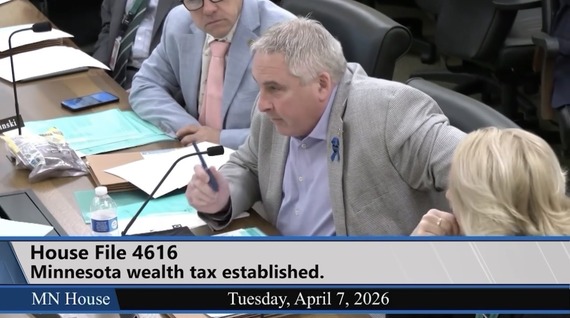 This week in the Taxes Committee, we heard a proposal that would hit Minnesotans hard, at a time when families and businesses are already feeling the squeeze and affordability is anything but a reality.
House File 4616 introduced by Tax committee Chair Rep. Aisha Gomez (D-Minneapolis) would create a brand-new, first-in-the-nation 1% annual tax on wealth over $10 million. Not income, but wealth. And under the bill, “taxable wealth” is defined broadly as nearly everything a person owns, including real estate, equipment, and even intangible assets—minus debts.
Each year, taxpayers would be required to determine the fair-market value of those assets using the same standards applied to federal estate taxes. That means ongoing, complex valuations of assets that aren’t easily priced, like farms, small businesses, and ownership stakes in pass-through entities.
Simply put, this is an appraisal-and-audit tax.
And importantly, this tax is stacked on top of existing obligations. The bill makes clear it would be in addition to other state taxes—not a replacement.
Despite how it’s framed, this proposal doesn’t just target “Wall Street wealth.” In Minnesota, land alone can get you there. With cropland averaging around $7,000 per acre, a family farm could reach that $10 million threshold at roughly 1,400 acres, before factoring in equipment, buildings, or other business assets.
The bill also explicitly pulls in ownership shares of pass-through businesses. That means farmers and small business owners could be taxed based on their proportional share of underlying assets, even if those assets aren’t directly in their name.
And here’s the key issue: cash flow matters. This tax would be owed every single year, regardless of whether a farm or business had a profitable year. For many, that creates real pressure—forcing decisions about whether to take on debt, sell assets, or scale back operations just to cover a new tax bill.
There’s a reason no state in the country currently has a wealth tax like this. Internationally, similar policies have been tried and repealed due to high administrative burdens and limited, unpredictable revenue.
Minnesota should not be the test case.
We should be focused on policies that support growth, protect family farms and small businesses, and keep our state competitive—not layering on new complexity and risk that could push investment and opportunity out of state.
You can watch my full comments from the committee hearing by clicking the photo above.
Fairness on the Field Shouldn’t Be Controversial
On Tuesday, we took up an urgency on the House floor to pass three pieces of legislation aimed at preserving safe and fair athletic competition for biological females across Minnesota. Unfortunately, all three proposals were blocked.
This effort comes at a time when the issue is getting national—and even international—attention. The U.S. Department of Justice is currently suing Minnesota for failing to protect girls’ sports and women-only spaces. At the same time, the International Olympic Committee has announced that beginning with the 2028 Los Angeles Games, athletes who have gone through male puberty will not be eligible to compete in women’s events—a recognition that fairness in sports still matters.
One of the bills we pushed, the Preserving Girls’ Sports Act (H.F. 12), is about as straightforward as it gets: girls’ sports should be for girls. It ensures that female student-athletes can compete on a level playing field—something generations of women have fought hard to achieve.
Here in Minnesota, however, the legal landscape has shifted. In October, the Minnesota Supreme Court ruled that excluding males from female sports as “public accommodation” discrimination, and the Minnesota State High School League has refused to comply with federal guidance on this issue. And this isn’t just theoretical. Last spring, a male-born pitcher led a girls’ softball team to a state championship in dominating fashion—raising real concerns among athletes, parents, and coaches about fairness on the field.
During our debate this week, we even heard claims that biology itself is up for interpretation. I don’t think most Minnesotans would agree with that logic. There are clear, measurable differences between males and females, and ignoring them doesn’t make them disappear—it just puts female athletes at a disadvantage.
As a proud father of three daughters who competed in high school athletics, I’ve seen firsthand the dedication, discipline, and sacrifice it takes to play at a high level. Two of my daughters played soccer at Lakeville North High School and went on to compete at the collegiate level, and my other daughter played lacrosse in high school. I’ve seen firsthand the dedication, discipline, and sacrifice the young women put in every single day.
Today, we’re seeing girls and women lose scholarships and opportunities they’ve worked incredibly hard to earn. When those protections are weakened, it’s our responsibility as legislators to stand up and defend fairness and individual opportunity.
This legislation was about preserving that hard-earned progress and ensuring that female athletes across Minnesota continue to have a fair shot—not just to compete, but to succeed.
You have my word: I will keep fighting to restore fairness and protect opportunities for girls throughout our state.
Building on Tradition, & Growing Student Opportunity
Happy Masters week to all who celebrate, truly a tradition unlike any other!
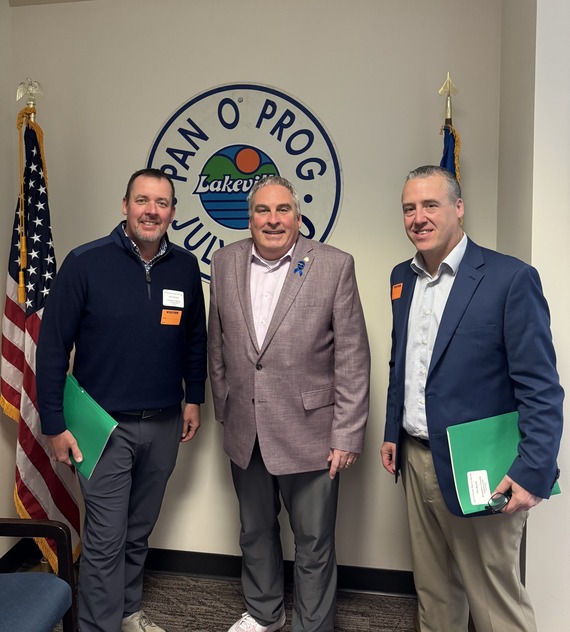
Back here in Minnesota—where our greens are just starting to thaw—I had a great visit at the Capitol with Tim and David from Bracketts Crossing Country Club for Golf Industry Day on the Hill. We had a productive conversation about their priority legislation and the future of the golf industry in our state.
Because while Augusta may set the gold standard, Minnesota golfers (and courses) know a thing or two about dedication… especially when your season comes with a snow delay.
 I also met with some great Lakeville students this week who came to advocate for HOSA-FHP. HOSA-Future Health Professionals is an incredible solution to the growing healthcare workforce shortage. It’s a global, student-led organization supported by the Carl D. Perkins Career and Technical Education Act, and it gives students real, meaningful exposure to the healthcare field.
Through this program, students are able to take part in leadership development, hands-on learning, volunteering, community service opportunities, conferences, competitions, and networking with professionals in the healthcare industry. It’s an outstanding pipeline for students who are interested in pursuing healthcare careers.
Programs like HOSA are exactly the kind of investment we should be making in our future workforce, and I look forward to supporting similar policies here in Minnesota to help the next generation of professionals succeed and excel.
Stay Connected!
As we head into the final few weeks of session, your thoughts, questions, and ideas are more important than ever! These last few weeks are when the real work happens—and your input is what keeps me motivated and focused on what matters most to you. Whether you’re curious about the bills we’re working on or have something else on your mind, don’t hesitate to reach out. I’m here to listen and to work on solutions that reflect your priorities.
You can always connect with me by phone at 651.296.4240 or email at rep.jeff.witte@house.mn.gov.
It’s truly an honor to represent you at the Capitol, and together, we’re building a brighter future for Minnesota—one conversation at a time.
Take care!
—Representative Jeff Witte
|