Legislative Update
 Dear neighbors,
We are about a month into session and already nearing the halfway point. With next week’s bill deadline coming up, the pace is picking up quickly, and in an evenly split House, it does not take much to slow a good bill down.
That means some good bills are going to stall. Regardless of the gridlock, my commitment to the people of our district and the values they elected me to uphold will not budge.
No State Tax on Tips or Overtime
If you earned overtime pay or tips in 2025, you may have seen some relief on your federal tax return. Under federal law, certain qualified overtime pay and tip income can now be deducted. Minnesota does not currently match that treatment, which means income excluded at the federal level can still be taxed by the state.
That is what House Files 3524 and 3525 are meant to fix, and I am glad to be working with Rep. Kristin Robbins in that effort. These bills would bring Minnesota into alignment with federal law so workers can keep more of what they earn and avoid one more unnecessary complication when tax season rolls around.
This is a straightforward issue. Minnesotans are already quite generous, both to our neighbors (most of the time) and to the different levels of government we fund. If someone picks up extra shifts, stays late, or works for tips, St. Paul does not need a cut. Though my colleagues across the aisle aren't as convinced, these bills are priorities for our caucus and, as Vice Chair of the Taxes Committee, these two bills will be top priorities when end-of-session negotiations inevitably arise.
If we are serious about affordability, this is the kind of common-sense policy that should make it across the finish line. Both bills received a hearing this week and were laid over for possible inclusion in the tax omnibus bill.
A Practical Fix for Families Trying to Save
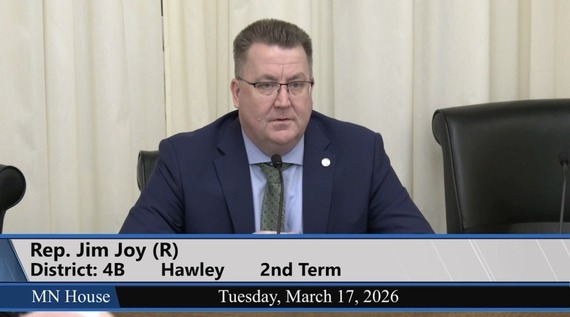
This week, I presented House File 3754 in the House Taxes Committee. The goal is simple: if families want to start setting money aside early for their kids, Minnesota should not make that harder than it needs to be. A new federal program now allows these accounts, with contributions from parents, employers, nonprofits, and certain government entities.
HF 3754 makes sure Minnesota’s tax code does not get in the way. It aligns state law with the federal program and excludes up to $2,500 in certain employer contributions, along with qualifying contributions from government and nonprofit organizations.
It is not a flashy bill, but it is a practical one. It gives families more certainty and keeps Minnesota from creating confusion where none needs to exist. Financial uncertainty and strain are unfortunately realities for far too many families in Minnesota. We don't need to take a slice from families that are trying to set their kids up with a bit of financial breathing room when they enter adulthood.
The bill was laid over for possible inclusion in a future tax omnibus bill, and I will keep working to move it forward. You can watch my remarks from committee by clicking the photo below.
Energy Policy Has to Live in the Real World
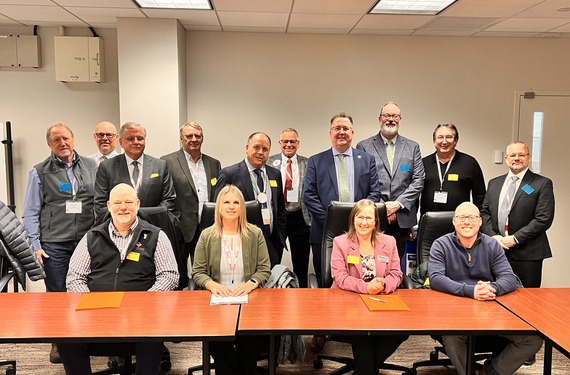 I had a good conversation this week with Wild Rice Electric Cooperative and neighboring cooperatives about the challenges facing Minnesota’s energy future. The focus was where it should be: affordability, reliability, and whether this state is serious about meeting growing demand without driving up costs or putting the grid at risk.
That leads to a bigger issue. Minnesota’s Nuclear Energy Alliance, a broad coalition that includes utilities, electric cooperatives, labor groups, and local governments, is pushing to repeal Minnesota’s ban on new nuclear construction. Minnesota is the only state in the country that still has one.
Regardless of whether your biggest energy concern is the cost to your wallet or the cost to the environment, nuclear energy should be one of the few issues Minnesotans ought to be able to come together on. Even if we had a fully renewable grid tomorrow, a significant share of that system would still need to come from a stable and reliable source of power. When global energy providers agree with the Intergovernmental Panel on Climate Change regarding the critical value of nuclear energy, Minnesota should take that seriously. Hopefully we can figure that out before our neighboring states build the plants, capture the jobs and tax base, and then sell the power right back to us.
I’m grateful to WREC and the many folks from our district who take the time to meet with me, whether here at home or down in St. Paul, to have serious conversations about issues that matter. Hearing directly from the people I represent and from the businesses and co-ops helping keep our communities running helps me better represent our district.
The Second Half of Session
In the coming weeks, you are going to hear plenty of talk about affordability and helping working families. That is easy. The harder part is voting for policies that actually lower costs and let people keep more of their own money. At a time when families are already dealing with rising prices and constant financial pressure, government ought to be getting out of the way, not making things worse.
If there is a bill you support or oppose, one of the most useful things you can do is contact the members of the committee where that bill will be heard and debated. Those are the folks who need to most urgently receive your feedback. If you need help figuring out where a bill is going, how to navigate the House website, or how to most effectively advocate for your position, my team and I would be happy to help point you in the right direction.
I will keep pushing for practical policies, pushing back on proposals that raise costs, and doing my best to keep common sense somewhere in the conversation. As always, if you have questions, concerns, or ideas, please reach out.
Have a great weekend!
– Jim
|