Legislative Update
Dear friends and neighbors,
We just wrapped up week four of the legislative session, and I’m happy to report it was a busy—and refreshingly productive—week at the Capitol.
We kicked things off with testimony from Governor Walz’s Director of Program Integrity, Tim O’Malley, before the House Fraud Prevention and State Agency Oversight Committee. O’Malley recently released a 56-page report examining how Minnesota’s oversight of public programs ended up with… let’s just say a few more holes than anyone would like.
As it turns out, many of the weaknesses in the system didn’t appear overnight. They’ve been quietly building for decades—which helps explain how fraudsters managed to slip through the cracks for so long. When the system has blind spots, unfortunately someone eventually figures out how to take advantage of them.
The encouraging part is that the report doesn’t just diagnose the problem—it actually lays out a roadmap for fixing it. That includes stronger oversight, better coordination between agencies, and clearer accountability whenever taxpayer dollars are involved. In other words: fewer loopholes, more common sense.
O’Malley also made something very clear during his testimony. He didn’t take this job to serve any politician—he took it to serve the people of Minnesota. That’s exactly the kind of mindset we need more of when it comes to protecting taxpayer dollars.
Minnesotans work hard for their money, and they deserve a government that treats those dollars with the same level of care. After years of fraud headlines, it’s time to stop acting surprised and start fixing the systems that allowed it to happen in the first place.
I’m hopeful that in the weeks ahead we can keep the momentum going, work across the aisle, and tighten up the system so taxpayer dollars end up where they’re supposed to—serving Minnesotans, not funding the next fraud headline!
License Tabs… or Luxury Item?
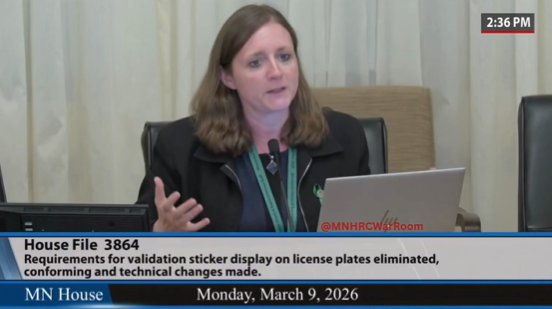
You may have seen this video clip floating around the internet about a comment made by one of my DFL colleagues during committee. She suggested she may introduce an amendment to quintuple Minnesota’s car tab fees in order to fund other projects some believe are worthy.
Now, let’s put that into real-world terms.
Under this proposal, the tabs on a two-year-old $50,000 vehicle would cost about $3,650.
At that point, renewing your tabs starts to feel less like a quick trip to the DMV and more like signing up for a second car payment… except you don’t get another car.
As funny as the math might sound on paper, the reality is that affordability is one of the most serious issues facing Minnesotans right now. Families are already dealing with rising grocery bills, higher childcare costs, housing pressures, insurance increases, and energy prices that seem to climb faster than a Minnesota snowbank in January.
And unfortunately, a lot of these pressures were made worse during the last biennium, when the Democrat trifecta passed billions in new taxes and fees. That includes things like the delivery fee, a new payroll tax, and costly unfunded mandates that local governments often have no choice but to pass along to taxpayers.
House Republicans believe the answer isn’t piling on more costs—it’s making life more affordable.
That’s why we’re advancing proposals to lower costs across the board, including:
-
Lower vehicle tab fees (HF 3562 – Rep. Patti Anderson)
-
A Property Tax Commission to rein in rising property taxes (HF 3396 – Rep. Greg Davids)
-
No tax on tips or overtime pay (HF 3524 & HF 3525 – Rep. Kristin Robbins)
-
Returning a portion of future surpluses directly to taxpayers (HF 4 – Rep. Wayne Johnson)
-
Reducing property taxes by allowing schools to opt out of costly unfunded mandates (HF 957 – Rep. Ron Kresha)
-
Allowing local governments relief from unfunded state mandates (HF 1593 – Rep. Tom Murphy)
Minnesotans are asking us to make life more affordable, not turn license tabs into a luxury item.
So while the idea of $3,600 car tabs certainly got people’s attention, I can safely say House Republicans will be keeping that proposal firmly parked!
When a Court Order Is Ignored, the Law Shouldn’t Be
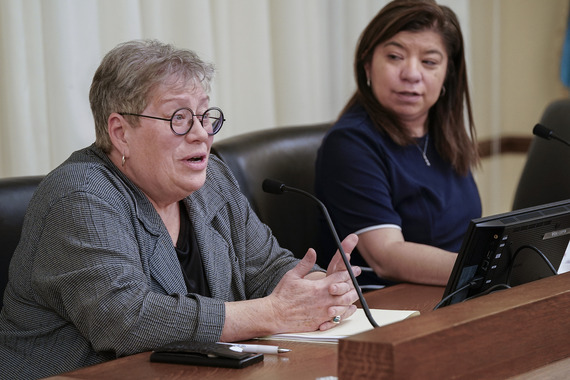 This week in the House Public Safety Committee, I introduced House File 2169, a bill focused on strengthening accountability when someone chooses to violate a court-issued protective order.
Protective orders aren’t handed out casually. A judge issues them when there is a real concern for someone’s safety. For many victims of domestic violence or stalking, that order represents a critical safeguard—the legal line meant to keep someone dangerous at a distance.
But when someone knowingly violates that order, they’re not just bending the rules. They are ignoring a direct command from the court that was put in place to protect someone’s life.
And when those violations escalate into tragedy, our laws need to reflect just how serious that choice was.
House File 2169 ensures that when someone violates a protective order issued in another jurisdiction and that violation leads to a death, Minnesota law recognizes the full gravity of that act.
In simple terms: if someone ignores a court order designed to protect a victim and their actions result in the loss of life, the law should treat that decision with the seriousness it deserves.
Protective orders exist to protect people at their most vulnerable. When those protections are violated, it is a signal that the system needs to respond with clarity and accountability.
House File 2169 is about reinforcing that message and making sure Minnesota law continues to stand firmly on the side of protecting victims and upholding the authority of our courts.
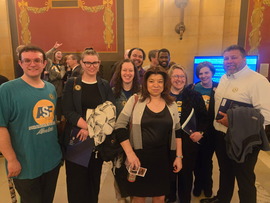
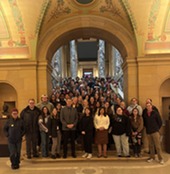
Visitors at the Capitol This Week
|