Legislative Update
Dear friends and neighbors,
We just wrapped up week four of the legislative session, and I’m happy to report it was a busy—and refreshingly productive—week at the Capitol.
We kicked things off with testimony from the State Medicaid Director of Program Integrity, Tim O’Malley, before the House Fraud Prevention and State Agency Oversight Committee. O’Malley recently released a 56-page report that detailed how Minnesota’s lack of oversight of public programs ended up with more holes than a block of Swiss cheese.
As it turns out, many of the weaknesses in the system didn’t appear overnight. They’ve been quietly building for decades—which helps explain how fraudsters managed to slip through the cracks for so long. When the people tasked with preserving program integrity have blind spots, unfortunately someone eventually figures out how to take advantage of them.
The encouraging part is that the report doesn’t just diagnose the problem—it actually lays out a roadmap for fixing it. That includes stronger oversight, better coordination between agencies, and clearer accountability whenever taxpayer dollars are involved. In other words: remove loopholes, add common sense, and increase consequences for criminal fraudsters.
O’Malley also made something very clear during his testimony. He didn’t take this job to serve any political party—he took it to serve the people of Minnesota. That’s exactly the kind of mindset we need more of when it comes to protecting taxpayer dollars.
I know that you work hard for every dollar you earn, and you deserve a government that treats those dollars with the same level of care and frugality. After years of fraud headlines, it’s time for us in St. Paul to stop either denying that it exists or freaking out about it and start fixing the systems that allowed it to happen in the first place.
I’m hopeful that in the weeks ahead we can keep the momentum going, work across the aisle, and tighten up the system so taxpayer dollars end up where they’re supposed to—serving Minnesotans, not funding the next fraud headline!
Tabs, Taxes, and a Very Expensive Joyride!
Earlier this week, you may have seen a Facebook post from me about a comment made by one of my DFL colleagues during committee. She suggested she may introduce an amendment to quintuple (that's 5X) Minnesota’s car tab fees in order to fund other projects some believe are worthy.
Now, let’s put that into real-world terms.
Under this proposal, the tabs on a two-year-old $50,000 vehicle would cost about $3,650.
At that point, renewing your tabs starts to feel less like a quick trip to the DMV and more like signing up for a second car payment… except you don’t get another car.
As funny as the math might sound on paper, the reality is that affordability is one of the most serious issues facing Minnesotans right now. Families are already dealing with rising grocery bills, higher childcare costs, housing pressures, insurance increases, and energy prices that seem to climb faster than a Minnesota snowbank in January.
There are plenty of us in the Minnesota House of Representatives who believe the answer isn’t piling on more costs—it’s making life more affordable.
That’s why we’re advancing proposals to lower costs across the board, including:
-
Lower vehicle tab fees (HF 3562 – Rep. Patti Anderson)
-
A Property Tax Commission to rein in rising property taxes (HF 3396 – Rep. Greg Davids)
-
No tax on tips or overtime pay (HF 3524 & HF 3525 – Rep. Kristin Robbins)
-
Returning a portion of future surpluses directly to taxpayers (HF 4 – Rep. Wayne Johnson)
-
Reducing property taxes by allowing schools to opt out of costly unfunded mandates (HF 957 – Rep. Ron Kresha)
-
Allowing local governments relief from unfunded state mandates (HF 1593 – Rep. Tom Murphy)
Minnesotans are asking us to make life more affordable, not turn license tabs into a luxury item.
So while the idea of $3,600 car tabs certainly got people’s attention, I can safely say that I will work to keep that proposal firmly parked!
The Curious Case of the $2.3 Million Black Marker
A few weeks ago, we discussed the long anticipated external review of fraud risks within the Minnesota Department of Human Services, conducted by a company called Optum. This report was intended to pull back the curtain—to shine a bright light on weaknesses in oversight, billing systems, and internal controls so we could identify vulnerabilities and implement real reforms in the legislature.
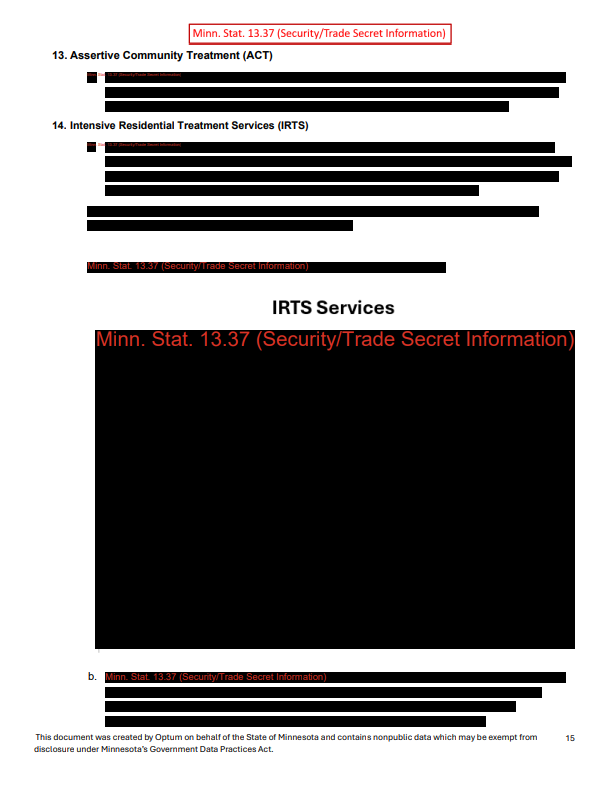
Unfortunately, when the report finally became public, much of it looked less like a policy review and more like a classified CIA document.
Entire sections were redacted—page after page of black bars covering up key findings. When critical information is hidden like that, it becomes nearly impossible to understand the true scope of the problem. And if we can’t see the full picture, how are lawmakers supposed to fix it?
Minnesota taxpayers spent $2.3 million on this external review conducted for the Minnesota Department of Human Services. That is not a small investment. At a time when families are tightening their budgets and small businesses are working hard just to stay afloat, a $2.3 million report should come with real, tangible answers... not a stack of blacked-out pages.
That’s why we introduced House File 3378, legislation requiring the Commissioner of Human Services to release the initial Optum reports in their entirety to legislative committees—without redactions or edits, except for limited proprietary information requested by Optum itself.
The bill also makes clear that any private or protected data in the report cannot be publicly disseminated, ensuring sensitive information remains safeguarded while lawmakers still get the full picture needed to do their jobs.
At the end of the day, this is about transparency and accountability. When taxpayers fund a report meant to identify weaknesses in our system, the Legislature must be able to review the findings fully so we can pass the reforms necessary to prevent fraud and protect taxpayer dollars.
Minnesotans deserve answers—and that starts with seeing the report, not just the redactions.
School Superintendents Visit the Capitol.
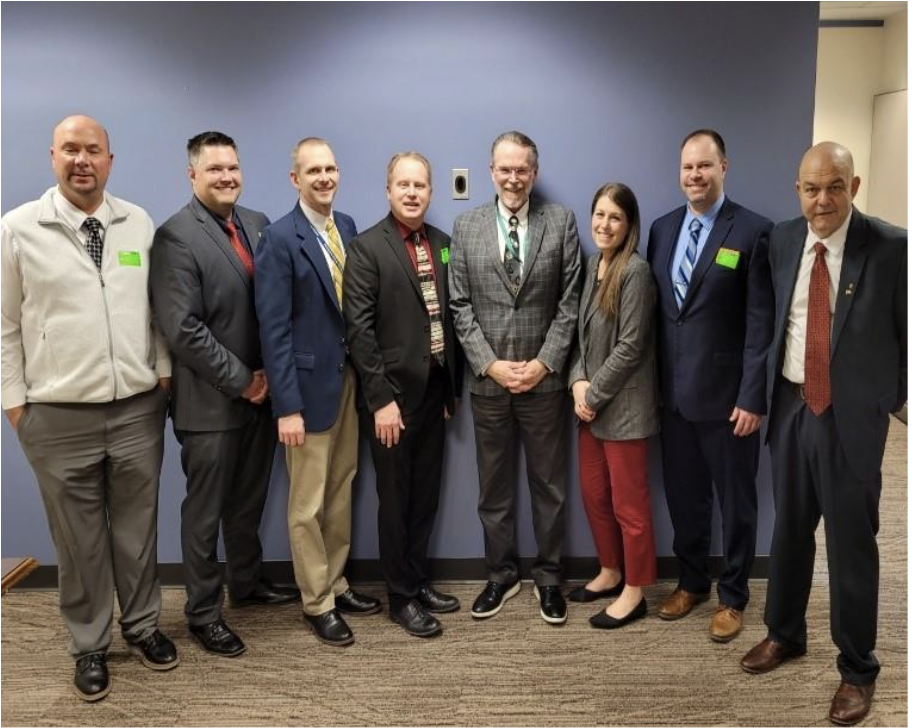
Do you remember being sent down to the office back in your school days, like when you were in trouble? Well, this was that—times seven! Not really.
Superintendent Kevin Grover from East Grand Forks and some of his colleagues from the region were at the Capitol on behalf of students in our area. The focus of the conversation included preserving funding for necessary programs, reducing unfunded mandates that undermine efficiency and effectiveness, and funding for a Level 4 educational facility in our region to properly educate students with significant behavioral needs.
Have no doubt—these people are incredible professionals who really care about our kids!
Got an Idea? Let’s Talk.
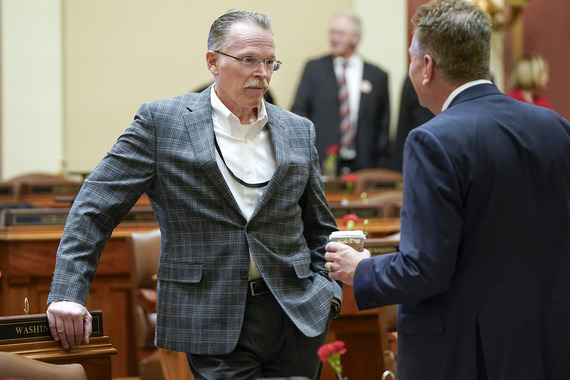 Now that the 2026 legislative session is officially in full swing, the pace at the Capitol has picked up—but one thing hasn’t changed: my door is always open!
If you have a question, a concern, an idea, or just want to talk through an issue that matters to you, don’t hesitate to reach out. Whether it’s stopping by the office, giving us a call, or sending an email, I always appreciate hearing directly from folks back home.
Truth be told, some of the best ideas we work on here don’t start in a committee room—they start with a conversation. Minnesotans are thoughtful, practical people, and those real-life perspectives are what help shape better policies.
So if you’re up at the Capitol, swing by and say hello. We might not have a fishing opener or a bonfire going in the office, but you’ll always be welcomed with a friendly conversation and a listening ear.
At the end of the day, I’m here to serve you—and I’m always glad to hear what’s on your mind.
Sincerely,
— Representative Steve Gander
|