Legislative Update
Dear friends and neighbors,
We just wrapped up week four of the legislative session, and boy is it flying by!
This week at the Capitol brought another chapter in what is starting to feel like a familiar storyline: whenever the Fraud Prevention Committee starts asking questions, the Walz Administration suddenly gets very busy.
The House Fraud Prevention and State Agency Oversight Committee held a hearing to examine the fraud report from Program Integrity Director Tim O’Malley and take a closer look at oversight failures within the Department of Human Services; particularly why a Medicaid eligibility verification program required by state law hasn’t been running.
This program actually worked when it was in place. In just 18 months, it reviewed 580,000 enrollees and removed more than 37,000 ineligible individuals from the program.
But here’s where things got interesting.
The DHS officials who were expected to testify… didn’t show up.
Yet just minutes after the fraud hearing adjourned, those same DHS staffers appeared in the exact same committee room—this time asking the Ways and Means Committee for more funding.
So to recap:
- No time to answer questions about fraud
- Plenty of time to ask for more money
That kind of scheduling efficiency would almost be impressive… if it weren’t happening with your tax dollars on the line.
The hearing also included testimony from whistleblower Faye Bernstein, who described the retaliation she faced after raising concerns about grant compliance inside DHS. Her testimony raised serious questions about leadership and accountability within the agency.
This marks the second time in a week the department has avoided providing testimony to legislative committees. Last week, lawmakers were also left without answers about the heavily redacted Optum fraud report.
You can watch my remarks on the report below.
|
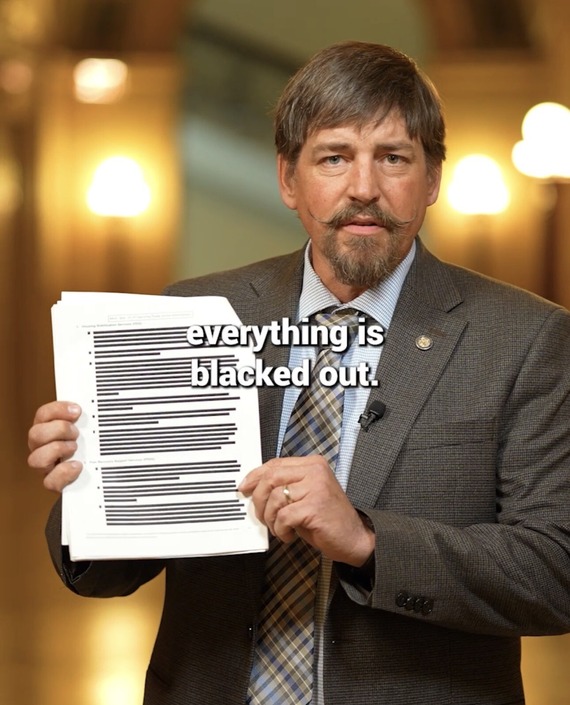 This fraud is very serious and when our state agencies refuse to answer questions, it immediately sounds alarms.
Minnesotans deserve transparency, accountability, and a government willing to show up when asked simple questions about how taxpayer dollars are being managed. And until that happens, we will keep demanding answers!
Putting Affordability Back on the Agenda
 If there’s one thing I hear about more than anything else when I’m back home in the district, it’s this: things are getting too expensive.
Groceries. Childcare. Housing. Insurance. Energy bills. Property taxes. It seems like just about everything costs more than it did a few years ago—and for many families, the paychecks simply aren’t keeping up.
Unfortunately, a lot of the policies passed during the last legislative trifecta only made things worse. Democrats piled on billions in new taxes and fees, including the now-infamous retail delivery fee, a new payroll tax, and dozens of unfunded mandates on local governments. When the state pushes costs onto cities, counties, and schools, those costs don’t disappear—they show up on your property tax bill.
That’s why House Republicans have made affordability one of our top priorities this session. We’re focused on practical solutions that help lower costs and make the American Dream more attainable for families across Minnesota.
Here are just a few of the proposals House Republicans are advancing this session:
-
Lower health insurance costs by making Minnesota’s reinsurance program permanent (HF 3388 – Rep. O’Driscoll)
-
Expand affordable healthcare options through a Direct Primary Care program (HF 1724 – Rep. Gillman)
-
Require the state to pay for new healthcare mandates so they don’t drive up premiums (HF 400 – Rep. Perryman)
-
Create a Property Tax Commission focused on long-term solutions to reduce property taxes (HF 3396 – Rep. Davids)
-
No tax on tips or overtime pay so workers keep more of what they earn (HF 3524 & HF 3525 – Rep. Robbins)
-
Repeal the retail delivery fee, end the tax on Social Security income, and stop automatic gas tax increases (HF 5 – Rep. Joy)
-
Lower boat registration fees (HF 3669 – Rep. Schultz)
-
Reduce vehicle tab taxes (HF 3562 – Rep. Patti Anderson)
-
Return a portion of future budget surpluses back to taxpayers (HF 4 – Rep. Wayne Johnson)
-
Reduce property taxes by allowing schools and local governments relief from unfunded state mandates (HF 957 – Rep. Kresha; HF 1593 – Rep. Murphy)
In an election year, Democrats are suddenly trying to rebrand themselves as the party of “affordability.” But Minnesotans have long memories—and the record tells a different story.
Just look at the policies they continue to push:
-
A Climate Superfund-style proposal (HF 3945) that would drive up energy costs, fuel prices, and everyday goods
-
More than a dozen new health care mandates that will make insurance premiums even higher
-
A new fifth-tier income tax (HF 2591) that takes even more from Minnesota families
-
Continued defense of the retail delivery fee and automatic gas tax increases
-
Opposition to lowering vehicle tab taxes, which were dramatically increased in 2023
-
Continued support for unfunded mandates that are fueling record-breaking property tax increases
-
New payroll taxes and business mandates that inevitably get passed along to workers and consumers
And let’s not forget what happened just a couple of years ago.
During the 2023–2024 session, Democrats burned through an $18 billion surplus, raised taxes by $10 billion, and expanded government spending by 40 percent.
Minnesota’s affordability crisis didn’t happen overnight—and it certainly didn’t happen by accident. It’s the result of policy choices that made life more expensive at nearly every turn.
House Republicans are working to change that. Our focus is simple: lower costs, responsible budgets, and policies that help Minnesota families get ahead—not fall further behind.
That’s the kind of work I came to St. Paul to do, and I’ll keep fighting for it every day on your behalf.
Until next time,
— Representative Nathan Nelson
|