Legislative Update
Dear friends and neighbors
By now, many of you are aware of the massive fraud epidemic that has taken root in Minnesota. Unfortunately, this problem didn’t appear overnight, and it certainly didn’t start this year.
The reality is that fraud has been quietly draining public programs for years, and the true scale of it is something Minnesotans deserve to fully understand.
As your representative, it is my duty to the people of district 17A—and to all Minnesotans—to help navigate this moment with the utmost honesty and transparency. The good news is that House Republicans’ push for stronger oversight is already beginning to expose the cracks in systems that were far too easy to exploit.
And when you start shining a light on fraud, something interesting happens: the numbers start changing—fast.
Take a look at what we’ve seen in some of the state’s highest-risk sectors.
Programs like autism treatment services and non-emergency medical transportation exist for a very important reason. They help some of Minnesota’s most vulnerable residents access care, therapy, and transportation to critical medical appointments. When these programs work the way they’re supposed to, they make a real difference in people’s lives.
Unfortunately, recent findings suggest something has been going very wrong behind the scenes.
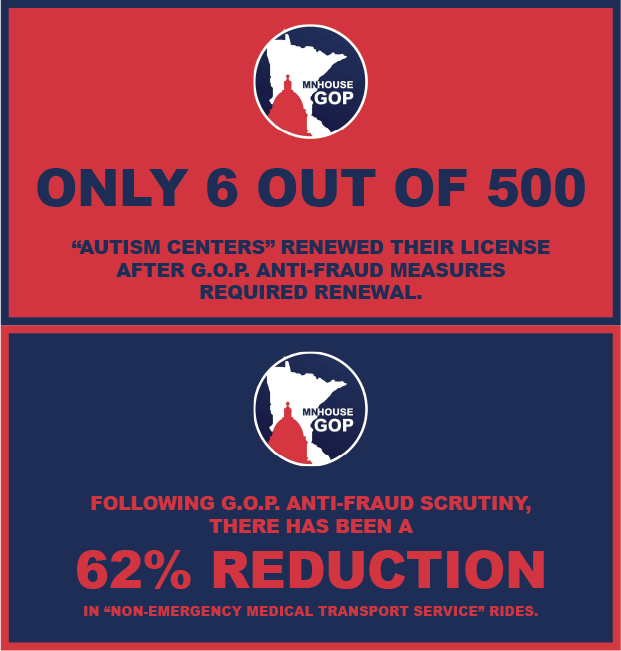
In an effort to improve oversight, the Legislature required autism treatment centers to apply for a provisional license if they wanted to continue operating. Out of more than 500 providers statewide, only 6 have applied so far.
Yes… six.
That statistic alone raises some serious questions about how many of these operations may have never been legitimate in the first place.
We’ve seen a similar story unfold in non-emergency medical transportation. After stronger oversight measures were put in place last year, the number of rides being reported by providers dropped by 62%.
Let that sink in...
When oversight increases and the numbers suddenly fall off a cliff, it usually means one thing: the system had some serious problems that were being overlooked for far too long.
And here’s the frustrating part—this isn’t just about wasted taxpayer dollars. Every dollar lost to fraud is a dollar that should have been helping someone who actually needs these services.
That’s why House Republicans are continuing to push for stronger accountability. One proposal would establish a state Office of the Inspector General dedicated to rooting out fraud across government programs. Another proposal, the Fraud Isn’t Free Act, would create real consequences when agencies fail to protect taxpayer money.
Under that proposal, agencies that fail to meet anti-fraud standards set by the Legislature could face a 10% reduction in their budgets, while commissioners overseeing poorly managed agencies could see a 25% reduction in their salaries.
Because let’s be honest—if this kind of oversight failure happened in the private sector, there would be consequences. Leadership would be expected to answer for it.
Minnesotans work too hard for their tax dollars to watch them disappear into fraudulent schemes. They deserve transparency. They deserve accountability. And most importantly, they deserve a government that takes protecting their money seriously!
When it comes to fraud in Minnesota, the days of looking the other way need to be over.
Removing Barriers to Mental Health Care
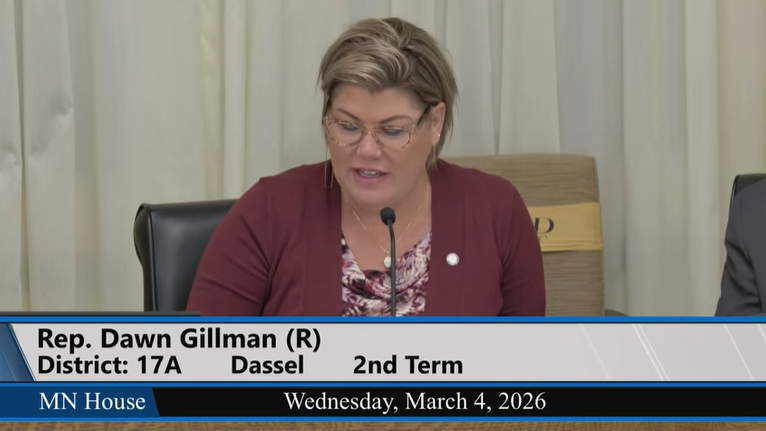 This week I had the opportunity to present House File 3520 in committee—a bill focused on something most Minnesotans can agree on: making it easier for people to access the mental health care they need.
Over the past several months, I’ve heard from providers across the state who all share the same concern. The need for mental health services continues to grow, but too often outdated policies and unnecessary red tape make it harder for treatment programs to help the people who are reaching out for support.
When someone is ready to seek help—sometimes during one of the most difficult moments of their life—the system should be ready to meet them with accessible care, not barriers.
That’s what HF 3520 aims to address.
The bill makes several updates to state law related to intensive residential treatment services and intensive nonresidential rehabilitative mental health services. These changes are designed to help providers operate more effectively so they can focus their time and energy where it matters most: caring for patients.
One great piece of this bill helps ensure that individuals receiving intensive residential treatment services can have their room and board covered through the Behavioral Health Fund when they are enrolled in Medical Assistance or MinnesotaCare. In simple terms, it removes a financial obstacle that can prevent someone from getting the treatment they need during a very vulnerable time.
Mental health professionals enter this field because they want to help people heal and rebuild their lives. Our job as policymakers is to make sure the system supports that mission rather than complicates it.
If we can make the path to care a little clearer and a little easier for Minnesotans who are struggling, then we are moving in the right direction.
A Week of Great Visits at the Capitol
One of my favorite parts of the hustle and bustle of session is the steady stream of folks who make their way to the Capitol to share the priorities of their organizations. Between committee hearings, floor sessions, and the occasional sprint down the hallway, it’s always a welcome break to sit down with people who are passionate about the work they do.
Week after week, I’m blown away by the talent, dedication, and heart behind these groups—really good people rolling up their sleeves and advocating for their neighbors across the state. The Capitol can get pretty busy this time of year, but these conversations are a great reminder of who we’re here working for. This week, I’d like to highlight a few of those visits.
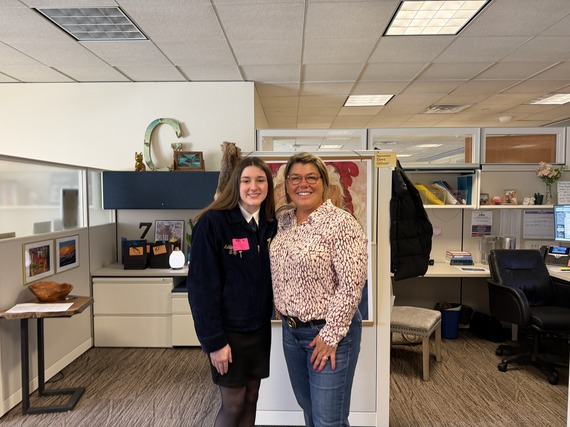 Great to visit with Ashlin Kadelbach from the Dassel-Cokato FFA, who stopped by the Capitol for Future Farmers Day on the Hill. It’s always encouraging to meet young leaders who are already stepping up to advocate for agriculture and rural communities. If this is the future of Minnesota farming, we’re in very good hands!
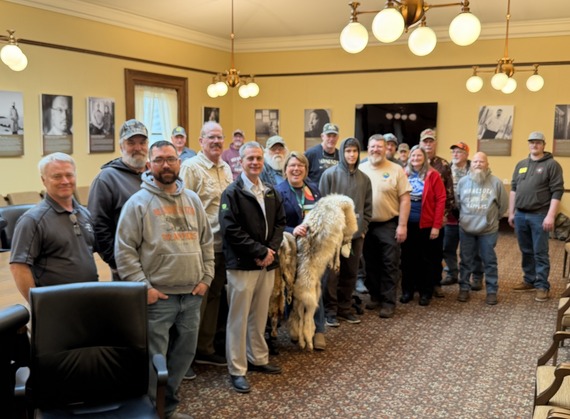 Had a great visit with the Minnesota Trappers Association at the Capitol! Always fun connecting with folks who know Minnesota’s outdoors better than just about anyone—and who aren’t afraid to get their boots a little muddy in the process. I appreciate them stopping by to share their perspective on conservation, wildlife management, and keeping Minnesota’s great outdoor traditions alive. Thanks for making the trip to St. Paul!
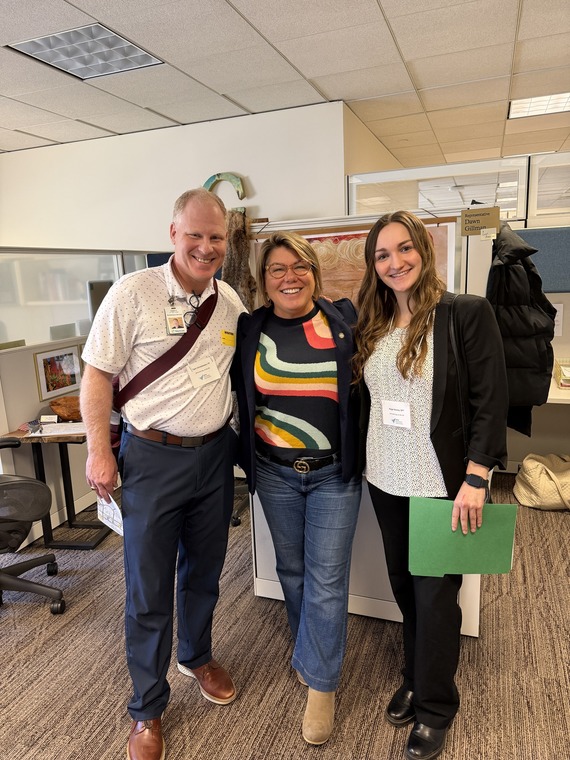 Had a great time celebrating Physical Therapist Day on the Hill and visiting with constituents from Glencoe and Hutchinson who serve our communities as physical therapists. These are the folks who keep Minnesotans moving—whether it’s helping someone recover from an injury, get back on their feet after surgery, or just survive another Minnesota winter without pulling a muscle shoveling snow.
Always grateful for the chance to hear directly from the professionals doing this important work every day. Thanks for everything you do to keep our communities healthy and on the move!
Don’t Be Shy, Let’s Talk!
As we move through the rest of the legislative session, I truly can’t stress this enough: your voice matters. Public service works best when it’s a two-way conversation—not just lawmakers talking, but neighbors weighing in with ideas, concerns, and a little healthy Minnesota honesty.
So if there’s an issue you’re passionate about, a priority you think we should tackle, or something happening in your community that deserves attention, don’t keep it to yourself!
Shoot me an email at rep.dawn.gillman@house.mn.gov or give my office a call at 651-296-6746.
I’m here to work for you—and I’m always happy to hear what’s on your mind.
Have a great weekend!
— Representative Dawn Gillman
|