|
ABOUT GREEN NOTES
GreenNotes covers environmental news, programs and events from Hennepin County.
Please take a few moments to read our stories. Share your feedback and ideas for protecting the environment.
Also check out archived issues.
Email Hennepin Environment
Please forward this email to interested individuals and encourage them to sign up.
|
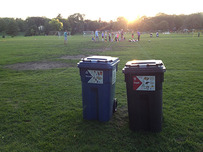 The Minneapolis Park and Recreation Board is making recycling easier for park visitors by providing new trash and recycling containers. Neighborhood parks will have dark gray carts for trash and blue carts for one-sort recycling, which are the same carts Minneapolis residents use at home. Larger regional parks and trails will have blue bins for recycling and green bins for trash.
Park visitors can recycle a wide variety of materials, including metal cans, glass bottles and jars, cardboard, paper, and plastic bottles, cups and containers. The Minneapolis Park and Recreation Board will follow several best practices for setting up recycling programs, including pairing recycling and trash carts and placing more carts in high-use areas such as playgrounds, basketball courts and wading pools.
Hennepin County partnered with the Minneapolis Park and Recreation Board to plan for the program roll out and develop signage for the carts. The revamped recycling program helps meet the Minneapolis Park Board’s core value of sustainability and provides additional options to recycle everywhere.
|
Four businesses recently earned recognition as Hennepin County Environmental Partners, a program that recognizes local businesses for their efforts to recycle and divert organic waste (food and food-soiled paper) from the trash.
The following businesses earned recognition:
- Brave New Workshop for recycling and composting, as well as encouraging the use of reusable cups, reducing waste, conserving energy and using less-toxic cleaners.
- Coze Flats, an apartment building that has made it easy for all residents to recycle and collect organic waste for composting.
- Open Arms for recycling and composting, as well as having an on-site garden where they grow vegetables for use in their meals and using a non-toxic cleaning system.
- Tennant Co., which recently revamped its recycling program, added organics recycling in the cafeteria, and uses reusable and compostable foodservice items.
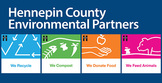 These businesses join 22 businesses already recognized as Hennepin County Environmental Partners. Environmental Partners receive window decals and other materials to communicate their efforts to customers. They are also listed in an online directory that potential customers can use to find and support businesses that are recycling and diverting organic waste from the trash.
If you know of a business that deserves recognition for their recycling, waste reduction and food waste diversion effort, encourage them to become a Hennepin County Environmental Partner.
For more information, contact Nancy Lo at nancy.lo@hennepin.us or call 612-348-9195.
|
Applications for several Hennepin County environmental grant programs are due soon. Apply now for the following:
-
Environmental education grants: Grants of up to $15,000 are available for projects that empower residents to reduce waste, increase recycling, reduce and properly dispose of household hazardous waste, reduce climate change pollution and improve air and water quality. Applications are due by 5 p.m. on October 15, 2014.
-
Natural resources grants: Grants of up to $50,000 are available to landowners, local governments and organizations for projects that preserve and restore critical corridors and wildlife habitat, reduce soil erosion and improve water quality. Applications are due by 5 p.m. on October 15, 2014.
-
Business recycling grants: Grants of up to $50,000 are available to help businesses, non-profit organizations and institutions start or improve programs to divert recyclables and organics from the trash. Applications are due by 5 p.m. on October 15, 2014.
-
Contaminated land cleanup grants: Environmental Response Fund grants are available to assist with the evaluation and cleanup of contaminated sites where the added environment cleanup costs hinder site improvements or redevelopment. Applications are due by 4:30 p.m. on November 3, 2014.
Hennepin County is being recognized for innovation in government through the Minnehaha Creek Watershed District’ Watershed Heroes award program. The Minnehaha Creek Watershed includes Minnehaha Creek, Lake Minnetonka, the Minneapolis Chain of Lakes, and Minnehaha Falls. The district is recognizing the county for providing emergency assistance during spring flooding, protecting water quality in Lake Minnetonka during reconstruction of Bushaway Road, and implementing planning that values natural resources and partnerships.
Three organizations in Hennepin County have been awarded funding through the Community POWER (Partners on Waste Education and Reduction) program for projects that educate and actively engage residents in reducing waste, reusing and properly disposing of hazardous waste. The Community POWER grant program is funded by the Solid Waste Management Coordinating Board, a joint powers board comprised of six metro-area counties.
Funding was awarded to the following organizations:
- Art Your Engine/Bancroft Elementary School to integrate reusing and recycled art projects into the curriculum and engage older youth leaders and younger students in a Be Green Mentorship program.
- Lao Assistance Center of Minnesota to educate community members about recycling at home using a train-the-trainer model with community recycling ambassadors.
- New American Academy to reduce the amount of toxic and household hazardous materials among East African households by training community leaders and sharing information at community meetings and events.
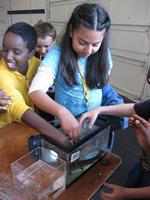 On September 24, 1,200 fourth graders from 11 metro counties attended the 17th annual Children’s Water Festival where they learned first-hand the importance of water. Students explored a variety of water-related topics through stations and presentations on basic water science, the importance of wetlands and aquatic ecosystems, how to measure water quality and other water-related environmental issues.
The Children’s Water Festival is organized by 11 counties and the Minnesota Pollution Control Agency. Hennepin staff provides planning, volunteers and materials for presenters.
For more information, contact Stacey Lijewski at stacey.lijewski@hennepin.us or 612-348-9938.
|
In the News
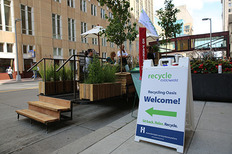 Throughout August and September, the Hennepin County Recycling Oasis, a portable park constructed with recycled materials embedded on the back of a trailer, traveled to community events throughout the county to promote the Recycle Everywhere campaign.
The Recycle Everywhere campaign encourages people to look for recycling everywhere they go, whether they’re at work, at home, at school, at a park or an event. And if you can’t find recycling, ask for it. Hennepin County has programs to start or improve recycling at businesses, schools, apartment buildings, events and public spaces. Learn more on WCCO and Channel 12.
|
Construction sites in Minnesota send about the same amount of waste to landfills as waste generated by residences and businesses. Some construction waste is recycled or reused, but there are no rules or goals in place requiring or encouraging the recycling of construction waste. That may change, as Minneapolis is currently examining rules from other cities, and Hennepin County is studying the capacity of the recovery market to determine feasible goals. Read more in the Star Tribune.
Hennepin County looks to examples of international leaders in meeting landfill diversion goals
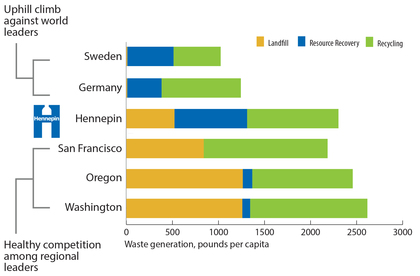 Sweden has received accolades recently for sending only 1 percent of their waste to landfills. Sweden accomplishes their goal of limiting the landfilling of waste by implementing aggressive recycling programs that recover about 50 percent of their waste and sending the other half to waste-to-energy facilities where the trash is burned to generate energy.
Hennepin County looks to international leaders like Sweden as we work to meet our goals of increasing recycling and reducing the amount of waste sent to landfills. Hennepin County is similar to Sweden in that we have a good recycling rate with room for improvement – we recycle about 40 percent of our waste – and a portion of waste generated in the county is sent to the Hennepin Energy Recovery Center, a waste-to-energy facility in downtown Minneapolis. In 2013, the county achieved our goal of diverting 80 percent of waste from landfills. However, we can do more to send less waste to landfills by generating less waste overall and diverting more waste to recycling and composting. Read more in Slate.
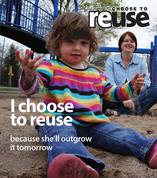 Online technologies help support reuse markets in numerous ways – by better connecting buyers and sellers, by supporting innovative partnerships, and by making it easier to find reuse options. One example is Hennepin County’s Choose to Reuse program, which offers discounts at local reuse retailers and partners with the Chinook Book to make coupons accessible via smartphones. Read more in the Minnesota Daily.
|
Anoka and Dakota counties have both recently started Master Recycler/Composter programs based on the successful Hennepin County program that started in 2011. Master Recycler/Composter program participants receive training on waste prevention, recycling and composting then commit to volunteering in their communities to promote and implement recycling and waste reduction programs. Hennepin County will be accepting applications in the spring for the next Master Recycler/Composter course. Read more in the Star Tribune.
Events
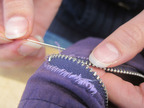
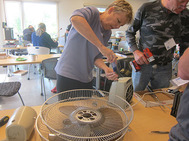 Since launching in September 2012, Hennepin County’s popular Fix-It Clinic program has helped 1,419 attendees fix 1,529 items, achieving a 76 percent fix rate. At Fix-It Clinics, residents receive free, guided assistance from volunteers with repair skills to disassemble, troubleshoot and fix their broken household items, which include small household appliances, clothing, electronics, mobile devices and more.
|
 |
|
Fix-It Clinics teach valuable troubleshooting and basic repair skills, build community connections, and reduce the number of repairable objects that are thrown in the trash. To date, 9,885 pounds have been diverted from the waste stream, and volunteers have donated more than 2,400 hours. |
Get your stuff fixed at an upcoming Fix-It Clinic:
- Saturday, October 11 from noon to 4 p.m. at the North Regional Library, 1315 Lowry Ave. N, Minneapolis
- Saturday, November 8 from noon to 4 p.m. at the Brooklyn Park Community Activity Center, 5600 85th Ave. N. in Brooklyn Park
- Sunday, December 14 from noon to 4 p.m. at the Brookview Community Center in Golden Valley
Volunteer fixers are essential to making the clinics successful. If you have skills in electrical, mechanical or electronics repair, wood working, sewing or general tinkering, consider volunteering!
For more information or to volunteer, contact Nancy Lo at nancy.lo@hennepin.us or call 612-348-9195.
Get rid of your unwanted automotive wastes, household, lawn and garden products, batteries, mercury-containing items and more at upcoming hazardous waste collection events.
The remaining events in 2014 will be held Thursday – Saturday, 9 a.m. – 4 p.m. at the following locations:
- October 2 – 4 at the Shorewood Public Works Department, 24200 Smithtown Road in Shorewood
- October 9 – 11 at the Minneapolis Public Works Department Snelling Avenue location, 3607 East 44th Street in Minneapolis
Please note that electronics will not be accepted at collection events. See the schedule, guidelines and materials accepted.
Green Tip
Cold weather and heating season is just around the corner. The U.S. Department of Energy suggests the following tips for saving energy during the fall and winter:
-
Take advantage of the heat from the sun by opening curtains on south-facing windows during the day.
-
Cover drafty windows with plastic film or insulating drapes or shades.
-
Adjust your thermostat to be as low as comfortable when you are home and awake and 10 – 15 degrees lower when you’re gone or sleeping. Use a programmable thermostat to adjust the temperature automatically.
-
Seal leaks around pipes, chimneys, light fixtures, cabinets, closets, windows and doors.
-
Maintain your heating system by scheduling regular maintenance and replacing the filter.
-
Lower your water heating costs by turning down the temperature.
-
Use energy-efficient lighting, such as compact fluorescent (CFL) or light-emitting diode (LED) bulbs.
Also see tips for preparing your home for colder weather.
|