Construction
has begun in the process of building The
Interchange, a transportation hub designed to be a station where trains,
buses, bikers and pedestrians connect.
The Interchange will extend beyond Target Field Station and construction
will generate more than 300 full-time jobs.
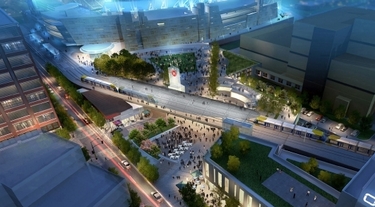 The Interchange with the Twins ballpark in the background.
The architects created an open source structure,
called open source because it will: A)
be a design that can be more flexible than standard transit structures; B) be
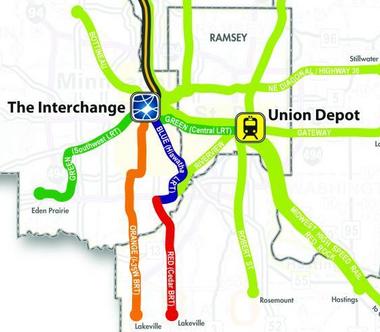
plug-and-play with the future Southwest and Bottineau LRT lines – to be known
as the Green Line and Blue Line extensions when they connect to the Hiawatha
and Central Corridor lines; C) help knit the North Loop neighborhood into
downtown and the transportation network; and D) connect existing infrastructure
in simple but often innovative ways – for instance, snow on the new plazas,
stairs, and sidewalks will be cleared using waste heat from the neighboring
Hennepin Energy Recovery Center.
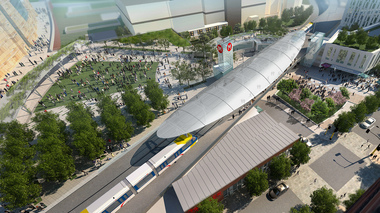
Once completed in 2014, The Interchange will be a
bustling urban park, transit station and neighborhood gathering space. This one
of a kind destination will connect approximately 500 trains arriving and
departing daily via the METRO Blue Line (Hiawatha LRT), METRO Green Line
(Central Corridor LRT) and Northstar Commuter Rail, as well as more than 1,800
daily bus trips, and miles of bike and walking trails.
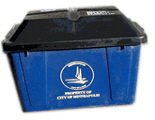 In 2011 Hennepin County changed its Residential
Recycling policy to foster recycling and innovation in waste management. With the new policy cities can receive grant
money by increasing recycling rates. The
City of Minneapolis compared its current multi-sort system and found that
single-sort recycling will be both more cost-effective and convenient for
residents. As a result, Minneapolis will
enact single sort recycling in 2013. The
change is projected to increase recycling from 18% to 32%, with a commensurate 60%
increase in materials recovered.
Thank you Minneapolis, I know I’ll enjoy not having to sort any more
into the myriad bags in my kitchen!
On May15 the construction of the Central
Corridor LRT line reached the halfway mark; it is now over 60% built; and by
the end of the year 75% of the line should be complete. As construction moves along the corridor, businesses
on University and Washington Avenues have been affected. A new policy designed to shorten
construction-related disruptions now completely shuts down cross streets as
they are rebuilt, instead of staging the demolition and rebuilding of the
intersections.
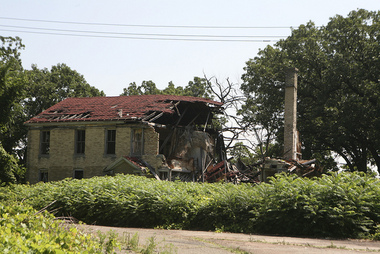 Seven
years have passed since Hennepin County engaged Ft. Snelling’s multiple
property owners, federally recognized tribes, and organizations interested in
the property to stabilize the site’s remaining buildings. The work was done with the goal of saving the
historic buildings and getting this area back into productive use. Over time it became clear that one permanent
organization should replace the informal group of local, state, and federal
entities that were seeking to coordinate efforts. A joint
powers agreement, established by Hennepin County, Minneapolis Park Board, MN
Department of Natural Resources, MN Historical Society, National Park Service,
and US Department of Veterans Affairs, will create an interim organization.
The interim organization that will be charged
with two significant tasks: 1) creating
a permanent body to oversee and manage the property; and 2) preserving and
enhancing the Ft. Snelling Upper Post Area for public benefit. Partnering with this interim group will be
federally recognized tribes.
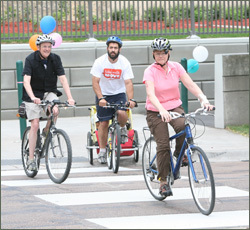
This family friendly tour will start in Linden Hills
where the library is listed on the National Register of Historic Places and finish
at the newly renovated Nokomis Library whose features include a geothermal
heating and cooling system (no furnace needed).
The libraries are all close to bike trails, which helps keep the tour a
manageable endeavor.
Mechanical support, in case of a flat tire, for
example, is provided by Freewheel Bike and if the weather is questionable, patrons
planning to participate should call the Linden Hills Library at 612-543-6825.
 |
|
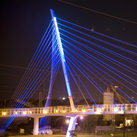
Construction began August 19 to fix the Sabo Bridge. The goal is to fully re-open the bridge by the end of the year after retrofitting the diaphragms connecting the cables the bridge deck and mast. Read an explanation of the cable failure.
|

|