September/October 2026
Check out what’s happening this fall in Special Collections.
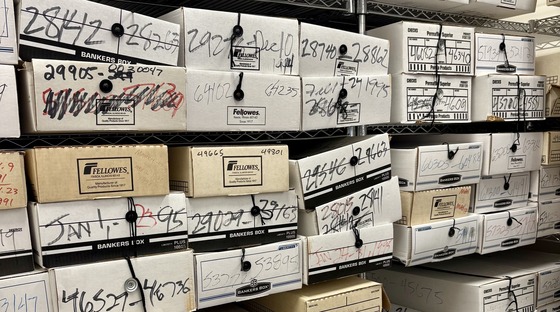 This summer, we received another huge photograph donation from the Minnesota Star Tribune. The collection includes more than 340 boxes of negatives and 64 boxes of CDs/DVDs. While the total number of photographs is still unknown, we do know that each negative box contains 2+ weeks of photos and each box of CDs contains roughly 600-800 disks—we estimate that’s hundreds of thousands of photographs!
This donation was months in the making and builds on our positive relationship with the newspaper, including through earlier donations of photographs in 1970 (print photographs 1910s-1940s) and 2018 (print photographs 1950s-1990s).
The latest donation includes mostly photographs taken by Star Tribune photographers from the late 1980s to 2014. Topics include sports, front-page news, variety section events, and more, and include both photographs printed in the paper, as well as additional photos from the same shoot. The collection is organized by date.
Rights to the photographs in this collection are held by the Star Tribune, but photographs will be available, by request, to the public once the boxes have been cleaned and inventoried.
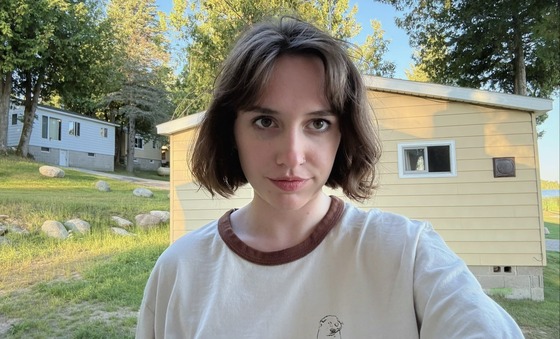 This summer we welcomed Lucy as a new archival processing volunteer. Lucy is continuing work on the Minneapolis Park and Recreation Board Collection—separating oversize material, re-foldering and re-boxing records, and entering files into the finding aid in Archives Space.
Lucy grew up in South Minneapolis and recently graduated from the University of Minnesota with a Bachelor of Science degree in Family Social Science. In her free time she enjoys listening to music, practicing Japanese, playing video games, and collecting stationery. Lately, she’s been tinkering with ways of collecting and organizing her own personal archive. Lucy has a cat named Frankie, whom she adores.
Here’s more from Lucy:
Q: Why did you decide to start volunteering with Hennepin County Library and why Special Collections?
A: My mom and grandmother have both worked in libraries for as long as I can remember, so I always tell people it’s genetic that I am interested in library science. Towards the end of college, I worked on an archival research project that sparked my interest in historical materials and strengthened my resolve to pursue a career as an archivist. I chose to volunteer here at Special Collections because I wanted to learn from professionals and gain hands-on experience.
Q: Have you found anything weird, unusual, or especially interesting in the MPRB collection?
A: Right now, I am processing the Park Board's legal files dating back to the 1930s. It's been really interesting to piece together the story of how our city's parks came to be. Furthermore, the lawyer who put the files together was very meticulous about saving newspaper clippings related to each and every incident that took place in local parks. I appreciate (and am surprised by) the amount of ephemera included in this part of the collection.
Q: Tell us about a favorite project you’ve worked on in a library or archive.
A: In college I conducted extensive archival research [at the University of Minnesota Archives] on the history of my major, Family Social Science, which used to be called Home Economics. There was a time [from 1918 to 1944] when students lived and worked together in a shared house to hone their Home Ec skills. Shockingly, however, real children—wards of the state—lived in these houses as well, and were commonly referred to as "experiment babies" for the students to practice with. The more I looked through the archives, the more complicated the story became. It shocked me how much information was hiding right beneath the surface. I appreciated the opportunity to think critically about how American culture understands children's place in society. I am hoping to publish my findings.
Q: If you could transport yourself to another time in history, when would you choose and why?
A: I'd go back in time to meet my parents in college and find out if we would be friends.
Thanks, Lucy, we’re so glad to have you in Special Collections!
From the Archives: New Oral History Collections and More
Several digital oral history collections have recently been added to our archives. These collections are unprocessed, but available for research:
-
Art-a-Whirl Oral Histories – Ten oral history interviews about the origins and history of Art-a-Whirl, conducted for the 30th anniversary of the event in 2025. Interviews include audio recordings, transcripts, releases, summary forms, and photographs. Interviewees include Alison Price, Anna Becker, Dean Trisko, Emily Gray Koehler, Jennifer Young, Jonathan Query and Katayoun Amjadi, Leslie Barlow, Lisa Elias, R.T. Rybak, and Russ White. Interviewed by Kim Heikkila.
-
Green Book Oral Histories – Four oral histories conducted by the class of HSPH 8002 Project Work, University of Minnesota, Spring 2025. Interviews center on reflections of Green Book locations in the Twin Cities as well as current perspectives of contemporary Black business owners. The Travelers’ Green Book was an invaluable travel guide for African-Americans traveling in the era before the passage of the 1964 Civil Rights Act. Published nationally from 1936 to 1966, it provided listings of hotels and restaurants that could be relied on to provide food and lodgings without discrimination.
-
Overpoliced and Underprotected in MSP Oral Histories – Three oral history interviews conducted by Michael Lansing and Yohuru Williams as part of their Overpoliced and Underprotected in MSP project. Narrators are Gerald Vizenor, Greg Hestness, William Mavity, and David Couper. Learn more about the history of police reform in Minneapolis in the TPT documentary, Paradox.
-
Twin Cities Puppet Oral Histories – Twenty-six oral histories conducted by Jennings Mergenthal with puppeteers in the Twin Cities. You can read more about puppet history in the Twin Cities in Jennings’ zine, A Field Guide to the Puppets of the Twin Cities, available in Special Collections.
These collections were also recently donated:
-
Friends of the Plymouth Library Records – Meeting agendas, minutes, and photographs from the Friends of the Plymouth Library.
-
Northside Residents Redevelopment Council Records – Records of the neighborhood organization for the Near North and Willard-Hay neighborhoods. Includes contracts, mortgage program files, photographs, and other records from 1969 through the 2010s.
Archival finding aids are now available for these two collections, which have long been housed in Special Collections, but are now more discoverable:
-
Minnesota North Stars Press Releases – Press releases produced by the Minnesota North Stars and the Metropolitan Sports Center (Met Center) from 1966 through 1980. Most press releases are typewritten on Met Center letterhead. View finding aid.
-
Seth Eastman Sketchbook and Painting – Sketchbook and watercolor painting of St. Anthony Falls created by Seth Eastman. The small sketchbook contains watercolor paintings and pencil sketches of Minnesota, Wisconsin, and New York locations. Some sketches are unidentified. View finding aid.
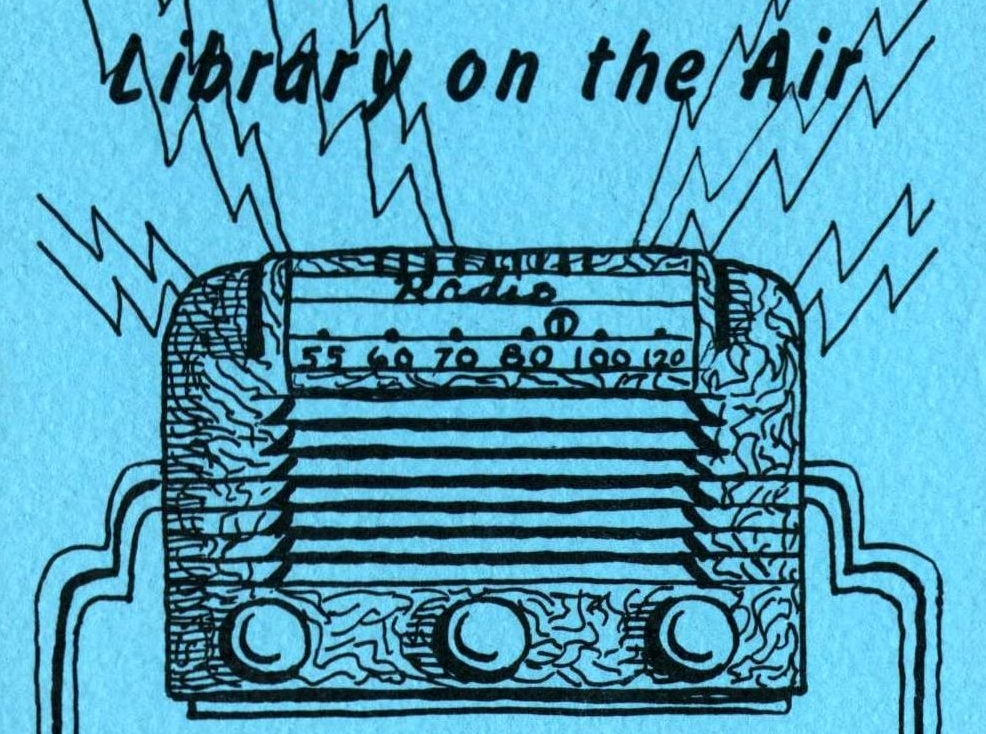 For several years in the 1970s, the library broadcast radio programs over KBEM-FM. When Minneapolis Public Schools first launched KBEM in 1970, the library served on the station’s advisory board. The library first broadcast a 3-hour program of music, called “Fanfare,” using recordings selected from the library’s collections. In 1974, the format was changed to a 2-hour program emphasizing library materials and services and rechristened “Bookends.”
“Bookends” featured storytelling, interviews with authors, news about the library, music, and visits from “Tillie the Answer Lady,” who answered reference questions from listeners. Many library staffers, interns, and volunteers were involved in the show’s production, including Mary Forman, Grace Belton, Lois Esterly, Lois Ringquist, Faye Herold, and Suzanne LeBarron. The program’s principal host and content developer was Audrey McClellan, a library assistant at the Roosevelt library and later with the Library Programs Office.
“Bookends” staff interviewed dozens of local and visiting authors and speakers, including Betty Friedan, Jim Klobuchar, Studs Terkel, Cleveland Amory, Ben Stein, Mary Higgins Clark, Aaron Copeland, Lawrence Welk, Judith Viorst, Irving Stone, Madeline L’Engle, Garson Kanin, Sigurd Olson, Anne Rice, and Hubert Humphrey.
An occasional guest was also popular local folksinger and longtime library supporter, Charlie Maguire. At McClellan’s request, Maguire even composed a tribute to the library, which became the theme song for the program.
The library purchased professional recording equipment in the early 1970s and, with assistance of recording engineer Bill Lund, recorded dozens of the programs to 7 ½” reel-to-reel tapes, which Special Collections has since digitized and transcribed. The program ended in 1978 when the school district elected to discontinue its agreement with the library. The last “Bookends” aired in 1979.
Hennepin History Magazine
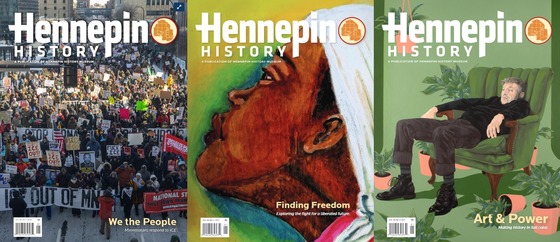 Did you know you can read Hennepin History magazine in our Digital Collections? We’ve partnered with our friends at the Hennepin History Museum to bring you digital issues of the magazine, including the latest issue, featuring photos of the ICE Out protests earlier this year, an interview with radical librarian Sandy Berman, and an excerpt from William Green’s new book on the 1970 Minneapolis Teachers Strike. Published since 1941, Hennepin History magazine tells stories of the people, places, and objects in Hennepin County and how our lives today can be interpreted through the lens of history.
Note: For the best reading experience, click the blue arrows in the upper right corner of the digital image to expand and focus text and images.
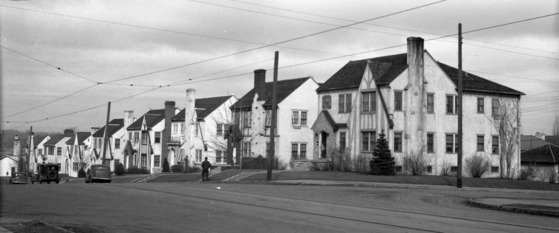 This fall we’re offering two sessions of the popular program, Researching the History of Your Home. Registration is now open.
Learn about the historical resources at the library and across the county that will help you piece together a history of your Minneapolis house, neighborhood or property. We’ll explain and demonstrate resources, emphasizing online resources in the Digital Collections that will allow you to jump-start your research from home – including permit records, maps, city directories, newspapers, photos and more. This class is best suited for researching properties located in the city of Minneapolis, though some county-wide resources will be discussed.
Photo: Houses on Chicago Ave. at 48th St. in 1936, from the Minneapolis Public Works Department. C34492
|