Complete the Essentials quiz at the end of this newsletter to receive one hour of training credit towards your annual training requirement!
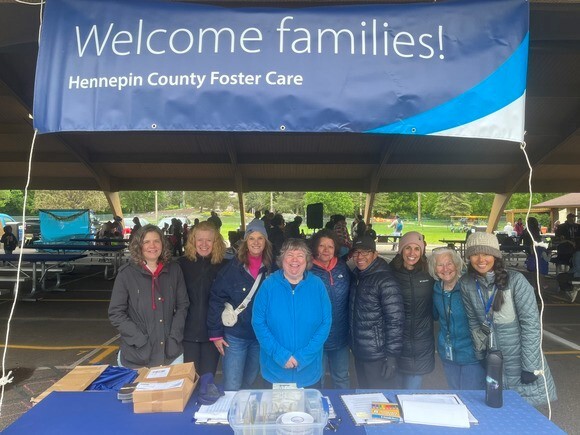
Please join us on Saturday, May 16, for this year's foster care picnic and resource fair in appreciation of our dedicated foster care providers. Thank you for the countless ways you support children, youth, and families.
Register today for an afternoon filled with games, prizes, lunch, resources and more.
New this year: Complete your car seat training at the picnic!
All foster parents transporting children under age 9 must complete Basic Education for Safe Travel (B.E.S.T.) prior to licensure, and every five years thereafter. Training includes online certification followed by an in-person car seat check.
-
Complete the online Car Seat Basics training within 30 days prior to
May 16.
- Email your Car Seat Basics training certificate to HS.Foster.Care@hennepin.us by Friday, May 15, to register for the in-person car seat check.
- Complete the in-person car seat check at the picnic – and enjoy the festivities!
Contact your licensor with questions.
Important information for traveling with children you foster
Communicate your vacation plans with all parties
The biological parent or legal guardian has the right to be informed if their child will be out of state or placed in respite care. The child’s worker is responsible for communicating this information to them. If any parent or family visits will be missed due to these plans, foster parents must discuss this with the child’s worker. Do not make alternative arrangements with the child’s family on your own.
Foster parents are required by Hennepin County to notify the child’s worker and their licensing worker before taking a child on any trip that includes one or more overnights. Foster parents should email both the child’s worker and their licensing worker when planning travel, and include the exact dates and full travel location address. This requirement also applies to cabin trips within Minnesota.
For out‑of‑state travel including neighboring states
Foster parents should inform workers of their plans as soon as possible and at least one month in advance. Permission from the child’s worker must be obtained before taking a child out of state. Approval from the court order is required for travel to another state. Submitting the request does not guarantee approval. Follow-up with the workers about the status of the request and reminder that out-of-state travel requests may be denied by the parents or the court, which could result in canceled plans.
Travel reimbursement
Foster parents may be eligible for up to $15 per day for up to 21 travel days per year when taking a child you foster on a family vacation. This reimbursement is in addition to the regular foster care rate and must be pre‑approved by the child’s worker. If approved, the foster parent must complete a Miscellaneous Expenditure Voucher after the vacation and email it to the child’s worker within 30 days of the expense. All receipts must be kept.
When you cannot include children you foster in your vacation plans
You must submit a written request for alternate care at least 30 days in advance. Substitute care in your foster home with an approved caregiver may be used if the caregiver has completed the required training and background study for care lasting more than 72 hours. Hennepin County also offers out‑of‑home respite care with another licensed provider. Respite care requires specific paperwork.
For more information, see Section 4 of the Foster Parent Guide, or contact your licensor.
 As foster parents, you know that most children in foster care return home to their families. Some are adopted by relatives or by their foster parents.
When these options aren’t possible, kids need loving and supportive adoptive families. Many waiting children in Hennepin County are school-age or teens, or part of a sibling group. Help us spread the word and find permanent families for these youth. We are in need of loving families, like yours, who are willing to be a mentor, respite provider, foster family, or adoptive resource for these youth.
Ma'Siah (3) is engaging, curious, and full of smiles. He enjoys snuggling, reading, and singing. Ma’Siah gravitates towards music and can often be found listening to his Tonies. He likes spending time outside, especially if it involves swinging. Ma’Siah’s favorite characters are Curious George and Elmo. He loves touch and feel books. Ma’Siah is 100% dependent on his caregivers for all personal care.
Please email Kellie Syring if you are interested in learning more about Ma'Siah.
Kathryn and Ernest have been fostering for over 8 years. They share how fostering youth have changed their lives for the better.
What inspired you to become a foster provider?
We knew we had the space and margin to care for more children and after meeting another family in our community that was fostering, we became interested. Once we began going to the trainings and learning more about the need, we couldn’t NOT do it.
How have you personally handled reunifications with the families/parents? Did you need extra support?
We’ve had one case go to reunification where we have been very nervous about how successful the parent will be and we’ve had one case go to reunification where we were very supportive of reunification. Although both cases were different they both were very hard because we love both children and cannot imagine daily life without them. We remind ourselves and our children that foster care is supposed to be temporary and that we are so blessed for having those children in our lives. It certainly doesn’t come without sadness and some heartache. Leaning on our faith has been the most important as well as being open about how we are feeling. We are forever changed to know those kids and having them in our home but the complete sadness never truly goes away.
What are the most important things you try to provide for the children in your care?
The most important things for us to provide for children 0-5 is stability, routine, comfort, attention. I guess those things are important for any age! We get the child new clothes from Once Upon a Child, have a crib/room all set up for them with stuffed animals, books and toys.
How has fostering changed you or changed your family dynamics?
Fostering has been the hardest and best thing our family has done. We have 4 bio/adopted kids; ages 16, 14, 11, 7. Fostering has made us all more empathetic and aware of people who are going through hard situations. It has brought us closer as a family while we care for placements and work together to give them what they need. We stay in close contact with our adopted son’s bio dad. That has created a lot of good conversations for our family but also shown us that we can really love and care for someone who has a different life than us. We’ve known him for over 7 years and just this past year we invited him to our house for Christmas. It was such a wonderful time together and has strengthened our relationship. It took many years for us to be comfortable to do that but consistency and trust was built over time.
Do you have any advice for someone considering becoming a foster parent or to newly licensed foster parents
We were given this advice the day we walked into the hospital room to meet our now adopted son. The nurse asked us if we were excited to meet him and I responded with something about us being a little apprehensive as this was our first placement. She said this little baby needs you to be all in because no one else in his life is. She said that it can be scary and you’ll want to protect your heart, but he didn’t choose what’s happening to him and because of the support system in our lives we will be able to love him and if he ends up leaving us we will ultimately be ok. If we aren’t “all in” for him he’ll never learn to attach, what love is, who to trust, etc. This advice changed everything for me.
People would say to me out in public they could never foster because they would get too attached! We get too attached – but we ultimately know the work we are doing will last a lifetime.
You don’t need to have a fancy house, the perfect family or tons of money. All you need is to have the margin in your life to say yes and then watch how it changes you for the better!

Clean and calm for spring
Spring is a great time to open windows, let in fresh air, and make your home feel new again. For children in foster care, a clean and organized space can help them feel safe and settled. Spring cleaning becomes more than tidying up. It can build important life skills and help create a calm home.
Why spring cleaning matters
Some children in foster care have lived in places that felt confusing or out of control. An organized space can help them:
- Feel safe and know what to expect
- Build confidence by finishing small tasks
- Learn simple routines
- Feel more relaxed when the space is tidy
Even easy jobs like sorting toys, finding a place for items, or wiping a table can help children feel more in control of their space.
Ways to make spring cleaning supportive and fun
1. Start small and keep it simple
Work on one small area at a time, like a toy box or dresser drawer. Tell your child what you’re going to do and how long it will take. This helps them feel ready and lowers stress.
2. Give choices
Let children make simple decisions when you can, like which shelf to put a book on or which bin to use for art supplies. Giving choices builds decision making skills, especially for kids who haven’t always had control over their space.
3. Use it as a teaching moment
Spring cleaning can teach skills like:
- Sorting and organizing
- Basic cleaning
- Managing time
- Letting go of items in a gentle way
If a child has trouble giving something up, move slowly and acknowledge their feelings. This is normal and okay.
4. Create calming spaces together
After cleaning, help your child set up a peaceful spot. This could be a reading corner, a calm down bin, a sensory space, or a tidy homework area. When children help create the space, they are more likely to use it and care for it.
5. Celebrate success
End by recognizing their effort. A simple acknowledgement like "you worked hard on this” can build confidence in a big way.
Recommended health checks
|
Age
|
Frequency
|
|
Birth to 6 months
6 to 24 months
2 to 20 years
|
Monthly
Every 3 months
Twice a year
|
Recommended dental visits
Twice a year, starting when the first tooth appears and no later than 12 months.
We can help! The Child and Teen Checkups staff are experienced in finding medical and dental clinics. We can help schedule appointments and set up transportation or interpreters when needed.
Questions? Connect with Child and Teen Checkups:
612-348-5131
checkups@hennepin.us
When school ends, children in foster care often lose the routines and consistent support that help them feel secure. A little planning can help families create a summer that still feels predictable, connected, and fun.
Create a daily rhythm
Children who have experienced trauma feel safer when they know what to expect. A flexible daily rhythm can reduce anxiety without over-scheduling. Posting a simple schedule on the fridge helps children know what comes next.
- Morning: Breakfast, getting dressed, small chores, outdoor play
- Midday: Outing or creative activity
- Afternoon: Quiet time or screens
- Evening: Dinner and connection time
Free and low-cost Twin Cities fun
Many foster and kinship caregivers are balancing appointments, visits, and tight budgets. Fortunately, Hennepin County offers many free or low-cost outings that give kids a chance to explore and burn off energy. Ask your licensing worker about Tickets for Kids and other free or discounted programs.
- Minnehaha Falls picnics and nature walks
- Como Park Zoo & Conservatory
- Minneapolis Sculpture Garden scavenger hunts
- Chain of Lakes beaches, playgrounds, and bike rides
- Free library programs
- Outdoor movies and concerts in city parks
- Splash pads, nature centers, and farmers markets
Build connection through everyday moments
Children in care often heal through safe relationships and shared experiences, not elaborate plans. Foster caregivers can build connection through small activities. Letting kids plan an activity may give them a voice and sense of belonging.
- Chalk art contests
- Water balloon games
- Picnics or evening walks
- Fort building
- Create gratitude or memory jar
- Scavenger Hunt
- Baking or gardening together
- Puzzles or board games
For teens, summer is a great time to practice independence – planning and cooking one meal each week, helping shop for groceries, opening a bank account and creating a monthly spending plan, or learning basic household tasks can build confidence and life skills. Bonus: Create a bingo board game with skill challenges to complete and earn a small reward.
Managing screen time
Long summer days can mean more screen time, especially for busy caregivers. Instead of constant power struggles, focus on predictable boundaries. Predictability and empathy often work better than strict limits.
- Set predictable screen times
- Give 10-minute warnings before turning screens off
- Offer an easy transition activity like a snack, walk, or quick game
- Create screen-free zones
Remember your own support
Caring for children who have experienced trauma takes energy. Connecting with other foster parents, practicing small acts of self-care, or reaching out to your licensing worker about respite can help ensure you stay supported and refreshed.
Training requirements and registration process
Each year after your initial license, each foster parent in the home is required to complete training.
Visit the child foster care license website to view the training calendar and learn about training requirements and how to register. Send all your questions and requests for training registration to fostercare@hennepin.us
Complete or schedule car seat training to get a free car seat
If you are a foster parent in need of a backless boaster seat for a foster child in your care, please let your licensing worker know. The training coordinator has a limited number of backless boaster seats available on a first come first served basis. Must have completed or are scheduled to complete your car seat training to receive the seat.
Meet the new HennepinCounty.gov
Hennepin County's new website is designed to ensure Hennepin County services are easy to access and understand. It features a streamlined design that improves navigation and search, is fully compliant with the Americans with Disabilities Act (ADA) to support access for all visitors and is optimized for mobile devices.
Visit HennepinCounty.gov
Note that some links and navigation paths may have changed. If you are having trouble finding something, email HennepinCounty.gov@hennepin.us and we will help you get what you need.
|