|
View in browser

Hennepin County is celebrating 25 years of the Environmental Response Fund (ERF), the county’s brownfield redevelopment program that supports the cleanup and assessment of polluted properties.
Each of the 500 projects supported through these funds has a story to tell, and this video (YouTube) highlights a few examples of how communities are improved by environmental cleanup.
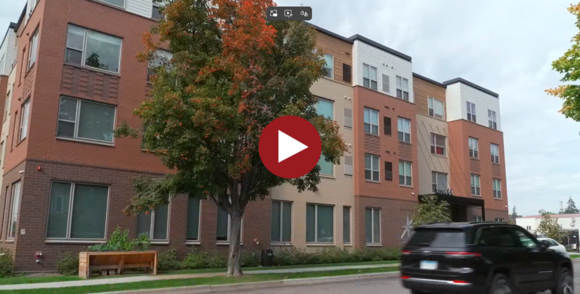 Clean up and redevelopment successes
- Juxtaposition Arts (JXTA) in the West Broadway Cultural District in north Minneapolis gives young urban artists a place to find community and pathways to self-sufficiency in the creative industry.
- A Rogers Main Street revitalization project will soon provide affordable housing for seniors, a senior center, outdoor plaza, and commercial space.
- Mino-Bimaadiziwin, which means “living the good life” in Ojibwe, brings affordable housing and much-needed services, including a childcare center, wellness clinic, and office space for the Red Lake Band embassy, to the heart of the Minneapolis Native American Cultural Corridor
- Vista 44 in downtown Hopkins provides safe, affordable homes to people and families who have experienced homelessness, have disabilities, or live with serious mental illness.
Continuing ERF's proven track record of success
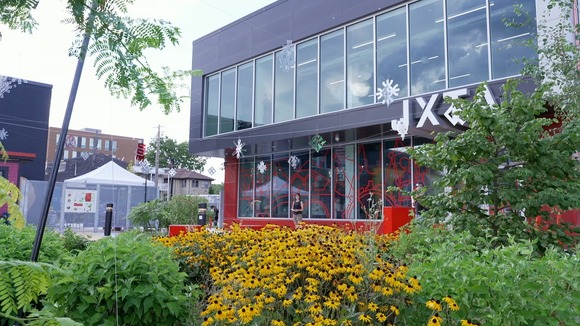 Juxtaposition Arts
ERF projects spur economic growth and neighborhood revitalization. When comparing property values before and after assessment and cleanup, completed ERF-aided projects have increased property values by more than $3.4 billion. ERF projects have also created or retained more than 23,000 housing units and created or retained 25,000 jobs.
Our work is not done. There are more sites that still need to be cleaned up. The county is active at the Minnesota Legislature this session to seek an extension for the modest mortgage and registry deed tax (SF 3589/HF3420) that funds this important work.
Hennepin County’s forestry program focuses on protecting the county’s tree canopy to increase the benefits that trees provide, including improving our air and water and making our communities healthier.
Hennepin County has a climate-action goal of planting 1 million trees by 2030, and we’re over halfway there! By the end of 2025, over 500,000 trees have been planted by county foresters, cities, park districts, partners, and residents.
Key accomplishments from our forestry work in 2025 include:
- Planted about 1,900 trees and shrubs grown in our gravel bed nursery throughout the county and nearly 20,000 seedlings.
- Removed 590 diseased or infested trees on private property of homeowners with low incomes and planted 217 trees on private property where trees had been removed.
- Gave over 10,000 seedlings away to residents.
- Awarded 26 Healthy Tree Canopy grants totaling $500,000 to 9 cities, 2 affordable housing providers, and 15 schools and nonprofits.
- Planted 86 different species of trees to maximize tree canopy diversity and resilience.
Learn more in the 2025 community forestry annual report.
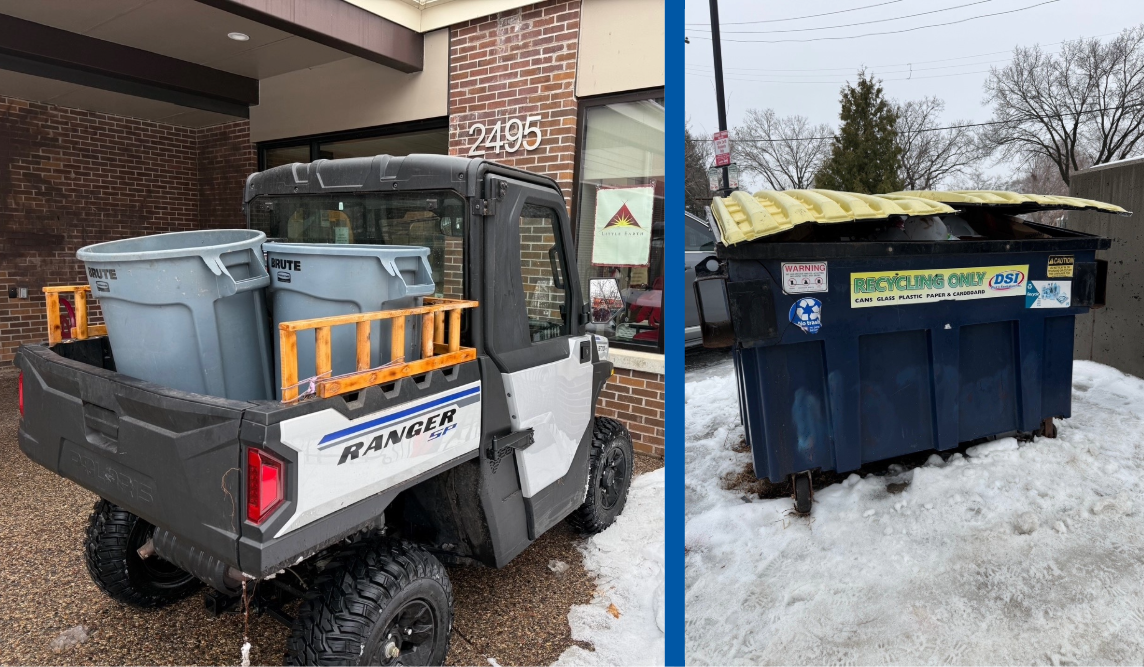 With funds from a Hennepin County Community Zero Waste grant, the Little Earth Residents’ Association purchased a utility vehicle to make recycling collection easier across its 212-home, 9.4-acre campus. Before this initiative, recycling participation was minimal, with a single dumpster rarely used. Today, that dumpster fills twice a week. Property management has increased pickup service and are considering swapping some trash dumpsters for recycling dumpsters.
Expanding recycling with supplies, guides, and improved service
The zero-waste team launched its efforts by visiting townhomes, handing out recycling totes and easy-to-follow guides, and helping with weekly pickups using the new vehicle. Next, the team will expand to apartment complexes.
The association is partnering with property management to plan for more recycling service as community interest grows, and the zero-waste initiative is now seen as one of Little Earth’s most impactful community-driven projects in recent years.
About the Community Zero Waste Grants
Hennepin County awarded six Community Zero Waste Grants totaling $450,000 in 2025. The grants expand funding and support for community-centric solutions in order to make progress toward a zero-waste future, eliminate racial disparities, and advance equity in the solid waste management system.
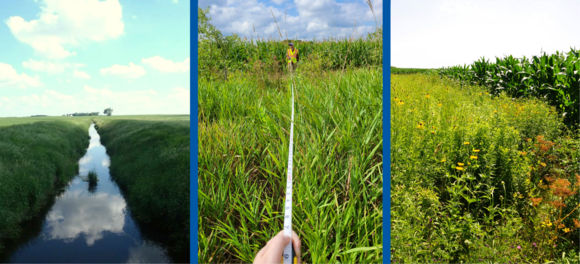 Natural buffers: protecting waterways from runoff, proving habitat for pollinators
It’s been a little over 10 years since the Minnesota Buffer Law was enacted. The Buffer Law requires landowners to maintain perennial vegetative buffers along public water bodies and ditches in order to protect water quality.
As part of our role as the Soil and Water Conservation District, Hennepin County works with farmers and landowners to ensure compliance with buffer law requirements.
Our farmers and landowners have done an amazing job, achieving a compliance rate of over 99%. We are thankful to work with such dedicated people and applaud their efforts to keep the waters of the county clean!
Have questions or a potential project on your buffer?
Hennepin County staff are always looking to support farmers and landowners that have properties subject to the buffer law. Contact Roz Davis, conservation specialist at rozalyn.davis@hennepin.us or 952-262-0397
Waste prevention grants for businesses and nonprofit organizations
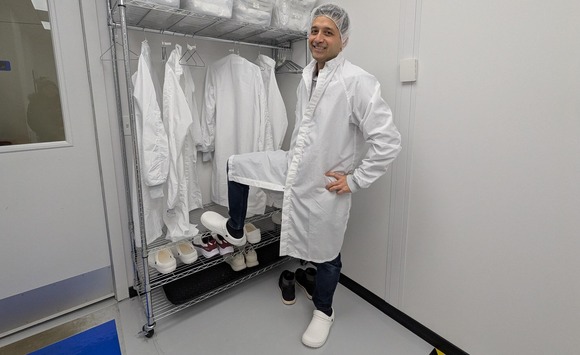 Prevailing Medical in Plymouth received a waste prevention grant. One of its projects was replacing disposable shoe covers with reusable slip-on shoes.
Looking to reduce waste at a business, nonprofit organization, or reuse retailer? Business waste prevention grants are available for projects that focus on reuse and repair, replacing disposables with reusables, preventing wasted food, and conducting research and development to prevent waste.
Applications are due by Tuesday, April 7. Grant flyer with overview of the grant program (PDF, 1MB)
Virtual information meeting Thursday, March 5 from 2 to 3 p.m.
Attend a virtual information meeting to hear about project ideas and understand the application process. A recording and slides will be available after the meeting. Register to attend.
Grants to establish organics recycling drop-off sites
Funding is available to businesses, cities, multifamily properties, nonprofit organizations, and institutions in Hennepin County to establish organics recycling drop-off sites. Priority will be given to drop-off sites that increase access to organics recycling for residents in apartments and condos.
Up to $15,000 is available for each drop-off site. Funding can be used for hauling and disposal costs, construction, dumpsters or carts, and promotions and educational materials.
How to apply
Applications are due by 3 p.m. on Tuesday, April 7. A virtual information session will be held on Friday, March 6 at 10 a.m.
Review the and find application materials on the Hennepin County supplier portal.
For more information and to get a link to the information session, contact Katie Stelzner at katie.stelzner@hennepin.us.
Green Partners environmental education and community engagement program
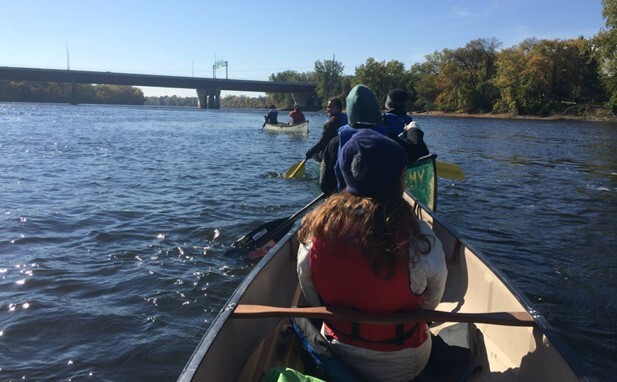 Become a Green Partner! Funding is available to organizations to actively educate, engage, and motivate residents to become environmental stewards and make positive behavior changes. Eligible organizations include schools and school districts, early childhood family education programs, nonprofit organizations, community groups, congregations, and park districts.
Types of projects and application due dates
Three types of projects are awarded:
-
Youth Environmental Leadership, applications due March 11: Projects encourage environmental leadership and/or exposure to green jobs for young people in high school up to age 24.
-
Youth Environmental Education, applications due March 18: Projects engage youth in elementary and middle school in environmental education and outdoor nature experiences.
-
Environmental Action, applications due March 25: Projects focus on motivating adults to make one or two environmental changes at home and on-the-go.
Swap-It events
Bring gently used items you no longer need. Take home stuff you can use. Swap it–for free!
Swap-it events are a fun, sustainable way to reduce waste, share resources, build community, and support local reuse efforts. You don’t have to bring anything to take something home. Everyone is welcome to participate.
Get details about accepted/not accepted items and what to expect: hennepin.us/swap-it
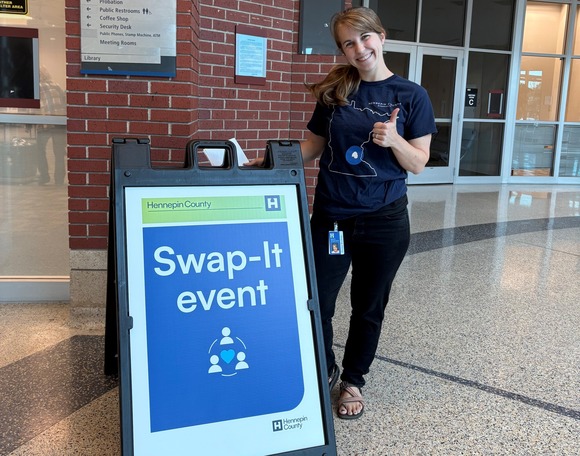 Upcoming Swap-It events
All events are held from noon to 2:30 p.m. Early drop-off only beings at 11 a.m. (no swapping); final items accepted at 2 p.m.
-
Kitchen gadgets: Saturday, February 28 at Ridgedale Library, Robert H. Rohlf Room
-
Toys: Saturday, March 21 at Edina Fire Station 2
-
Outdoor gear: Saturday, May 2 at Rockford Road Library
Volunteer at a Swap-It event
Interested in helping out or know someone who’d like to get involved? Email swapit@reusemn.org or call 612-314-6283.
Farm and County Coffee Hour series
 Talk with Hennepin County staff about financial and technical assistance available for conservation projects on rural and agricultural properties.
Learn how Hennepin County’s Cost Share for Conservation program can help offset the costs of addressing erosion, improving soil health, and installing conservation practices, and sign up for the free soil health testing program.
Coffee hours will be held at Blackwater Coffee in Maple Plain on:
- Wednesday, March 11 from 7:30 to 10:30 a.m.
- Thursday, March 19 from noon to 3 p.m.
- Wednesday, March 25 from noon to 3 p.m.
If you can’t make it, reach out to conservation staff directly: Roz Davis, rozalyn.davis@hennepin.us or 952-262-0397 or Kevin Ellis, kevin.ellis@hennepin.us or 612-382-3956.
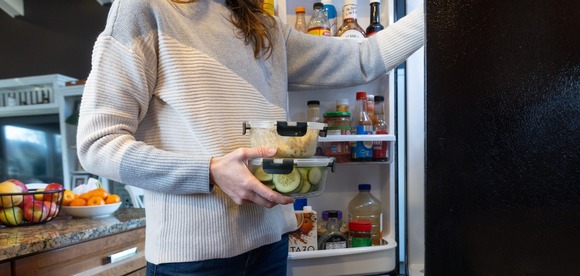 This month, nearly 1,000 people participated in the online Plastic-Free Challenge and started forming plastic-free habits. Every small change adds up. Even after the challenge is over, you can still explore the actions on the website to learn how to ditch plastic in your own life!
One of the easiest ways to reduce plastic waste is by reusing. Reusable items save resources, cut costs, and often last for years. Here are a few practical swaps to try:
-
Bring your own coffee cup. Love your daily coffee? Skip the disposable plastic cup and bring a reusable metal one. Most coffee shops will fill it, and some even offer discounts. Keep it with your keys or in your bag so you don’t forget it.
-
Choose loose produce. Instead of prepackaged fruits and veggies, opt for loose items and bring reusable produce bags.
-
Pack waste-free lunches. Replace single-use plastic baggies with glass containers or silicone bags. If you pack lunch five days a week, that’s over 20 plastic bags saved each month!
-
Skip the straw. Simply say, “No straw, please.” If you prefer straws, carry a reusable one. Collapsible options fit on your keychain.
-
Use a reusable water bottle. Ditch disposable bottles. A durable metal bottle keeps water cold and saves hundreds of plastic bottles a year.
|




