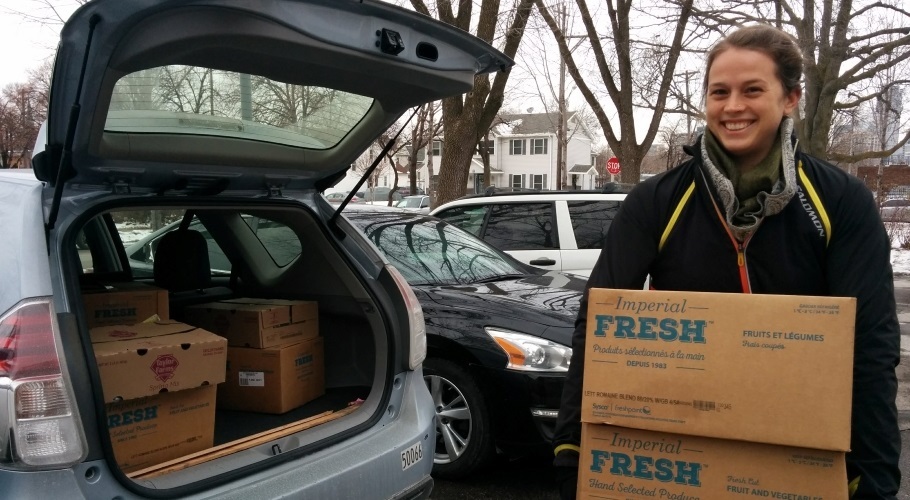
 The start of winter holidays is a time of reflection, gratitude, and lots of food. Nearly 40 percent of food in the U.S. is wasted each year. Uneaten food is a waste of all the resources that goes into making it and the money we spend on it. The amount of food wasted often increases during this season of gatherings and travel, and while delicious dishes might be plentiful for some, they can be harder to get for others.
Support food rescue and sharing
Hennepin County is increasing the collection and redistribution of surplus food to people in need by providing food recovery grants – $540,000 in funding was awarded to 12 emergency food organizations in 2025. The county awarded an additional $60,000 in November to three organizations to support food rescue as part of a broader response to help food banks, food shelves, and meal programs meet unprecedented demand.
If you are looking for ways to get surplus food to neighbors and give back to your community, see our guide to rescuing and sharing food. The guide offers specific ways to volunteer to connect food to people, support local food shelves, offer extra food to neighbors, and take action at work.
Waste less food with Fridge Check Fridays
Get tips for how you can waste less food and save money at home by signing up for Fridge Check Fridays. Upcoming tips include making the most of your leftovers, fitting holiday events into your meal plan, and understanding grocery deals.
 Whether you face challenges in caring for lawn, garden, and natural spaces or are an avid tree caretaker, your perspective matters. Take our short survey to share what you love about trees, what barriers you’ve run into, and how we can work together to grow a greener community that works for everyone.
The county has a goal of planting 1 million trees by 2030, and we need everyone’s help to reach that goal. Information gathered in this survey will inform educational materials and programs we offer to help residents plant and care for trees.
Biological monitoring provides insights into ecosystem health
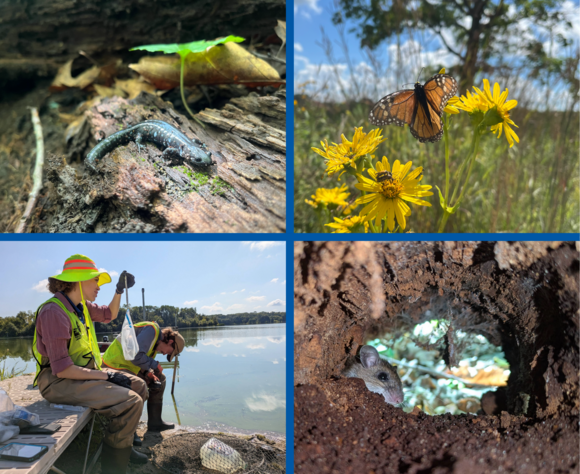 Hennepin County has an abundance of natural resources that serve as the foundation for a high quality of life. Hennepin County conservation specialists study the plants and animals in the county to further our understanding of these ecosystems. By monitoring how plant and animal communities change over time, we can measure our successes and tailor our habitat protection and restoration efforts to create healthier ecosystems that are home to a diversity of wildlife and resilient to climate change.
Since surveying began in 2022, county biologists have documented:
- 360 different plant species
- 290 different animal species, including a broad diversity of amphibians, birds, bumblebees, butterflies, dragonflies, fish, mammals, and reptiles
- Rare or threatened species, including 39 Minnesota species of greatest conservation need, 7 state threatened and endangered species, and 2 federally endangered species, including the rusty-patched bumblebee.
Support wildlife in your yard
Help wildlife at home by providing food and habitat. Leave natural habitat features like dead trees and brush piles intact. Learn how to support backyard bird populations (PDF), provide habitat for birds (PDF), build and maintain a bat house (PDF), and create habitat for pollinators (PDF). These and other print materials covering a wide variety of environmental topics are available to order for free.
Record and share your nature observations
There are many apps designed to help track species sightings and contribute to biological monitoring databases.
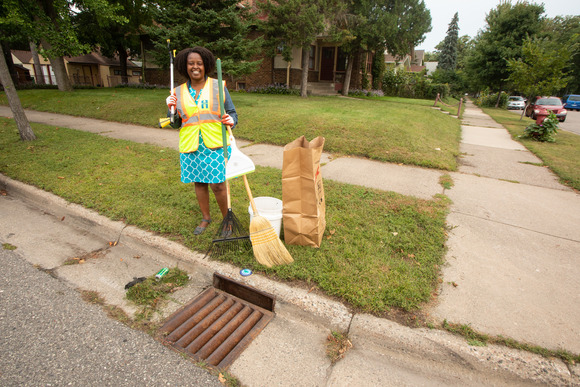 Volunteers with the Adopt-a-Drain program have reached a remarkable milestone: more than 1 million pounds of debris, leaves, and sediment have been cleared from storm drains and kept out of lakes, rivers, and streams across the United States since the program began in 2015.
The program launched in Minneapolis, and the city continues to operate the most successful Adopt-a-Drain program in the nation. In all of Hennepin County, more than 7,000 residents have adopted approximately 13,300 drains. Hennepin County residents account for 45% of program participation nationwide!
In 2024, Hennepin County drain adopters cleared more than 62,000 pounds of debris, and we are on track to do even better in 2025. The amount cleaned up so far this year (58,000 pounds) weighs more than a city bus full of passengers!
Getting involved is simple and only takes a few minutes per month. Learn how to keep your neighborhood clean, protect local waterways, and adopt a drain near you.
We recently awarded three grants totaling $26,100 to the cities of Bloomington, Hopkins, and Robbinsdale to establish organics recycling drop-off sites for residents. The drop-off site in Bloomington will be the city’s third, while the sites in Hopkins and Robbinsdale will be the first in each city. The new organics drop-off sites will divert compostable waste from the trash and increase access to organics recycling, especially for residents who live in multifamily units not served by city programs.
About one-third of our trash is organic materials, including food, food-soiled paper, and certified compostable products, that could be composted. Organics recycling is the best opportunity to reduce our trash and put it to better use. Organics recycling pickup services and more than 50 organics recycling drop-off sites are available throughout the county. Learn more about organics recycling.
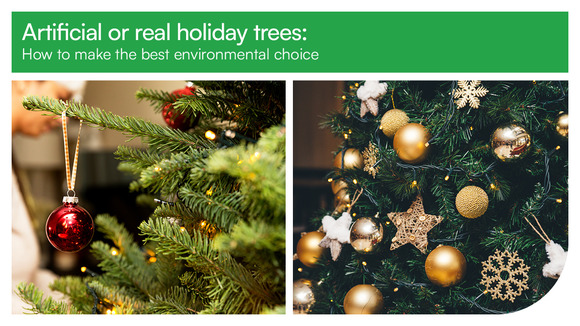 What type of tree to buy – real or artificial – is a question that comes up every holiday season. This isn’t surprising because there are pros and cons to each and ways to make either decision greener.
Artificial trees
Minimize the impact of artificial trees by finding a used tree and using it for as many years as possible. Consider purchasing your tree from a thrift store or community marketplace. If you already have an artificial tree, keep using it! If stringing your tree with lights, use LED lights.
Real trees
Real trees generally have a lower environmental impact than artificial trees, but that’s depends on where they were grown and how they're disposed. Purchase a locally grown tree (find options on the Minnesota Grown Directory). Use LED lights. Don't spray on any flocking (fake snow) because it is not compostable. At the end of the season, remove all decorations and check with your city, garbage hauler, or yard waste drop-off site for disposal options. Remove all decorations prior to disposal.
|





