Plan establishes target to cut the amount of edible food discarded in half
 Hennepin County’s Wasted Food Prevention Plan (PDF) establishes a target to cut the amount of edible food discarded in half and provides a roadmap to reach this target. The plan includes 44 strategies that will have an impact on reducing wasted food overall as well as in residential, commercial, schools, and food rescue sectors.
About 40% of food is wasted somewhere along the supply chain in the U.S. Wasted food has both upstream and downstream impacts, from the energy used to grow, transport, process, and refrigerate it to the methane generated when food waste is landfilled.
Preventing wasted food is a priority for the county and is critical to reaching our climate-action, zero-waste, and disparity-reduction goals. The plan is the first of its kind in the country because it focuses solely on preventing wasted food rather than relying on composting to divert food from the trash.
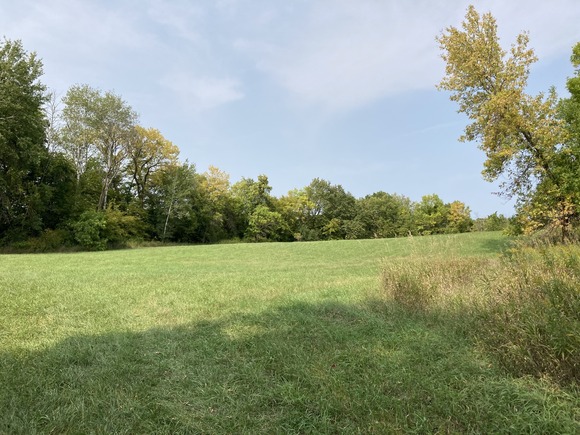 Three conservation easements totaling nearly 88 acres were established in April in Minnetrista, permanently protecting a diverse and ecologically rich landscape. Owned by a single family with deep ties to the land, these properties reflect the landowner’s enduring commitment to nature, wildlife, and protection of the region’s natural resources.
The Big Woods Edge easements, co-held by Hennepin County and the Minnesota Land Trust, protect a variety of important habitat types. Together, the properties encompass 25 acres of grassland, 39 acres of forest, and 19 acres of wetland. They also protect more than 4,000 feet of pond and stream shoreline. The stream eventually joins Painters Creek and flows into Lake Minnetonka.
The Gillette family treasures the abundance of wildlife that calls their land home, including several rare and sensitive native species. From big brown bats to sedge wrens in the grasslands, their properties are alive with natural beauty and ecological significance.
For the landowners, conservation is about active stewardship, and the family plans to expand their restoration work by controlling invasive buckthorn and restoring their forest.
Learn more about the county’s efforts to protect and restore habitat and opportunities for establishing conservation easements.
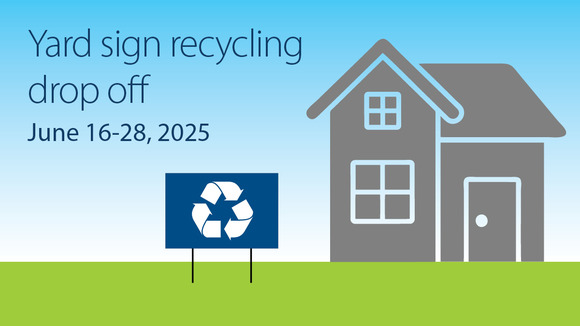 You may have yard signs to get rid of after the spring graduation and sports season wraps up. Check first with your school or organization to see if they are collecting yard signs for reuse.
If the yard sign can’t be reused, yard sign recycling drop-off containers will be available at four locations from June 16 to 28:
- Hennepin County drop-off facilities in Bloomington (1400 West 96th Street) and Brooklyn Park (8100 Jefferson Highway), open Tuesday to Saturday from 9 a.m. to 5 p.m., proof of residency, such as a driver’s license or utility bill, required
- Minneapolis North Transfer Station (2710 Pacific Street North) Open 24 hours a day, 7 days a week, collection container will be outside of the gate
- Minnetonka/Hopkins Recycling Center (11522 Minnetonka Blvd.), open 24 hours a day, 7 days a week
The signs will be brought to Choice Plastics, where they will be turned into pellets and then recycled into new material. Metal stakes will be collected separately at the drop-off locations for scrap metal recycling.
Find more information and guidelines on the Green Disposal Guide.
2024 accomplishments
 Hennepin County receives funding from the State of Minnesota solely to prevent the introduction or limit the spread of aquatic invasive species. Read details of all AIS prevention efforts in the 2024 AIS Accomplishments report (PDF).
In 2024, Hennepin County leveraged this funding in a variety of ways, including:
- More than 8,000 inspections funded by Hennepin County were conducted.
- 1,064 people on 24 lakes and the Mississippi River have taken the pledge to prevent the spread of aquatic invasive species through the county’s Lake Pledge.
- 21 people participated in aquatic invasive species detector classes.
Updating the AIS prevention aid guidelines
Hennepin County is updating its aquatic invasive species prevention aid guidelines to be used from 2026 to 2030. These guidelines help direct how the county spends state funding to work on preventing the introduction or limiting the spread of aquatic invasive species.
To inform the development of the new guidelines, the county is engaging with government partners, lake associations, nonprofit organizations, volunteers, residents and youth who use water resources. The first part of this public involvement process included a survey and small group discussions.
Learn more and stay informed
Details on survey results and information on the process can be found at beheardhennepin.org/aquatic-invasives-species-guidelines.
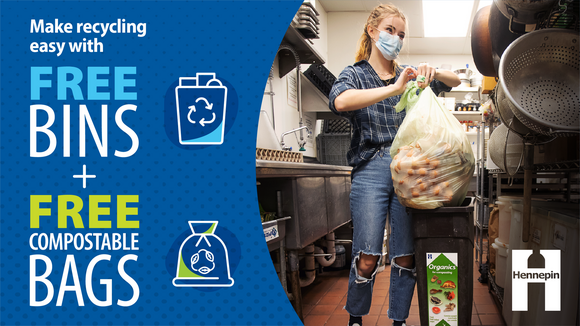 Hennepin County is offering free resources, technical assistance and support to small businesses and nonprofit organizations to start and/or enhance their recycling and organic waste recycling programs. Select up to $3,000 worth of containers and compostable bags from the county's product list to help you get started. Check out the grant guidelines (PDF) and flyer (PDF) for details on container and bag options.
Start the application process now
Applications will be accepted on an ongoing basis until Friday, November 14 or until funding is exhausted, whichever occurs first. Visit the business recycling web page to learn more and begin the process to get your bins and compostable bags.
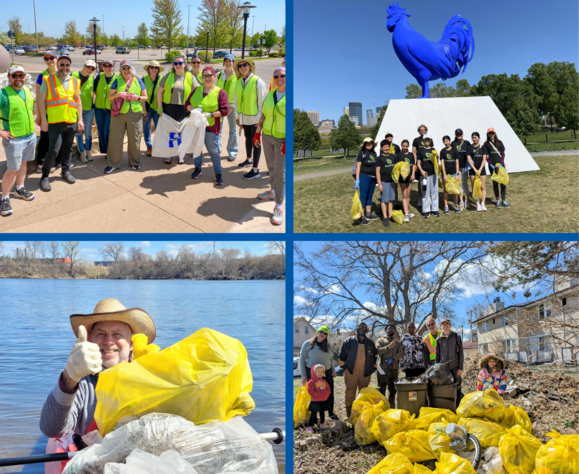 Hennepin County was challenged by our downstream neighbor, Goodhue County, to participate in the Mighty Mississippi Cleanup Challenge between April 15 and May 15, and we wholeheartedly accepted! We encouraged residents to join a cleanup event, which we listed on our Earth Day web page, organize their own cleanup, or sign up to Adopt-a-Drain.
About 50 cleanups and hundreds of drain cleanouts happened throughout the county during the challenge. We had results reported from 16 groups, including cities, staff groups, neighborhood groups, and nonprofit organizations. The groups that shared data and photos had about 2,800 participants and picked up over 20,500 pounds plus 110 bags of litter!
See our 2025 Mighty Mississippi Cleanup Challenge results and photos (PDF).
Thanks to everyone who contributed to keeping our lakes and rivers clean and making Hennepin County a great place to live!
June 2 is Heat Action Day, which raises awareness about the rising risks associated with extreme heat.
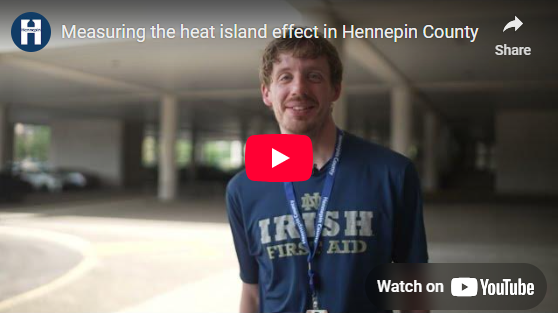
The county is committed to understanding and addressing the impacts of extreme heat. Last summer the county completed an urban heat island mapping study with 200 volunteer community scientists to better understand the uneven distribution of heat and related impacts. Watch our urban heat island study video (YouTube) to learn more about how the study worked and how Hennepin County will use the data and key observations.
 The county was recently awarded a Climate Resiliency Planning Grant from the Minnesota Pollution Control Agency to create a heat resiliency plan for Hennepin County. The plan will identify both short- and long-term strategies to make our communities and building and natural environments resilient to extreme heat.
As we enter the summer season, be sure you are prepared to stay safe in the heat and humidity. Read our climate action article for tips on learning about and preparing for local conditions, staying safe outdoors, finding a place to stay cool, and recognizing the signs of heat-related illness.
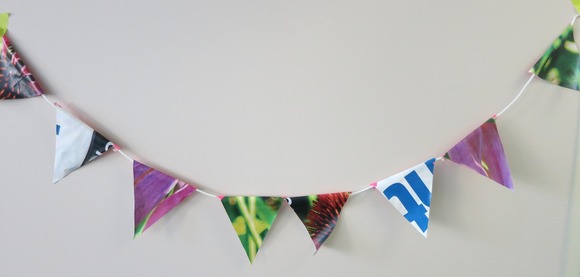 Graduation party season is here. Here are some easy tips to make your party green while allowing you to focus on what deserves the most attention — your graduate. Congratulations!
-
Send e-vites instead of paper invitations. If you choose paper invitations, check with the vendor for recycled paper options.
-
Avoid single-use items, like balloons, plastic utensils, disposable tablecloths, and other waste that is difficult to recycle.
-
Shop for used dishes and decorations. Supplement what you already have and get ideas on where to shop, both locally and online, with our Choose to Reuse Guide for Great Thrifting.
-
Create a waste sorting area with clearly labeled bins for guests to sort their waste. Includes bins and signs for reusable dishes; recycling for cans, bottles, and cups; organics recycling for food scraps and BPI-certified compostable products like utensil and cups; and trash.
-
Send leftovers home with guests. When the party wraps, have reusable containers ready so you can send leftovers home with guests. Consider saving and washing deli and takeout containers that don’t need to be returned.
For more in-depth planning tips, check out graduation party green tips on Choose to Reuse. And remember to apply these tips to any party, picnic, or gathering you are hosting!
|





