|
ABOUT GREEN NOTES
Green Notes covers environmental news, programs and events from Hennepin County.
Please take a few moments to read our stories, and share your feedback and ideas for protecting the environment. School Recycling Assistance Program
Navigational buoys placed on area lakes
Schools close the organics composting loop
Organics recycling a success at MSP airport
Minnesota Twins expand recycling programs
Hennepin licenses businesses that generate hazardous waste
Solid Waste Management Master Plan approved
In the News:
- 600 pounds of medicines shipped for disposal
- Asphalt shingle recycling
- Green cleaning tips
Events: HHW collection events
Green Tip: Protect water quality
Please forward this email to interested individuals and encourage them to sign up.
|
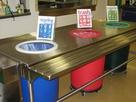
Funding available to schools for recycling and organics programs
|
Hennepin County has a new funding opportunity for all public and non-public, K – 12 schools in the county to implement or improve recycling and organics recycling programs.
|
|
 |
Navigational and safety buoys placed on area lakes
 |
|
From March 28 to April 4, Environmental Services staff installed more than 500 buoys on Lake Minnetonka, Lake Sarah and Lake Independence. |
With the unseasonably warm spring, buoy installation was completed about three weeks earlier than usual. The buoys are installed as navigational aids to boaters.
The current water levels on Lake Minnetonka are low for this time of year – currently at levels typically observed in the fall. To stay safe this summer, boaters are encouraged to use caution and be familiar with water levels and boat depth requirements.
Hennepin County has performed lake improvement work such as dredging, riprapping, and placing and maintaining navigational buoys as part of the Lake Improvement Program since the late 1800s. The county also maintains two public accesses and 19 fishing sites.
Maps of Lake Minnetonka, which include boating regulations and safety information, are available at the Sheriff’s Water Patrol in Spring Park, and county facilities, marinas and bait shops near the lake. Lake maps can also be ordered online.
Schools close the recycling loop by using compost from their own organics recycling programs
Throughout May, 16 schools that participate in Hennepin County’s organics recycling program will ‘close the loop’ by planting gardens with compost made from kitchen and cafeteria waste collected from their own organics-recycling programs.
|
|
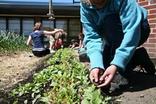 |
The compost was made from food scraps and non-recyclable papers that were collected in the fall and processed by The Mulch Store (Specialized Environmental Technologies Inc.), which donated the compost. By using the compost in gardens, students will learn first-hand how their organics recycling efforts can replenish soils with vital nutrients. The schools receiving compost are:
- Bloomington: Hillcrest Community School
- Brooklyn Center: Brooklyn Center School District
- Champlin: Champlin Brooklyn Park Academy
- Edina: Highlands Elementary and Southview Middle School
- Golden Valley: Meadowbrook Elementary
- Long Lake: Orono School District
- Minneapolis: Burroughs Community School, Carondolet Catholic School, Northrup Urban Environmental School and St. Charles Borromeo
- Minnetonka: Gatewood Elementary, Hopkins North Jr. High and Minnetonka Middle School East
- Richfield: Richfield Middle School
- Plymouth: Wayzata Schools
Organics recycling program a success at the Minneapolis–St. Paul Airport
About 24 restaurants and coffee shops at the Minneapolis-St. Paul Airport participate in an organics recycling program, in which food waste and food-soiled paper products are collected from kitchen and prep areas and recycled into compost. This program has expanded greatly from a pilot program implemented in 2010 with three restaurants at the airport.
About 10 tons of organic materials are diverted monthly from the airport’s waste stream. To close the organics recycling loop, compost – a nutrient-rich soil amendment – is used in projects on the airport grounds.
The Metropolitan Airports Commission received a $40,000 Waste Abatement Incentive Fund grant and technical assistance from Hennepin County to implement the airport’s organics recycling program.
Hennepin County works with the Minnesota Twins to improve and expand recycling programs
|
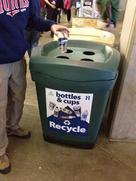
For the 2012 season, the Minnesota Twins are adding plastic cups to the recycling collected throughout Target Field. Plastic and metal bottles have been collected stadium-wide for recycling since Target Field opened in 2010.
|
|
 |
The Twins also expanded their organics recycling program. Organic waste, which includes food waste and food-soiled paper products, is being collected in the suites. Organic waste has been collected for recycling in the kitchens and other non-public spaces since 2010.
Hennepin County licenses and educates businesses that generate hazardous waste to protect the environment
When you think of businesses that generate hazardous waste, your dentist, mechanic or neighborhood pharmacy might not be the first businesses that come to mind. But these are just a few examples of the types of businesses that make up the 5,000 licensed hazardous waste generators in Hennepin County. Others examples include dry cleaners, auto service shops, printers, department stores and health care clinics.
Common hazardous wastes produced by these businesses include oil-based paints, cleaning solvents, used oil, car batteries, pharmaceuticals and fluorescent lamps. Through regular inspections (more than 1,000 in 2011), education and collaboration with licensed businesses, county staff ensure compliance with regulations that protect the environment for future generations.
Solid Waste Management Master Plan approved
The Solid Waste Management Master Plan was approved by the county board on April 10. The plan outlines the county’s strategies for increasing recycling and reducing landfilling through 2030. View the approved plan at www.hennepin.us/solidwasteplanning. In the News
More than 600 pounds of medicines collected and shipped for disposal in first month of drop box program
|
Wonder what happens to all the medicines collected in drop boxes? Since March 5, more than 600 pounds of medicines have been collected from the drop boxes that were recently installed at Hennepin County Sheriff’s Office locations in Brooklyn Park, downtown Minneapolis and Spring Park.
|
|
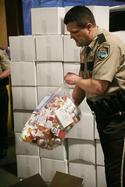 |
On April 18, the first shipment of those medicines was taken to be incinerated at a facility outside of the metro area that is permitted to accept medicines for destruction. Incineration is currently the best available technology and the most environmentally friendly method to dispose of medicines. Flushing medicines into our waste-water system (which is not equipped to remove pollutants such as hormones) or throwing them in the trash, where they can end up in landfills, can pollute water, harm wildlife and end up in our drinking water supplies. See more on WCCO and MinnPost.
Recycled shingles used in road construction projects
Old asphalt shingles have increasingly been recycled and shredded to be mixed with virgin asphalt for use in road resurfacing projects. Using asphalt with recycled shingles in the mix is cheaper than using conventional mixes of asphalt.
Producing asphalt mix containing shingles also uses less energy and creates fewer greenhouse gas emissions compared with asphalt mixes using no recycled materials, according to research conducted by the University of Minnesota’s Center for Urban and Regional Affairs (CURA). The CURA study found that all the available tear-off shingles in the Twin Cities, which represents about one-fifth of construction and demolition waste produced in the metro area, could be recycled for use in asphalt pavement projects in the region. Read more about this research in the CURA Report.
Green cleaning tips
When deciding which cleaning product to use in your home, you can take simple steps to reduce exposure to toxic chemicals, protect the environment and keep you and your family safe. Steps you can take include learning to read labels, buying the least toxic products, making your own non-toxic cleaners, and properly disposing of hazardous products. Learn more green cleaning tips on Kare11. Events
Household hazardous waste collection events
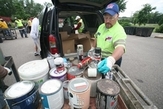
Hennepin County is providing residents with convenient, local disposal options for their household hazardous wastes at upcoming collection events. |
|
 |
Collection events are held Thursday through Saturday, 9 a.m. to 4 p.m. on the following dates and locations:
- May 3 – 5, City of Independence City Hall parking lot, 1920 County Road 90 in Independence
- May 17 – 19, City of Minnetonka Public Works Department, 11522 Minnetonka Blvd. in Minnetonka
- June 7 – 9, City of St. Louis Park, parking lot at Hwy 7 & Louisiana Ave. S. in St. Louis Park
Materials accepted include household, lawn and garden products, electronics, mercury-containing items and auto wastes. Visit www.hennepin.us/collectionevents for a full list of materials accepted and maps to the event sites.
Green Tip
Take actions when caring for your lawn to protect water quality
 |
|
When it rains, the stormwater that runs off driveways, lawns, houses and parking lots can carry pollutants like oil, paint and chemicals down storm sewers and into nearby lakes, streams and rivers.
|
By taking the following easy, no-cost or low-cost steps, you can have a big impact on reducing runoff and protecting our water resources and wildlife habitat.
-
Use your runoff – Direct downspouts onto your lawn or garden or into a rain barrel.
-
Keep grass clippings and leaves out of the street – Leave them on your lawn, compost them, or bag them up. Grass clippings and leaves left in the street end up in the storm sewer, where they are carried to nearby lakes and streams. The phosphorus and other nutrients in yard waste can cause excess algae growth that can negatively impact other plants and wildlife and can be unsafe for pets. Visit www.hennepin.us/yardwaste to find yard waste sites and other disposal options. Remember, if you bag your yard waste, you must use compostable bags.
-
Scoop the poop – Pet waste left on the ground can be washed into lakes and rivers with rainwater and runoff. Pet waste contains bacteria that can cause illness in humans and animals.
-
Use chemicals wisely – Read and follow the label instructions when using herbicides and pesticides. If you can, consider using alternative or natural remedies to control weeds and pests, or remove the problem by hand.
-
Fertilize smart – Sweep up any fertilizer that spills onto hard surfaces.
|