|
April 10, 2025
In this issue
Earth Day serves as a powerful reminder of our responsibility to protect the planet. One of the most impactful ways businesses can contribute is by reducing food waste. In Minnesota nearly forty percent of food goes to waste, contributing to environmental degradation through excess landfill use and methane emissions. By adopting sustainable practices, businesses can cut costs, enhance their corporate social responsibility and make a lasting positive impact on the environment. Consider the following to reduce food waste!
Conduct a food waste audit
Understanding the scale and sources of food waste is the first step toward reducing it. Businesses should conduct regular audits to track food loss and identify patterns. This data can inform purchasing decisions, menu planning and portion control strategies to minimize excess waste.
Improve inventory management
Using technology to track inventory can help businesses prevent over-purchasing and food spoilage. First-in, first-out (FIFO) stock rotation ensures that older products are used before newer ones, reducing the risk of expired goods being discarded.
Optimize portion sizes and menu planning
Restaurants and catering businesses can adjust portion sizes based on customer demand and feedback. Offering flexible portion options and designing menus with lower-waste ingredients can significantly cut down on uneaten food.
Donate surplus food
Instead of throwing away excess food, businesses can partner with local food banks and shelters to donate edible leftovers. The Minnesota Technical Assistance Program offers options for waste producers including assistance with making a Food to Hog solution with a local farmer.
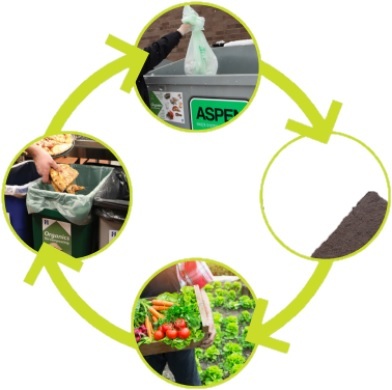
Implement composting
For food scraps and non-donatable waste, composting is an excellent alternative to landfill disposal. Hennepin County restaurants that produce more than a ton of garbage or eight cubic yards of trash per week are required to utilize food waste recycling. More information can be found here: Hennepin County Food Waste Recycling Requirements for Businesses
This Earth Day, businesses have the opportunity to make a real difference by committing to food waste reduction strategies. Not only does this benefit the environment, but it also improves operational efficiency and enhances brand reputation. By taking proactive steps today, businesses can contribute to a more sustainable and waste-conscious future for generations to come.
Have you ever noticed the asterisk next to the burger you’re about to order with a statement that ordering undercooked foods could increase your chances of illness? This is a required statement not intended to deter but to inform. Undercooked and raw foods have a greater risk of containing pathogens which are normally destroyed in the cooking process. This reminder places the decision in the hands of the person ordering.
Serving items raw or undercooked is allowed at most food operations. However, there are some operations serving specific populations known to have weakened or forming immune systems that must steer clear from offering items known to have an increased risk for causing foodborne illness.
This includes health care facilities, preschools and daycares. Operations serving food to a population more likely to become seriously ill if they contract a pathogen must take extra precautions to keep their customers safe.
Places that specialize in serving highly susceptible populations must not serve:
- raw or undercooked proteins
- unpasteurized juice
- raw seed sprouts
- unpasteurized eggs used as ingredients in items not cooked or undercooked
Operations serving highly susceptible populations must take extra care on their end to keep their customers safe. In addition to the menu items above, this includes increased emphasis on:
- Employee illness policy and keeping ill food handlers out of work while there is potential for them to spread their illness to others
- Frequent and proper handwashing
- Not using bare hands to handle items that won’t be cooked to a kill-step temperature prior to serving
- Limiting or excluding processes that are more likely to lead to the introduction of pathogens, such as
- Time used as a temperature control
- Re-serving food items previously offered for service
- Having a HACCP (Hazard Analysis Critical Control Points) plan for a process otherwise not approved under the food code
For more information, see the full list of requirements under the Minnesota Food Code: Minnesota Rules 2024, Chapter 4626
Definition in the Minnesota Food Code: “Highly susceptible population" means persons who are more likely than others in the general population to experience foodborne disease because they are immunocompromised, preschool-age children, or older adults and they are obtaining food at a facility that provides services such as custodial care, health care, or nutritional or socialization services.
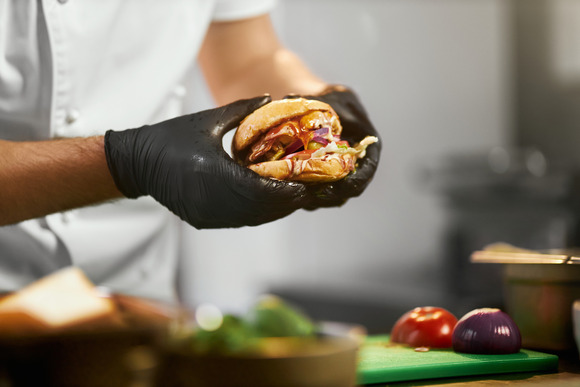
Gloves hold no magic protective power. The magic lies in using them correctly. Some employees might have the mindset that food is always safe while wearing gloves. It’s important to be vigilant of inappropriate glove use in your establishments and set clear hygiene policies to protect food.
Handling food or clean equipment with gloves should be viewed the same as bare hands. If the gloves are dirty whatever they touch becomes contaminated. Gloves need to be changed often, especially after any activity calling for a handwash. Gloves should only be used for one task.
Gloves are not magical enough to replace handwashing. Hands must always be washed between glove changes. Hand sanitizer cannot substitute for handwashing.
Gloves should always be changed at the following times:
- After using the toilet, restroom, taking out trash, blowing nose, touching your bare skin or hair
- After eating, drinking, smoking, using a cell phone or touch screen
- Upon entering the kitchen/food prep space or immediately before working with food and clean dishes
- After touching dirty equipment, tools or cleaning supplies
- After handling any raw animal proteins
- When switching between prep activities of different raw animal proteins
- When avoiding allergen cross-contamination
- After handling cash or credit cards
An important idea to keep in mind is that gloves are like any other utensil. You wouldn’t grab a door handle with tongs and then use them on food and shouldn’t do this with gloved hands either.
Medical anthropologist Sydney Ross Singer said in a blog post, “Hold the Bacteria: Made to Order Disease" that while gloves are meant to prevent food contamination through dirty hands, clean gloves are often dirtied when workers put them on with unclean hands.
“These restaurant workers think of their gloves as ways to keep their hands clean, instead of seeing the gloves as ways to keep the food clean,” Singer wrote.
“Sometimes I feel like people think that gloves are what we’d say are a ‘magic bullet’ — once you have gloves on everything is fine,” she said. “The gloves are only as clean as what’s on the outside of the gloves. Workers still have to use good hand hygiene. You definitely have to wash your hands.”
One of the top causes of foodborne illness is poor employee health and hygiene. Simply put, when food workers don’t wash their hands frequently or change their gloves when required, people can get sick.
- General environmental health
- Temporary food stand licensing
- Food license information, categories and fee schedule
- New construction or remodeling application
Radon information and test kits
hennepin.us/radon
Septic system requirements and procedures
hennepin.us/septic
Body art licensing information (tattooing and piercing)
hennepin.us/bodyart
Beaches in Hennepin County
hennepin.us/beaches
Public swimming pool regulations
hennepin.us/pools
About us
Food Digest is a quarterly newsletter written by inspectors from Hennepin
County Public Health Department, and designed to support and educate Hennepin County food facility owners and operators. Articles focus on food
safety and requirements from the Minnesota Food Code and Hennepin County food ordinance.
Location
479 Prairie Center Drive
Eden Prairie, MN 55344
8 a.m. to 4:30 p.m.
612-543-5200
hennepin.us/envhealth
|