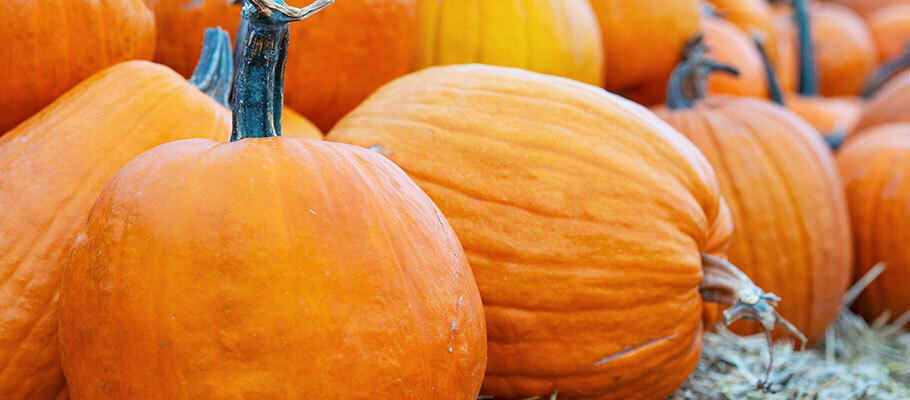
 When you clean up from Halloween, don’t let your pumpkins go to waste! Compost pumpkins by putting them in your organics recycling cart or bringing them to an organics recycling drop-off. Pumpkins are great fuel for compost, which is used to make soil and landscapes healthy. Before composting, remove all candles, candle wax, paint, and other decorations.
You can also check to see if your city is offering any special drop-off events. Here are a few upcoming events:
Pumpkin recycling at Brooklyn Park Central Park
November 1 through 10 at Central Park, 8440 Regent Avenue North, Brooklyn Park
This drop-off is only open to Brooklyn Center, Brooklyn Park, Crystal, and New Hope residents.
Richfield Pumpkin Smash
Saturday, November 2 from 10 a.m. to noon at Veterans Park, 6335 Portland Avenue, Richfield
This event is only open to Richfield residents.
Edina Pumpkin Smash and Bash
Saturday, November 2 from 10 a.m. to noon at Countryside Park, 6240 Tracy Avenue, Edina
This event is open to everyone!
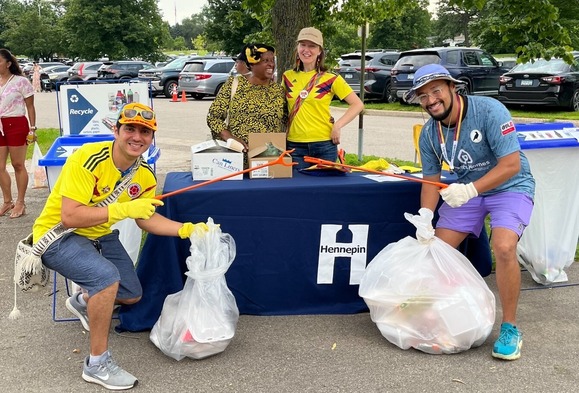 Community zero waste grants provide funding to community-based organizations to develop and lead waste prevention and diversion projects.
Examples of projects could include community-led swaps, repair clinics, special material collections, and recycling or organics drop-off sites that address waste programming gaps or culturally specific needs.
Eligible applicants include:
- Community-based organizations located in Hennepin County that are registered with the Minnesota Secretary of State.
- Non-profit organizations that demonstrate community partnership and aim to expand zero-waste capacities in underserved areas of Hennepin County.
Applicants may apply for up to $100,000 per year for up to 3 years to implement projects that advance the county’s zero-waste goals. There is no minimum grant award. Review the grant flyer (PDF) and the 2024 community zero waste grant guidelines (PDF) to learn more. Applications are due on Wednesday, December 4 at 2 p.m.
If you have questions about grants, contact the community zero waste grant coordinator, Didier Bolanos Gonzalez at Didier.BolanosGonzalez@hennepin.us or visit the community zero waste grant webpage.
When the clock is ticking on your food, try preserving it! Preservation stops or slows down harmful bacteria growth to make food last longer. Below are some different preservation options to try this harvest season.
For more on all of these methods, see resources on preserving and preparing food safely from the University of Minnesota Extension. Interested in more quick and easy tips to help you make the most of your groceries, waste less food, and save money? Sign up for Fridge Check Friday emails!
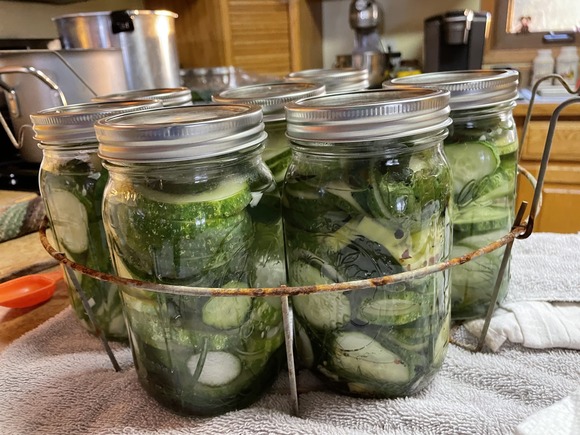 Pickling
 uses salt water or acid to preserve foods. Quick pickling uses vinegar as the acid, while fermented pickling uses natural bacteria that create acid. Pickling can be done with a variety of vegetables, including cucumbers, carrots, green beans, peppers, beets, onions and much more.
Canning
Canning, which is the process of sealing foods in jars, preserves many different foods. Water bath canning uses boiling water for heat and is good for high-acid foods like tomatoes, fruit jams and jellies, pickled foods, and salsas. Pressure canning uses pressure to reach high temps and is good for low-acid foods like meats, milk, and all veggies except tomatoes.
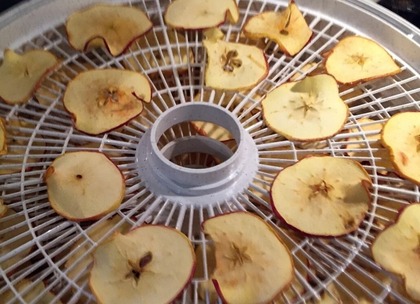
Drying
Drying is a simple process that relies on low heat, air flow, and time. Use an oven or food dehydrator to dry herbs, fruit, vegetables, meat, and prepared foods like chili.
Making jams and jellies
Turning fruit into jams and jellies is a delicious way to preserve the summer bounty. Jams and jellies can last up to 3 weeks in the fridge, up to a year in the freezer, and over a year if canned.
Freezing
Freezing is the easiest of all preservation methods. Almost anything – fruit, veggies, herbs, leftovers, meat, bread, flour – can be frozen. Blanching, or dunking food in boiling water then ice water, is a must for freezing most vegetables.
Laurel Hill East condo community receives grant for countertop organics bins, compostable bags, and organics hauling fees for six months
The recycling committee at Laurel Hill East (LHE), a condo community with 54 units in Golden Valley, contacted Hennepin County apartment recycling program staff about adding organics recycling to their building. Before receiving a grant, the property offered only recycling and trash service. Many residents participated in organics recycling when they lived in single-family homes, but found it more challenging to participate after moving to the condo building. The recycling committee wanted to make organics recycling easier and more convenient for all residents by offering organics recycling pick up service at the building.
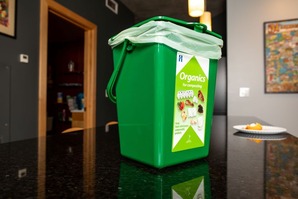
Hennepin County staff worked with the recycling committee to add organics recycling service through their waste hauler, Waste Management. LHE then applied for a Hennepin County multifamily recycling grant to help make participating in organics recycling as seamless and simple as possible for their residents. This grant provided countertop organics bins and compostable bags as well as funds to cover the organics hauling fees for six months.
Hennepin County staff presented to residents on waste reduction, recycling, and composting. Residents learned about their property’s new organics program and how to properly sort and dispose of their waste. At the conclusion of this training, residents were given their countertop organics bins, a start-up supply of compostable bags, and organics recycling guides. The building now has 20 of the 54 units participating, almost 40 percent of the building!
|
Assistance and resources available to multifamily properties
Hennepin County offers technical assistance to properties to improve recycling. Recycling staff help assess best options, review potential costs and savings, and determine the steps to improve recycling programs. In addition to on-site or online assistance, a variety of resources are available to property managers and residents, including reusable recycling tote bags, aluminum signs, labels, and educational resources.
Multifamily recycling grants are closing soon!
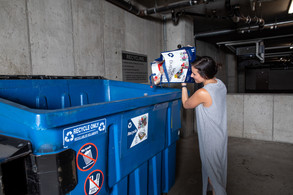
Hennepin County offers grants for multifamily properties to start or improve recycling or organics recycling, reduce contamination, prevent waste, and educate their residents on recycling and waste prevention. Applications will be accepted on an ongoing basis until mid-November 2024, or until the annual program budget is exhausted.
Areas of focus can include purchasing bins and compostable bags, paying for hauling costs, constructing waste enclosures or chutes, managing or preventing the waste of bulky items, and educating residents. Applicants may apply for up to $3,000 for bins and compostable bags and up to $20,000 for all other categories combined.
Review the grant guidelines (PDF) and the grant flyer (PDF) to learn more. Visit the apartment recycling web page to begin the application process.
|
Multifamily recycling resources
Free resources are available to Hennepin County residents to improve recycling in apartments, condos, and townhome associations. See what's available and order free resources.
Our committed staff is ready to help you start or improve recycling at your apartment or condo. We can help you assess your best options, review potential costs and savings, and determine the steps forward to improve your programs. Free assistance can be provided online or in-person. Contact the apartment recycling program coordinator to request assistance by emailing apartmentrecycling@hennepin.us.
|