|
Hennepin County offers two types of grants to multifamily properties. Applications for both grant programs close for the year on Monday, November 13.
Bin and compostable bag grants
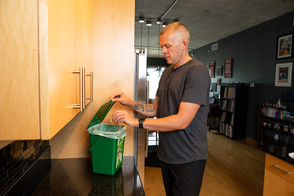
Hennepin county offers grants for bins and compostable bags to start or improve recycling and/or organics recycling at multifamily properties. Applicants may select up to $3,000 worth of bins and compostable bags from the county's product list. Review the grant guidelines (PDF) and the grant flyer (PDF) to learn more. Visit the apartment recycling web page to begin the application process.
Recycling grants
|
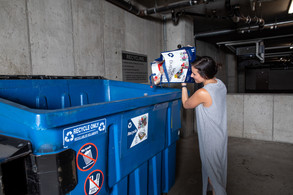
Hennepin County offers grants for multifamily properties to improve recycling and reduce contamination, prevent waste or start organics recycling for composting. Areas of focus can include organics hauling service, construction of waste enclosures or chutes, bulky waste and waste prevention. Applicants may apply for up to $20,000 in funding. Review the grant guidelines (PDF) and the grant flyer (PDF) to learn more. Visit the apartment recycling web page to begin the application process.
|
 Thanksgiving celebrates the plentiful harvest, but many of us have a tradition of going overboard. Unfortunately, that means the meal can result in a lot of waste.
You can take steps to prevent waste during all stages of your meal experience. But don’t stop at Turkey (or Tofurkey) Day! The tactics you learn here can be applied to any event or occasion year-round.
Planning
Before you even shop, do some planning. You can lower the meal’s impacts by thinking ahead, purchasing the right amounts, and being flexible.
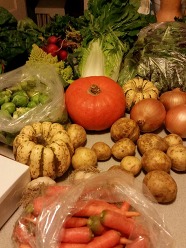
- Use a portion calculator like Save the Food's Guestimator to match servings with the number of guests. If you're having a smaller gathering, consider buying only a portion of a turkey instead of the whole bird.
- Simplify your menu. Fewer dishes to cook means less time in the kitchen, less food to put away, and less stress overall. Get ideas for planning a smaller feast from The New York Times, Better Homes and Gardens, and The Food Network.
- Reduce the "foodprint" of your meal by planning your menu to use local ingredients. Get ideas from Minnesota Grown.
- Don’t be afraid to switch things up. Is there a dish that nobody loves but you make it because of tradition? Time to let it go and make room for something better.
- If you're hosting and are planning to send leftovers with family or friends, save containers ahead of time. Recyclable containers from takeout meals or other store-bought items work great for sharing food in containers you don't need to get back. If you're attending an event and know your host will send you home with food, remember to bring your own reusable containers.
|
Shopping
Once you get into the store to purchase your food, be aware of the packaging and use your zero-waste shopping habits. Ask yourself: Is the packaging recyclable? Compostable? Avoidable?
If you're ordering Thanksgiving meals from a restaurant or grocery store, make sure to request no napkins, utensils, or any condiments.
Cooking
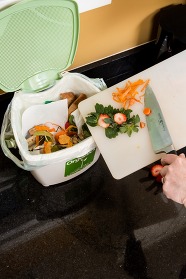
Cut down on food waste while you prepare and cook your meals. While cutting up fruits and vegetables, leave on edible skins (such as for potatoes, carrots, apples and some squash), or save the vegetable scraps for a soup broth (tip: you can freeze them for later use).
For food scraps you cannot prevent or use, separate them for organics recycling or composting.
While you cook, do simple things such as setting timers and keeping your focus to avoid kitchen mishaps like burning food or adding the wrong ingredients. There are also some tricks to save your dish when it just doesn’t taste quite right. One Green Planet has a useful article on fixing common seasoning mistakes to save your dinner.
|
Sitting down for the meal
There are ways to prevent waste while you eat, too! Cut plate waste by offering smaller plates, which encourages people to take seconds rather than filling up their plate only to realize their eyes are bigger than their stomachs.
Make sure to follow food safety guidelines so that your food is safe to eat later. Keep hot food hot, or above 135 degrees, and cold food under 40 degrees. Don’t leave perishable food out for more than two hours at room temperature. If you have multiple trays of food, keep one on reserve until the first runs out.
 Later: the leftovers
After you’ve eaten your meal, place leftover food in small containers so it can cool quickly and get it refrigerated.
If you love leftovers and planned your meal for extra food, you get to reap the rewards of a marathon cooking session for the next week or so! If you don’t like leftovers, reduce the amounts you are making or have a plan to share what’s left with someone who will eat it.
If you get sick of eating the food as is, the Internet has hundreds of recipes that reimagine Thanksgiving leftovers. Mashed potatoes can go into pancakes, fritters, or pizza crust. Leftover vegetables can be added to soup, scrambled eggs, stir fries, or sauces. Almost all of it could go into a shepherd’s pie. And that leftover pie could be turned into a delicious ice cream shake. Get additional ideas and recipes from Delish.
Whatever your holiday plans, plan ahead to reduce waste, aim to cook the right amount, keep tabs on what’s left in the fridge or freezer, and enjoy your lower waste feast.
About one-third of our trash is organic materials, including food, food-soiled paper, and certified compostable products, that could be put to better use as compost.
Organics recycling drop-offs can be a good option for residents who don’t have organics recycling service at home. That includes those who live in smaller cities and those who live in apartment buildings, condos and townhomes that don’t have access to their city’s residential service.
Looking for an organics recycling drop-off option near you?
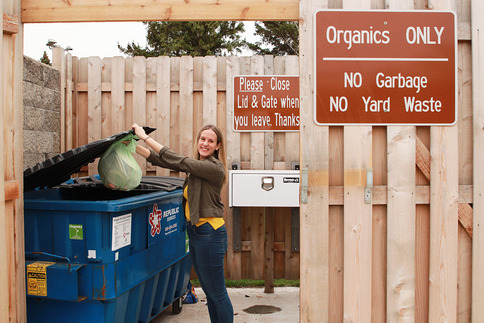
There are more than 40 organics recycling drop-off sites throughout Hennepin County. Check out our recently developed map to find a drop-off site near you.
 |
 |

This October, celebrate the first anniversary of MNimize and support businesses taking action to reduce single-use plastic by participating in the MNimize Fall Food Tour!
From coffee shops to breweries to bakeries, vegan fare to Somali cuisine to darn good burgers, MNimize businesses have something to offer every appetite – with less plastic on the side.
How to participate
Visit participating MNimize businesses from October 1 to 31 to be entered into a drawing to win one of five prizes. Look for the MNimize Fall Food Tour poster near the checkout counter or at the front of each business and scan the QR code to enter your information for a chance to win. Or, if QR codes aren’t your cup of tea, ask a staff member for a paper sign-in sheet.
Earn bonus entries by sharing an Instagram story or post with a photo you took at a MNimize business or by resharing a post from @mnimizeplastic. Be sure to follow and tag MNimize so your entry can be counted!
|
|
The following property received a grant from Hennepin County in 2023 to start their organics recycling program. Hennepin County offers grants for bins and compostable bags to start or improve recycling and/or organics recycling at multifamily properties. Learn more about grants.
Applewood Pointe of Champlin
The environmental committee at Applewood Pointe of Champlin, a senior cooperative with 70 units, contacted Hennepin County apartment recycling program staff about adding organics recycling to their building. Before receiving a grant, the property offered only recycling and trash service. Some residents were bringing their organics to the Brooklyn Park Transfer Station, but the environmental committee wanted to make organics recycling easier and more convenient for all residents.
Project support from county staff and grant approval
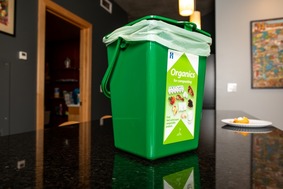
Hennepin County staff worked with the environmental committee to add organics recycling service through their waste hauler, Republic. Applewood Pointe wanted to make participating in organics recycling as seamless and simple as possible for their residents. To help with this, they applied for Hennepin County’s multifamily recycling grants. These grants were approved in February 2023 and provided countertop organics bins and compostable bags as well as funds to cover the organics hauling fees for six months.
In March, Hennepin County staff presented to residents on waste reduction, recycling, and composting. Residents learned about their property’s new organics program and how to properly sort and dispose of their waste. At the conclusion of this training, residents were given their countertop organics bins, a start-up supply of compostable bags, and organics recycling guides.
The building now has 39 of 70 units participating, more than 50 percent of the building! In just the first five months of the program, a total of 2,474 pounds (1.25 tons) of organic waste has been picked up by Republic.
|
|
|




