|
|
Being “Future Ready” is a little like looking into a crystal ball. There will always be surprises. But departments are developing strategies and roadmaps to where they need to go (see the interview with our Assistant County Administrator Jodie Wierimaa) and IT is aware of our reality:
- We have more than 5,000 software programs, which far exceeds the norm is most industries.
- IT hardware and software have a lifespan of approximately three to five years.
- According to Gartner, by next year government organizations with composable case management application architecture will implement new features at least 80% faster than those without.
To help Hennepin County succeed, we need employees who are knowledgeable, skilled and have the abilities to move into modular technology components. That’s the only way we can keep up with demand and the growing list of work.
We have several teams working on a roadmap for our Future of Work, which includes skill building for employees in the IT community. Learn about their work on developing a roadmap below.
Then take a few minutes to learn how our business relationship managers are modernizing our intake process using a matrix. It’s a work in progress, and we’re still fleshing things out. But the intake process will affect all areas of the IT community.
As always, thank you for your service.
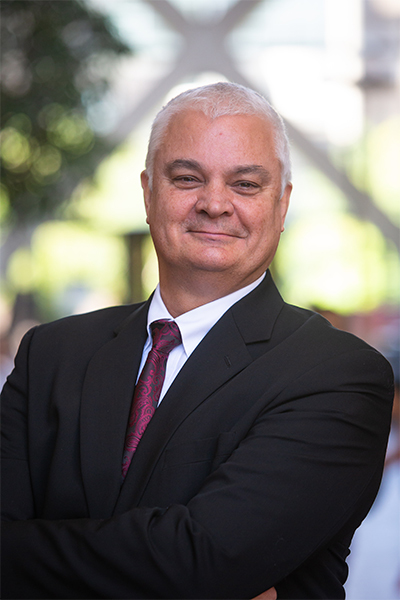
Glen Gilbertson
Chief Information Officer
|
 |
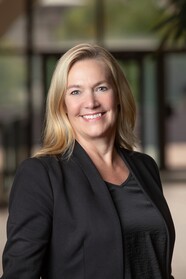
Jodie Wierimaa was named Assistant County Administrator for the Operations line of business in August 2022. While Wierimaa spent much of her career in the Law, Safety and Justice line of business, the work of Operations wasn’t unfamiliar to her. “I spent a number of years managing the day-to-day business functions in the County Attorney’s Office which led to many opportunities to partner with Operations, mostly in IT, OBF and Facility Services,” she said.
Prior to her ACA role, Wierimaa was the director of the newly created Strategic Planning Department and is a firm believer in the value of strategic planning, “not as rigid process but as an approach to getting organizational alignment about where we are, where we want to be and how we plan to get there.”
As a former business information officer, she knows how challenging it can be to create alignment between business and IT priorities, but it’s necessary work.
Enterprise and department level strategic planning are critical to informing the work in IT. She said that we know that we are not successful with a “build it and they will come approach.”
“Our IT investments are substantial so the better IT is aligned with the organizational direction, the more effective they can be at planning for the future in a way that is sustainable and meets the needs of the whole organization,” she said.
IT has engaged in formal planning for years, so they are already well versed in this work. With the creation of the Strategic Planning Department and our organizational commitment to the strategies identified in our seven Disparity Reduction domains, Jodie believes there is real energy to move this work forward.
Because the county is a large, complex organization, she said, “It can be challenging to see how we are all driving towards a common set of goals. A strategic plan helps make those connections so all employees can see how their work contributes to our organizational goals.”
|
|

The “Future of Work” strategy has two overarching goals: Developing systems that are agile and can grow and change with the organization and ensuring Hennepin County has the right workforce.
“These are the future roadmaps and trends that Gartner says organizations should be investing in,” said Chief Technical Officer Craig Troska. Gartner is a technology research and consulting firm used by businesses and government agencies worldwide.
For the first goal of developing systems that are agile, IT has three objectives:
- Technology is transformed into single purpose, modular components that can be reused for multiple needs.
- Staff are prepared to work in a modular platform environment
- Use staff assessment report to inform discussion on staffing needs by the end of 2023.
Troska said this goal really reflects adopting design philosophies and principles. “It’s not training in new tools, it’s training in methodologies to put things together in different ways.”
“The new philosophy is critical,” he explained. “We need to build new IT systems with reusable parts, things that can be switched out easily, so we can be future ready. We are continually upgrading, so we need switchable components so we can change without disrupting the business.”
|
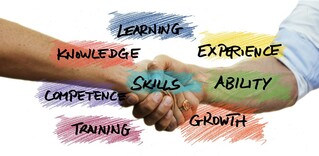
To be agile, Hennepin County IT needs employees who can pivot quickly and continue learning.
To ensure the county has the talent it needs, IT is identifying skill and technology needs to meet organizational goals, then defining and developing standardized criteria of knowledge, skills and abilities (KSAs) lined up to staff. “We have to know what our talent needs are and where our talent is, so we can do planning around creating growth and development opportunities for staff and recruiting new talent to backfill.” Troska said.
“We need to know where we need to invest in terms of employees. We have a lot of talent here that we want to retain and grow. While the goal for 2023 is specific to working with modular components, we will be creating this in a way that it can be reused for other emerging skill areas in the future. We want to create this plan by the end of 2023,” he said.
IT will develop and begin to roll out modular design training opportunities for staff by the end of this year, too. Troska encourages staff to take advantage of these opportunities. “Work with your supervisor and manager and build those skills, and to create the time and space to invest in skill development. We need you,” he said.
|
|

The Business Relationship Management team is working hard to modernize the IT Intake process.
“Everyone’s workload in IT is extremely busy, so we are looking at ways to modernize the IT Intake process as well as identifying ways to prioritize the work that is coming into the IT Department,” said Karina O’Mara, IT manager of business relationship managers (BRMs) and administrator of IT Intake. “We are looking at ways of automating the status of requests to be more transparent and provide customers with an easy way to find information about their request quickly.”
Today, new work that is submitted through IT should be submitted through the IT Intake process via IFS Assyst. The Business Relationship Manager (BRM) will then meet with the requesting end user to understand the business need and the organizational impact of the request more fully. Once the request is fully understood, the BRM then represents the request to the IT Intake Triage team, where it is reviewed for assignment to the appropriate technology resource service or team.
|
In addition to modernizing the IT Intake process, the BRMs have also been trying to collect more data on the requests as they come in.
One of the ways they are doing this is by completing business cases on appropriate requests and completing Value Plans. “The more information we capture upfront, the quicker the request is going to move through the Intake process” O’Mara added. The team has added a dedicated business analyst to assist with completing the business cases and following up with business partners to capture more details.
Prioritizing work
The BRMs are in the process of completing a proof of concept with a prioritization tool. This tool goes through a variety of questions to identify the business impact and technology alignment regarding the request being submitted.
While the tool is still in “proof of concept” mode, it is helping the BRMs support the “IT is Value-Driven” strategic area through the questions and conversations the BRMs have with the requester and business partners. “Today, a lot of the work that comes in is slotted on our backlog list in order of ‘first in, first out,’” said O’Mara. “This approach is not the most efficient or effective for meeting organizational needs. Having this structured approach to prioritization of requests will allow others to see what all is coming into the IT Department and where each request ranks on the list.”
|

Transparency is key
A common theme that the BRMs hear from their business partners is “What is the status of that request?”
They want to know if the request is being worked on, who is working on it, and when it will be done.
“There is a bigger goal to all of this, it helps create transparency,” said Christopher Knowles, IT strategic analyst and project manager for Modernizing IT Intake and Maturing Prioritization efforts. “By modernizing the IT Intake process, we hope that this becomes more evident. In addition, implementing the prioritization tool will assist in letting our IT resources know which and when efforts should be worked on.
“There’s so much work so this helps people understand why their work may not be at the top. This will help us with long-term projecting and resource allocation,” he said.
|
|
|
|
|
|
|