|
We recently awarded grants for environmental education, school recycling, and tree plantings, and we are so excited to work with these partners engage audiences in learning about and taking action to improve the environment. There are also several funding opportunities currently available through partner organizations, and many great virtual conferences and learning opportunities coming up this fall.
Environmental education grants awarded
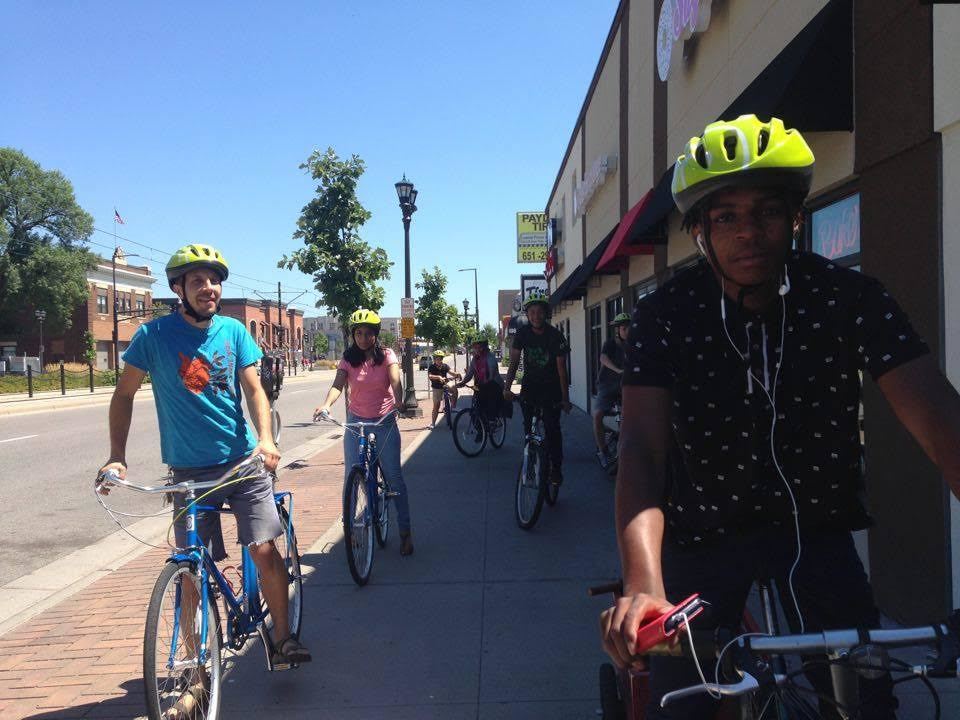
Environmental education grants were recently awarded to 20 organizations totaling more than $300,000. The grants provide training, support, and funding to organizations to implement projects that engage residents to protect and improve the environment.
Grantees have creative and engaging activities planned
The program offers two types of grants: environmental action grants for projects that focus on motivating adults to take environmentally friendly actions, and environmental education grants for projects engaging youth in environmental education and stewardship.
Through the environmental action grants, adult audiences will be engaged in creating personalized climate action plans, conserving energy, signing up for renewable energy programs, recycling, reducing waste, repairing clothing, and buying used.
Some activities supported by the youth environmental education grants include learning about nature, developing job skills in green infrastructure, participating in outdoor recreation, bicycling for transportation, reducing waste, composting, protecting pollinators, exploring climate solutions, creating art about environmental protection, and educating the community about using green cleaners.
Grants will have broad reach and engage diverse audiences
The grants awarded will engage more than 6,500 residents in becoming environmental stewards and taking action to protect the environment. These projects are expected to reach more than 200,000 residents with environmental messages. Of the 23 projects, 21 projects engage Black, Indigenous, or communities of color and residents that live in areas of concern for environmental justice. Learn about the grants awarded.
For more information, contact Patience Caso at patience.caso@hennepin.us.
School recycling grants awarded
The county recently awarded 10 school recycling grants totaling about $150,000. These projects will allow schools to expand recycling and organics collection, start composting on-site, and reduce waste from single-use packaging and food service ware.
Grant recipients include four public school districts, four charter schools, and two non-public schools. The schools are located in Bloomington, Brooklyn Park, Brooklyn Center, Crystal, Eden Prairie, Golden Valley, Maple Grove, Minneapolis, Minnetonka, New Hope, Osseo, Plymouth, Richfield, and Robbinsdale. We are working with schools to adjust their project timelines and activities based on their circumstances this fall. Learn about the grants awarded.
For more information, contact Kira Berglund at kira.berglund@hennepin.us.
Healthy tree canopy grants awarded
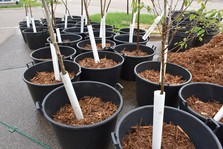
The county recently awarded 20 Healthy Tree Canopy grants totaling about $379,000. The grants will help combat threats to trees from invasive insects and diseases, promote the development of a more diverse, resilient, and equitable tree canopy, and support efforts to educate the public on tree care and the importance of trees.
|
Increasing the benefits that trees provide
More than 1,000 trees will be planted through the grant projects, increasing the benefits that trees provide throughout the county. Trees improve air quality by absorbing fine particulate matter and other pollutants, and they protect water quality by slowing down and infiltrating stormwater runoff. Trees also provide shade, reduce the urban heat island effect, reduce stress, and increase property values.
Prioritizing grants that help address disparities
The grants will improve livability by planting trees in neighborhoods throughout the county experiencing disproportionate amounts of economic, environmental, and health disparities. Grants were selected in part using the county’s tree planting prioritization map, which factors in both environmental and demographic data to identify areas that have lower tree canopy and higher need.
Eight of the twelve grants awarded to affordable housing providers, nonprofit organizations, and schools are in high priority areas. Six of the eight cities recommended for grants are entirely within moderate and high priority planting areas or contain canopy deficient areas.
Learn about the grants awarded.
For more information, contact trees@hennepin.us.
Funding available for youth and young adult services, crime victim services, and community COVID responses
Funding is available from the Minnesota Office of Justice Programs (OJP) to address unforeseen financial needs and risks created by the COVID-19 public health emergency.
This funding will support:
- Youth and young adult services, such as youth employment, out-of-school time activities, youth-focused violence prevention and intervention activities, mental health services, and community healing activities
- Crime victim services, including addressing homelessness and risk of homelessness issues
- Community COVID responses
See the full Request for Proposals for more details. For more information, contact Claire Cambridge at claire.cambride@state.mn.us.
Minneapolis Climate Action and Racial Equity Fund grants
Grants are available for place-based, community-driven initiatives, projects, and organizations that result in a demonstrable reduction in local greenhouse gas emissions, align with the goals of the Minneapolis Climate Action Plan, and further the goals of the Minneapolis Strategic Racial Equity Plan. This fund is a partnership between the City of Minneapolis, The Minneapolis Foundation, and the McKnight Foundation.
Applications for the next grant round will be accepted October 1 through October 30. Learn more. If you have any questions, contact Erin Jerabek Heelan at erin@erinhconsulting.com.
September 28 to October 1
The 23rd annual Metro Children's Water Festival is being held online throughout this week. Learn about the importance of water and what we can do to protect it. The festival includes live virtual presentations that will be recorded and accessible later, pre-recorded videos, and downloadable lesson plans.
|

Calling all 6th through 12th graders! Enter the Minnesota Schools Solar Video Contest by making a video telling your school's solar energy story or convincing school leadership that going solar is a good idea. Cash prizes totaling $2,000 are awarded to the top three places. Entries are due October 6, and prizes will be announced October 12 at the MnSEIA (Minnesota Solar Energy Industries Association) Conference. Learn more and submit your video.
|
Wolf Ridge has made it possible to explore together using 360-degree cameras! In these live sessions, students will be able to direct the action. Where do you want to go? What are you noticing that we can zoom in on together and investigate?
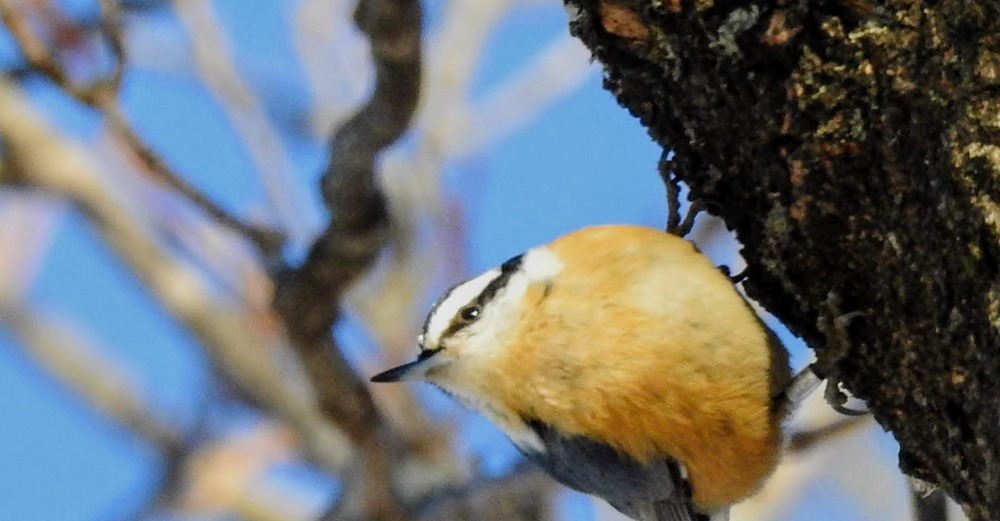
Classroom virtual field trips
Wolf Ridge naturalists work with educators to understand your educational and social-emotional goals for your students, and they use that to create a rough outline for your virtual field trip. On the day of the session, off you will go! It’s nature, so the plan may diverge a bit to focus on the eagle soaring the cliff edge just a few feet above or any other unexpected learning opportunities. That is part of the fun and learning! Learn more and schedule a virtual field trip for your classroom.
Family virtual field trips
Families steer the experience with Wolf Ridge’s family virtual field trips. You decide where you want to go and what you want to explore. Maybe it’s a great big hole in an old tree – what’s living inside? Or perhaps see how close we can get to that feather – can you see the tiny barbs that hold it together for flight? The possibilities are endless! Learn more and schedule a virtual field trip for your family.
Monthly virtual climate change educator workshops
Climate Generation is hosting free monthly virtual workshops on climate change education! These workshops will cover topics ranging from science to social, solutions to youth empowerment. They are featuring guest speakers, resources, and activities for your educational setting. The first webinar on Science and Other Ways of Knowing is September 30 at noon.
|
NAAEE webinar: Building an active and engaged public through discourse, media literacy, and civic education
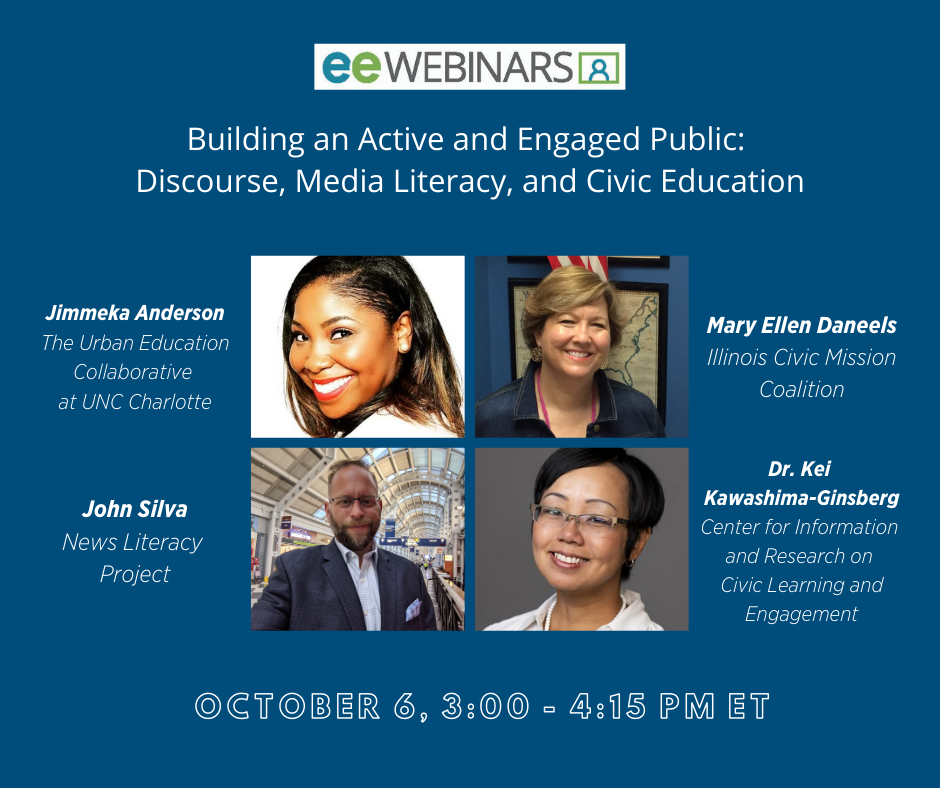
October 6 at 2 p.m. CT
Join an expert panel discussing why building an engaged public - especially among young people - through media literacy and discourse about public issues is so important. The panel will share concrete advice that educators can use every day. This will be a moderated conversation with ample time for Q&A. Learn more and register.
Virtual conference: Minnesota Association for Environmental Education
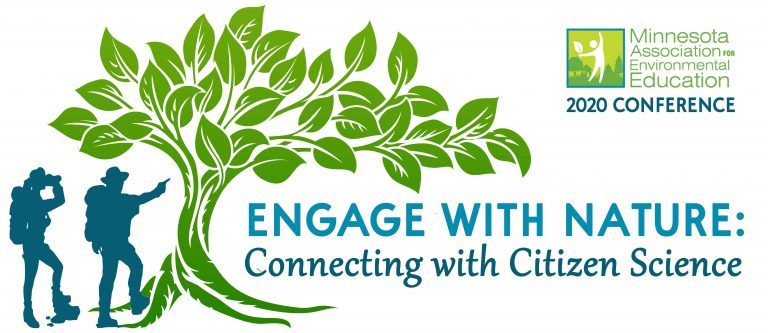
Saturday, October 10
The Minnesota Association for Environmental Education (MAEE) annual conference is virtual this year. The theme is Engage with Nature, Connecting with Citizen Science. Learn more and register.
Virtual conference: Minnesota Naturalists’ Association
Friday, November 6 and Saturday, November 7

There’s no doubt about it - 2020 has taken the world by storm, and our areas of natural and cultural history interpretation are no exception.
Join the Minnesota Naturalists’ Association community at this year’s virtual conference. The focus will be on connecting with one another around two of the biggest topics of the year - the COVID-19 pandemic and issues of race, diversity and inclusion in the outdoors. Then relax and unwind with new and old friends for some online, but interactive, evening fun.
Registration opens October 1. Learn more and register.
|
Virtual conference: Wisconsin Association of Environmental Education
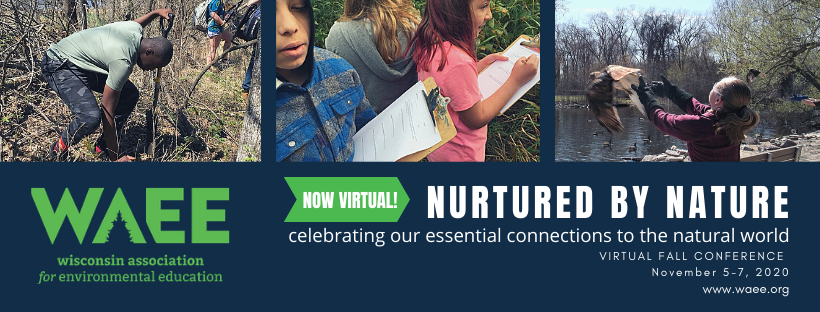
Thursday, November 5 through Saturday, November 7
Save the date for the Wisconsin Association of Environmental Education 2020 conference, being held virtually. Time in nature supports our physical, mental and spiritual well-being. As environmental educators, we share those benefits in our diverse communities. This year, WAEE will celebrate human connection to the natural world and work to expand the vision towards resilience and well-being.
Conference strands:
- Get into the Great Outdoors – Virtually
- Environmental Justice through EE
- Connecting to the Land and Each Other
- Resilient Systems in EE
Registration will be open soon. Learn more.
The following organizations have received a Hennepin County environmental education grant and are busy engaging their audiences in taking action to protect the environment.
Rusty and the Crew kick of Litter Be Gone neighborhood cleanup
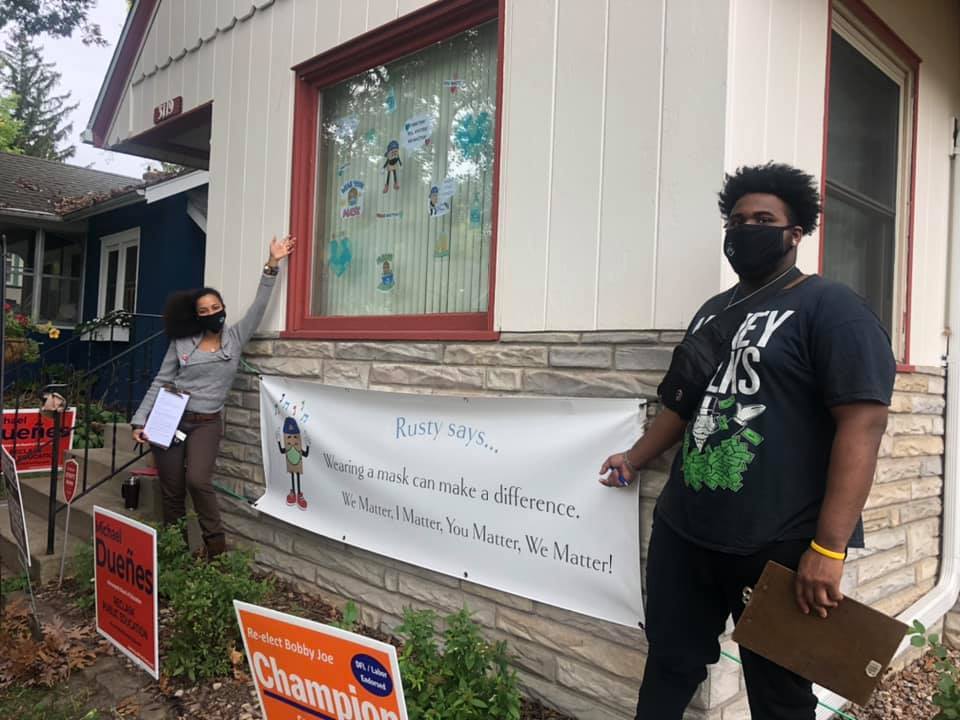
On September 26, a group of north Minneapolis based organizations – Rusty and the Crew, Musicant Group, MN Renewable Now, Northside Greenway Now!, Nice Ride for All, and Jordan Area Community Council – partnered to kick off the citywide Litter Be Gone cleanup effort happening October 1 to 10. They are holding another cleanup on Saturday, October 3, and small groups can participate in Litter Be Gone at any time during the 10-day event.
Tangletown Neighborhood Association launches textile waste education project
The Tangletown Neighborhood Association is launching a project to raise awareness about textile waste. The project will include a virtual documentary screening about the impact of fast fashion in October, a virtual panel about buying used clothing and donating unwanted textiles in November, and a textile education fair next year. The goals of the program are to encourage people to rethink their clothing choices by limited what they purchase, buying used clothing, and purchasing sturdier clothing that is built to last. This project was recently featured in the Southwest Journal.
|
|







