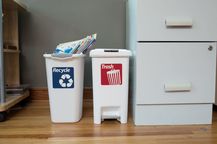
 Recycling has been in the news a lot lately with shifts in markets and policy changes in China. This has left many Minnesotans wondering what is happening to the recycling placed in their bins, and what they can do now to support recycling.
Your recycling is getting recycled
Minnesota state law prohibits materials separated and collected for recycling from being trashed. Your recyclables are getting recycled!
Recyclables are still in demand from manufacturers who want high quality materials to make new products and from consumers who want to buy products with recycled content. Because of the market changes, recyclers nationally and internationally are seeking recycling streams that are high quality and don’t contain a lot of contamination.
Know what goes in the bin
|
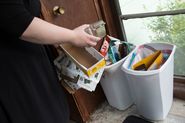 The best thing you can do now to support recycling is to recycle right by making sure you know what does and does not go in your recycling cart.
Learn more about the current state of recycling and what you can do, see our recycling guide for a list of materials that are accepted and not accepted for recycling throughout Hennepin County, read the Green Tip below for a list of materials to keep out of your recycling bin, and stay tuned to our Facebook page for tips on recycling throughout September.
For more information, contact Ben Knudson at ben.knudson@hennepin.us or 612-596-1176.
|
Last month, the county distributed its draft revisions to the recycling ordinance to seek input from cities, businesses, waste haulers and others that may be affected by the ordinance revisions. The county received about 300 comments, and staff are reviewing them now. A report summarizing the feedback will be available in the next two weeks. Staff will make edits to the recycling ordinance based on the feedback and submit it to the county board in September.
Next week, the board is expected to set a public hearing for Tuesday, October 2 at 1:30 p.m. to receive testimony from the public. The next draft of the revised ordinance will be posted online no later than September 17, 2018, for the public to review prior to the public hearing.
After the public hearing, additional edits may be made to the ordinance before the final version is submitted to the board. Board deliberation and potential approval of the ordinance revisions is anticipated to be in late October 2018.
E-notices are being sent at each stage of the revision process. Sign up to receive updates. Materials will also be posted at www.hennepin.us/solidwasteplanning.
Contact Paul Kroening at paul.kroening@hennepin.us or 612-348-6358.
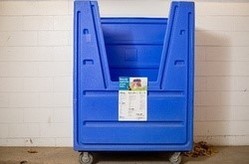 Donating usable items, such as furniture, clothing and small appliances, can be less convenient for residents at apartment buildings and condos. Many residents do not have the space to store these items or the means to transport them to a reuse store. Feeling like there is no easy option, these usable items often get thrown away.
To make it easier for residents in apartments to donate usable items, Hennepin County partners with three reuse retailers to provide pickup services at apartment buildings. Participation is easy. Properties receive a bin for collection and work with one of the reuse retailers – Arc’s Value Village, Goodwill, and Salvation Army – to schedule free pickups. Since 2015, participating properties have prevented more than 30,000 pounds of usable items from being thrown away.
If you know of a property interested in participating, contact Kirsten Wahlberg at kirsten.wahlberg@hennepin.us, or 612-348-6846.
|
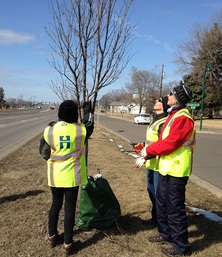 A tree steward class is being offered in the Standish-Ericsson Neighborhood of Minneapolis on September 15 for anyone interested in learning about tree care and protecting the health of our urban forest.
Tree stewards learn the basics of tree care and then have opportunities to participate in tree care and tree planting events in their community. The class covers tree biology and care, including tree identification, health, watering and pruning, through a combination of classroom instructions and hands-on, outdoor field experience. Learn more and register now!
|
The due date for responses to a Request for Qualifications for anaerobic digestion of organic materials has been extended to October 5 at 4 p.m. The deadline has been extended to allow additional time for the county to review and respond to questions posed by prospective responders. Questions will be addressed in a subsequent addendum. View the RFQ, addenda, and other information.
Wayzata Sailing Center youth learn to identify aquatic invasive species
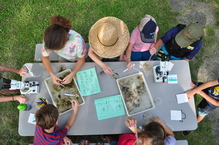 The Wayzata Community Sailing Center, recognizing an opportunity to engage youth interested in outdoor recreation in learning about ecosystems, offered a science-based camp this summer called Looney Lake Lab for youth to learn about aquatic invasive species and other lake science.
Youth examined aquatic invasive species under microscopes and surveyed for aquatic invasive species in Lake Minnetonka using snorkeling gear.
|
 They then developed messages that are being displayed on Hennepin County’s interactive message board on Lake Minnetonka. The youth especially loved sailing over to see the message board with their messages displayed.
Building on environmental education and business recycling grants
This project was funded by a Hennepin County aquatic invasive species prevention grant. It builds on a Green Partners environmental education grant that the sailing center received in 2017 to start their STEM education initiative and develop better recycling behaviors. The center has also received a Hennepin County business recycling grant to improve recycling and start organics recycling at the center. Recycling activities included conducting a waste sort to identify areas for improvements, educating staff and youth, and distributing “I composted” stickers to youth.
|
Starry stonewort found in Medicine Lake
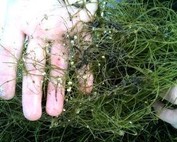 Starry stonewort, an invasive grasslike algae, has been confirmed in Medicine Lake. The aquatic invasive species is relatively new to Minnesota – it has been found in 12 Minnesota lakes, and this discovery is the first in the metro area. The algae can dorm dense mats that make boating, fishing and swimming difficult. Read more on MPR.
|
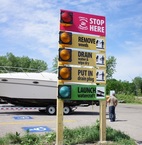 The discovery of this invasive species for the first time in the metro is a good reminder to take the necessary steps to prevent the spread of aquatic invasive species. Clean all aquatic plants and animals off boats, trailers and other watercraft before leaving any water access, drain all water before leaving a boat access or shoreline property and leave drain plugs out while transporting, and dispose of all unused bait.
|
Become a Master Water Steward
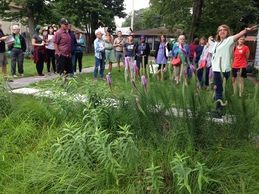 Master Water Stewards are trained volunteers who attend classes to learn the basics of stormwater management, water policy and community engagement then give back by developing a project to protect water. Learn about a Master Water Steward project that involved installing rain gardens, permeable pavers, and low-water fescue on Kare11, then apply to join the next Master Water Steward training by September 14.
|
County tests asphalt mix that is more durable and contains higher recycled content
Hennepin County is partnering with Cargill to test a new mix of asphalt for repaving roads that could make roads more durable to Minnesota’s extreme weather. The asphalt has a higher content of recycled materials – about 45 percent recycled asphalt compared to the 30 percent that is more typical – and has a “rejuvenator” added composed of vegetable products to make it more durable. In the process, the asphalt is stripped off the road, mixed with the additive, and reapplied. The addition of the rejuvenator makes the pavement less susceptible to cracking or rutting. Cargill has tested the asphalt mix on parking lots, but a project to test it on a section of Excelsior Boulevard that the county is repaving is the first use of this material on a city street. Learn more in the Star Tribune and on Kare11.
Learn how to protect the environment during your Minnesota State Fair visit
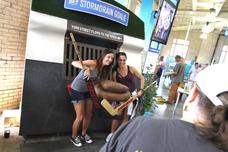 Beyond eating food on a stick, watching shows, visiting farm animals and connecting with friends and family, the Great Minnesota Get Together is the perfect opportunity to learn ways to protect the environment!
If you’re still planning a state fair visit, be sure to stop by both the Eco Experience and Horticulture buildings to see the following exhibits that Hennepin County has partnered on:
|
- Sample recipes featuring fresh, local foods and discover ways to prevent food waste at a cooking demonstration presented by Renewing the Countryside. Demos are held every day of the fair at 11 a.m., 1 p.m. and 3 p.m. in the Eco Experience building.
- Pledge to adopt-a-drain, learn ways to protect Minnesota’s lakes and streams right at home, and capture your commitment in the storm drain goalie photobooth in the Eco Experience building.
- Visit the Our Town exhibit in the Horticulture Building on September 1 and 2 to consider our common history and shared potential through a language we all speak – food.
Promote your reuse events on the Choose to Reuse website
The Hennepin County Choose to Reuse website feature local events that provide opportunities to buy or sell used items, repair broken goods, or swap materials you no longer use.
If you have a reuse event to promote, submit it through our online form.
Reuse events currently featured on the site are:
- University of Minnesota Reuse Program annual bike sale: Saturday, September 2 in Minneapolis
- Just Between Friends kids consignment sale: September 13 to 15 in Edina, September 20 to 23 in Brooklyn Park, and October 12 to 14 in Eden Prairie
- Fall clothing swap for women: September 21 in Robbinsdale
Learn repair skills at a Fix-It Clinics
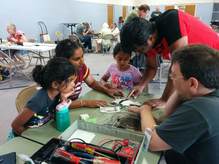 Bring your broken household goods to an upcoming Fix-It Clinic and get hands-on help from skilled volunteers on troubleshooting and repairing your items. Clinics are an opportunity to learn repair skills, keep items out of the trash, and build community. A wide variety of items have been successfully repaired at Fix-It Clinics, including coffee makers, clothing, lamps, radios, and toys.
|
The following clinics are scheduled through the end of the year:
- Saturday, September 8 from noon to 4 p.m. at the Brookdale Library in Brooklyn Center
- Saturday, October 14 from noon to 4 p.m. at Burroughs Elementary in Minneapolis
- Saturday, November 10 from noon to 4 p.m. at Seward Montessori School in Minneapolis
- Sunday, December 16 from noon to 4 p.m. at Brookview Community Center in Golden Valley
Hazardous waste collection event in Shorewood
The final hazardous waste collection event of 2018 is scheduled for September 21 and 22 at the Shorewood Public Works Department. The event will be open 9 a.m. to 4 p.m. each day. Materials accepted include adhesive, automotive fluids, batteries, cleaners, flammable products, paint, pesticides and mercury-containing items.
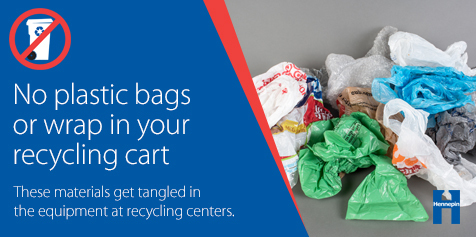
The best thing you can do to support recycling is to recycle right by making sure you know what does and does not go in your recycling cart.
Some important materials to keep out of the bin are:
-
Plastic bags and wrap: Do not put these materials in your recycling cart as they get tangled in equipment at recycling centers. Bring them to a retail drop-off location for recycling, avoid by finding reusable alternatives, or put them in the trash. Learn more.
-
Cords, hoses and string lights: Do not put these materials in your recycling cart as they get tangled in the equipment at recycling centers. You can recycle cords and string lights at a drop-off location, or you can put these materials in the trash. Learn more about what to do with string lights and cords.
-
Paper cups and plates: Do not put paper cups and plates in your recycling cart as these materials are often lined with plastic or contaminated with food. Avoid by carrying reusable water bottles and mugs and by choosing reusable or compostable alternatives. Put paper cups and plates in the trash.
-
Plastic utensils and straws: Do not put plastic forks, knives, spoons or straws in your recycling cart as there aren’t good recycling markets for these materials and they are too small to sort at recycling facilities. Avoid by carrying reusable utensils and straws with you, refuse straws when you can, use compostable alternatives, or put them in the trash.
-
Plastic foam: Do not put plastic foam containers, cups or packing materials in your recycling cart as there aren’t good recycling markets for this material and transporting and sorting the material is difficult. Avoid by finding reusable, recyclable or compostable alternatives, and put these materials in the trash.
Don't bag your recycling
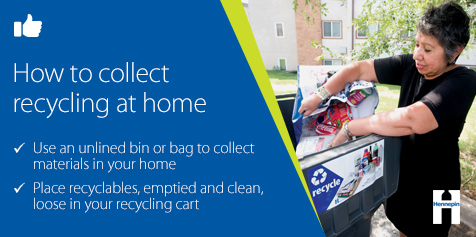
Do not put your recycling in bags in your recycling cart. Bags of materials don’t get properly sorted at the recycling center, and recyclers can’t tell what’s in the bag. Use an unlined bin or bag to collect materials in your home, and place recyclables – emptied and clean – loose in your recycling cart.
|






