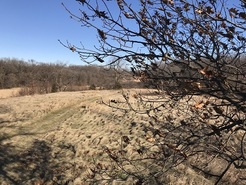
 The Hennepin County Board recently approved the potential establishment of a 13-acre conservation easement in Independence that contains old-growth maple-basswood forest, a tamarack bog, wetlands and grasslands.
A conservation easement is a set of development restrictions that a landowner voluntarily places on their property to permanently protect its natural resources. The landowner is compensated for the value of the easement and retains ownership of the land.
This potential conservation easement is adjacent to five previously established easements that together create a permanently protected corridor for wildlife, connecting natural areas with Lake Sarah Regional Park. Hennepin County will co-hold this easement with the Minnesota Land Trust.
To protect wildlife habitat and ecosystems that exemplify the county’s natural heritage, the county established a framework to pursue conservation easements in 2016. The county has been recommended to receive $1.5 million from the Lessard-Sams Outdoor Heritage Fund and is preparing to expand its conservation easement acquisition and habitat restoration activities.
If you are interested in protecting or restoring habitat on your property, contact David Thill at david.thill@hennepin.us or 612-348-0124.
|
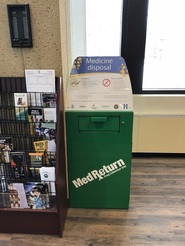 The Brooklyn Center Police Department, in partnership with Hennepin County and the Hennepin County Sheriff’s Office, recently opened a medicine drop box at their location at 6645 Humboldt Ave N. The drop box is open 24 hours a day, seven days a week. There are now 12 medicine drop boxes located throughout the county.
All types of medicines, including prescription and over-the-counter medicines, vitamins, supplements and pet medicines in all forms are accepted at the drop boxes. Properly disposing of medicines is important to prevent accidental poisoning and abuse and protect the environment.
For more information, contact Ryan Gastecki at ryan.gastecki@hennepin.us or 612-348-8994.
|
Free hands-on learning opportunity focused on water for 4th grade students
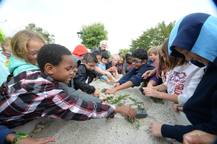 4th grade teachers can register now to bring their class to the Metro Children’s Water Festival, a full-day field trip focused on learning about water and actions we can take to protect the environment. The water festival will be held Wednesday, September 26 at the Minnesota State Fairgrounds in St. Paul.
Participating schools will be selected through a lottery drawing. Register for the lottery by March 16. The field trip is free, and schools selected to participate from Hennepin County may apply for a bus through the county to cover the costs of transportation to and from the field trip.
|
Become a Master Recycler/Composter
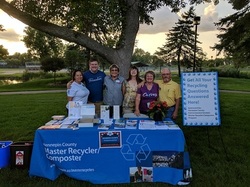 Join fellow waste reduction enthusiasts and become an advocate for the three Rs in your community as a Hennepin County Master Recycler/Composter. These trained volunteers plan and implement projects that prevent waste, improve recycling and increase public awareness of opportunities to recycle and compost.
The spring course will be held on Wednesday evenings from 6:30 to 9 p.m. from April 11 to May 16 at Elim Lutheran Church in Robbinsdale. An optional field trip will be held on Friday, May 4.
Registration for the class will open on March 12. For more information, contact Carolyn Collopy at carolyn.collopy@hennepin.us or 612-596-0993.
|
Become a tree steward
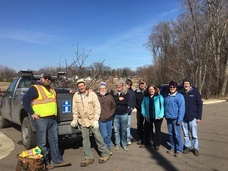 Learn the basics of tree care and help take care of the urban forest in your community by becoming a tree steward. Volunteer tree stewards take a one-day class that covers the basics of tree biology, health, planting, watering, and pruning through a combination of classroom instruction and hands-on, outdoor field experience.
Volunteers will then have opportunities to practice their skills by helping with various tree planting and tree care projects in the community.
The next class will be held Saturday, March 31 from 8 a.m. to 4 p.m. at the Hopkins Fire Station. Learn more and sign up.
For more information, contact Jen Kullgren at jen.kullgren@hennepin.us or 612-596-1175.
|
Grants available to improve recycling and reduce waste at schools
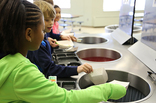 Hennepin County provides grants for K-12 schools to start or improve programs to divert recycling and organic materials, which includes food and non-recyclable paper, from the trash. Grant funding can also be used to take steps to reduce waste in the first place.
|
Priority will be given to projects that:
- Collect organics for composting
- Incorporate food waste prevention or donation
- Replace single-use and disposable items with bulk and reusable items
- Expand collection of recyclables to areas outside of the school building and at special events
Grant funding can be used for recycling containers and sorting stations, supplies, reusable or compostable foodware to replace disposables, and staff time to monitor waste stations and support environmental clubs.
Applications for grants of up to $50,000 are due on Wednesday, March 28. Applications for grants of up to $15,000 will be accepted throughout the year as funds remain.
Grant information meetings are scheduled for Thursday, March 8 and Tuesday, March 13. Learn more and apply.
For more information and assistance with your project ideas, contact Kira Berglund at kira.berglund@hennepin.us or 612-596-1498.
Grants to protect and improve natural resources awarded
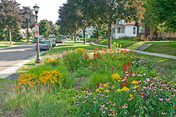 The Hennepin County Board recently awarded six Natural Resources Good Steward Grants totaling $70,000 for projects that will preserve, protect or improve natural resources and water quality.
Projects were awarded to:
|
- Minneapolis Public Schools – Field Community School to install rain gardens, produce educational signage and enhance curriculum.
- Metro Blooms/Nokomis East Neighborhood in Minneapolis to install a variety of stormwater management systems, including rain gardens, native plantings and permeable pavement throughout the neighborhood.
- Standish-Ericsson Neighborhood Association in Minneapolis to install up to 20 rain gardens throughout this neighborhood.
- Three private landowners in Bloomington and Independence to restore a native prairie, stabilize shoreline and improve a neighborhood pond.
The county also awarded a larger $100,000 Natural Resources Opportunity Grant to Metro Blooms to implement the first two years of a five-year stormwater retrofit plan for an apartment complex in Brooklyn Park.
Learn more about the grants awarded. For more information, contact Jim Kujawa at james.kujawa@hennepin.us or 612-348-7338.
Grants awarded to clean up contaminated sites
The Hennepin County Board recently awarded $1.4 million of Environmental Response Fund grants for 10 projects to assess and clean up contaminated sites where added environmental costs hinder site improvements or redevelopment. The grants will fund asbestos and lead-based paint abatement, vapor mitigation, and contaminated soil assessment and cleanup.
The funding supports projects that create economic development by increasing the tax base, creating permanent jobs, supporting stormwater management improvements, and creating market-rate and affordable housing. Grants were awarded to the City of Lakes Community Land Trust, City of Maple Grove, City of Minneapolis, City of Robbinsdale, Minnehaha Creek Watershed District and Minnesota Brownfields.
Learn more about the grants awarded. For more information, contact Mary Finch at mary.finch@hennepin.us or 612-543-1595.
Hennepin County works to revise recycling ordinance to increase organics recycling
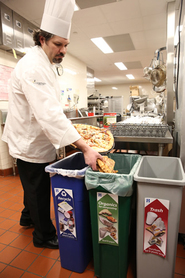 Hennepin County is in the process of revising its recycling ordinance with a focus on increasing organics recycling. Because organic materials, which includes food, non-recyclable paper and compostable products, currently make up about 25 percent of the trash, increasing organics recycling is an important step toward meeting the county’s goal of recycling 75 percent of waste by 2030.
Key provisions being considered for the ordinance include requiring businesses that generate large quantities of food waste to start food waste recycling, requiring cities to offer curbside organics recycling service to residents, updating multifamily recycling requirements, and incorporating state recycling requirements.
County staff are currently reaching out to stakeholders, including city representatives, businesses, trade associations, waste haulers and property owners, to seek input on the ordinance language. Sign up to receive notifications with updates and opportunities to provide feedback as the revisions proceed. Learn more on KSTP and in the Southwest Journal.
|
Repair tutorials from Fix-It Clinic volunteers
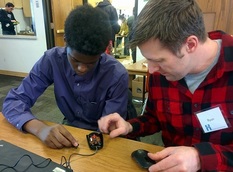 Hennepin County Fix-It Clinics provide free, hands-on assistance from knowledgeable volunteers in disassembling, troubleshooting, and repairing household items. The clinics are successful at keeping materials out of the trash - in five years, over 20,000 pounds of materials have been repaired and diverted from the waste stream!
Some of the most common items brought in to clinics include lamps, vacuum cleaners, DVD players, blenders and other small household electronics. On Kare11, Fix-It Clinic volunteers give basic tutorials for fixing a lamp, sewing machine, and space heater.
|
Hennepin County reduced salt use on county roads by 80 percent since the 1980s
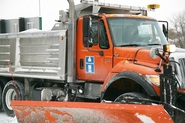 Hennepin County Transportation Operations is responsible for maintaining 2,200 lane miles of county roads, and keeping them safe in winter is a top priority. By regularly training snowplow operators, routinely calibrating equipment, taking advantage of new technology like salt application monitors, and increasing the use of brine (a salt and water mixture), the county has taken significant steps to reduce salt use.
The county used about 31,000 pounds of salt per lane mile every year in the 1980s, but has cut that to about 6,000 pounds per lane mile now. This helps to protect our lakes and rivers while still being effective in keeping roads clear for residents, businesses and emergency services. Learn more on Fox9.
|
Believe it or not, spring break is right around the corner! The stress and excitement of travel can mean that it’s also a time where we forget our daily habits and create a lot more waste than usual. Whether you’re taking a spring trip or looking ahead to summer adventures, there are many simple and practical ways to reduce waste on your next vacation.
Packing: remember the essentials
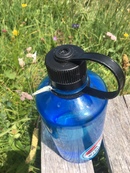 Remember to pack some of these waste-prevention must-haves:
• Refillable water bottle and thermos for water, tea, and coffee
• Reusable utensils and napkins
• Phone, charger, and headphones
• Reusable bag(s)
|
Snacks: reduce the mess
 While in a car or on a plane, it's always nice to have some snacks. Travel can be an excuse to try something new or special from the bulk section at the grocery store—raspberry pretzels, candied ginger, or a trail mix. Remember to purchase these in your own, reusable containers to avoid disposable plastic bags. Saving plastic containers from yogurt, sour cream or takeout are a good way to get containers that are lightweight and stackable for travel.
Hotels: take advantage of conservation programs
Most hotels have water conservation programs (e.g., reusing towels and sheets). If you can't find the directions, call the front desk. A lot of hotels don't have recycling in the rooms. So if you have something recyclable, hold on to your item until you find a clearly marked recycling bin.
Souvenirs: spend wisely
Resist that coffee mug or snow globe, and use this is as an opportunity to talk about value with the family. Gifts can be cherished if the items can withstand the test of time. Consider items like jewelry, clothing or something unique from the region. If you're visiting someone, express how special it is to indulge in experiences and enjoy meals together instead of gifts.
After the trip: keep track of what worked
Once you’re home and reminiscing over photos or unpacking your suitcase, take a few minutes to jot down what waste-prevention strategies worked for your trip and what you’d like to try next time. Update your packing list or other trip-planning documents now so you’re ready to go for your next adventure.
|
|






