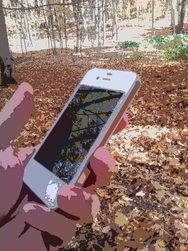
 A frequent request we get at
Health@Work is for fitness app recommendations. If you too would like advice on
this hot topic, check
out this collaborative document. To make this resource even better, we’d
love for you to add your input. What fitness tools have
worked well for you personally and for your employees?
So do fitness tools help us get moving? Yes and no. For most
people, motivation is the weak link in getting regular exercise. Current
research suggests that fitness apps have a long way to go before they reliably
increase and sustain most people’s motivation to move. In addition, technology can
bring unintended consequences such as increased loneliness. To learn more about
the impact of technology on people, watch this TED
Talk by Sherry Turkle or read the transcript.
Currently we know that most fitness apps motivate people to
download them, but not much more. If you are wondering what does motivate
people to exercise, the short answer is activities that people love (Zumba® anyone?) or doing sedentary activities that people love—but while
exercising. One example is walking on a treadmill while enjoying a favorite TV
show or audiobook.
University
of Michigan researcher Michelle Segar, Ph.D., argues
that having a compelling motivation or reason for exercising helps people be
active for a lifetime. She further emphasizes that people tend to do things
that feel good and avoid things that feel bad. Thus, she strongly encourages
people to both:
1. Find a reason to be active that is personally meaningful and compelling
and
2. Find energizing ways to be active that feel good.
There
is strong research behind Segar’s approach and it is why you hear so much about
intrinsic motivation from Health@Work and others. When people genuinely look
forward to being active— because of what it means to them personally or because
of the immediate benefits they receive—they are more motivated to exercise in
both the short and the long run.
Three tips for health
promotion coordinators
1. The
Heath brothers can teach you to motivate elephants. Researchers Chip and Dan Heath ask
people to imagine a person riding an elephant through
the forest on a path. Using this image of a person on an elephant, the Heaths
advise those of us wanting to influence people’s behavior to think in terms of
directing the rider, motivating the elephant, and shaping the path. The rider
represents our rational mind. The six-ton elephant represents our emotions. The
path is the organizational setting which, in this case, is the worksite. Watch this quick and entertaining YouTube
to learn the six ways the Heath brothers suggest for making change in your
organization. Then, map out how those practices apply at your worksite through
this organizational workbook.
2. It’s not too late to join Hennepin
County’s Step To It Challenge in May. The
Step To It
Challenge welcomes any worksite that wants to launch a free, four-week campaign that encourages employees to
maintain or increase their daily exercise. Registration opens April 1 (no joke).
Contact Linda Brandt with questions
or to add your worksite to the competition
3. Hennepin
County Public Health has its first Facebook page! “Like” our
new Facebook page to stay on top of the latest resources and news about
protecting and improving health.
Back to top
|