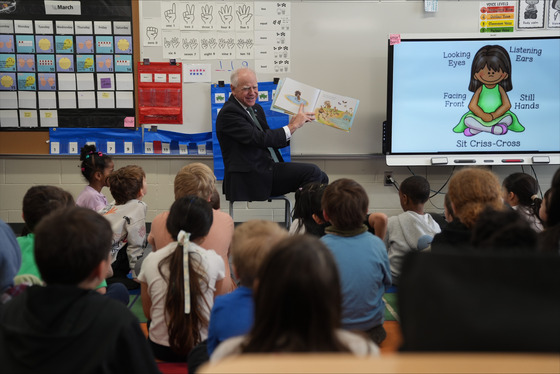
 Governor Walz released his 2026 supplemental budget proposal at the Eastside YMCA. The budget prioritizes lowering costs for middle class families, helping Minnesotans through workforce disruptions caused by artificial intelligence, and responding to Operation Metro Surge, while making responsible cuts to continue Minnesota's record of balanced budgets.
“As families see higher prices and more economic uncertainty, we’re proposing legislation to make everything from child care, to housing, to property taxes more affordable for middle class families,” said Governor Walz. “This is a fiscally responsible plan that cuts spending to maintain a balanced budget while preparing our economy and our workforce for the challenges of artificial intelligence.”
Lowering Costs for Families
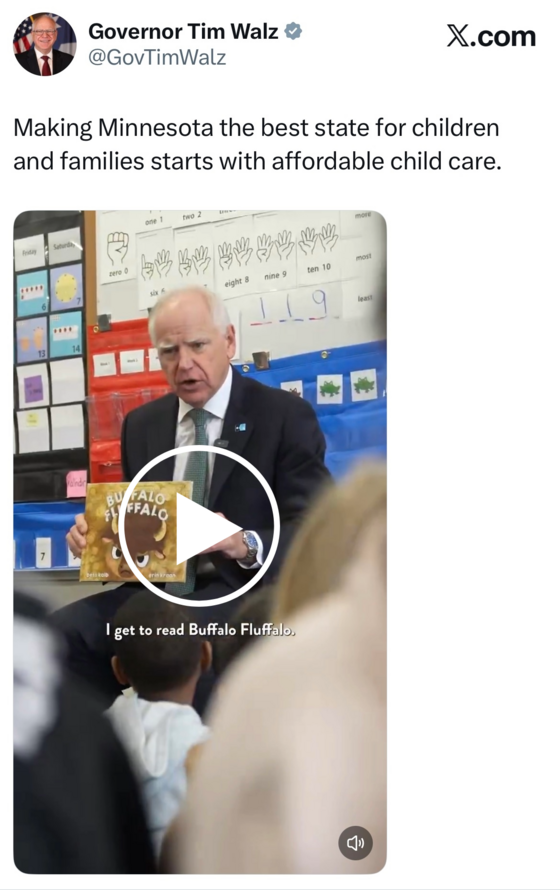
The Governor’s proposed budget would offset rising child care costs by providing families with child care refunds. Expanding the Dependent Care Tax Credit would benefit 104,800 families with young and school aged children and increase the maximum allowable expenses by $3,000 for one child and $6,000 for two or more children under five years old. The budget also includes $33 million for permanent supportive housing, $34 million for first-time homebuyer downpayment assistance, and a cut to the statewide sales tax by .075%, which would be the first sales tax cut in state history.
Supporting Workers Impacted by Artificial Intelligence and Making Tech Companies Pay Their Fair Share
Artificial intelligence (AI) is rapidly transforming industries, business practices, and jobs. As tech companies see record profits while workers bear the costs, the Governor is proposing proactive steps to ensure workers and businesses are prepared to compete and succeed in the changing economic landscape. The Governor is proposing a social media tax on tech companies with over 100,000 monthly users. The revenue would be dedicated to workforce and economic development initiatives designed to prepare Minnesota’s workforce and businesses for increased AI adoption and other emerging technologies. He is also proposing a new Governor’s Council on the Future AI Economy that would help provide guidance on how funds should be invested to ensure Minnesota remains a leader in innovation while ensuring Minnesotans benefit from technological change.
Operation Metro Surge Response
Operation Metro Surge had significant financial and societal impacts on Minnesota families, children, schools, businesses, and the economy. The Governor’s supplemental budget prioritizes resources to help Minnesota recover, with $10 million in partially forgivable loans for businesses that faced significant revenue loss; a $10 million investment in the Human Services Response fund at the Department of Human Services to help support the health and wellbeing of Minnesotans; and rental support for 9,150 Minnesota renters through the Family Homelessness Prevention and Assistance Program.
Gun Violence Prevention, Safety, and Security
Gun violence has inflicted immense heartbreak and loss in Minnesota. The Governor’s budget would build on previous gun violence prevention measures taken in Minnesota with proposals to ban military-style assault rifles and high-capacity magazines; ensure accountability among responsible gun owners by requiring safe storage and reporting of lost or stolen firearms; close the ghost gun loophole; implement a firearm insurance requirement; establish a firearm and ammunition tax; and create and expand early intervention resources, including school resources. The supplemental budget also includes increased penalties for impersonating a police officer and funding for Capitol security enhancements.
Fraud Prevention and Financial Integrity
Governor Walz and state leaders have taken extensive action to protect taxpayer dollars and strengthen program integrity across state government. The supplemental budget builds on these actions with increased detection and oversight, strengthened investigative and enforcement authority, and increased criminal penalties. The budget also establishes a Statewide Office of Inspector General; prohibits legislatively named grants; adds capacity for fraud prevention at the Attorney General’s Medicaid Fraud Unit; strengthens program integrity at Managed Care Organizations; and allocates $30M over three years to update Minnesota’s legacy IT systems.
Governor Walz announced Minnesota has secured more than $1 billion in federal investments to replace the Blatnik Bridge between Duluth and Superior, Wisconsin, clearing the way for the largest public works project in Minnesota history.
“This is a major win for Minnesota and the Twin Ports,” said Governor Walz. “Replacing the Blatnik Bridge will improve safety, strengthen our economy, and support thousands of good-paying jobs. This investment, signed into law by President Biden, should never have been put in jeopardy. Minnesota is ready to break ground and get this project started.”
“The Blatnik Bridge project is the top priority project for the Minnesota Department of Transportation, and securing this grant means the project can continue without delay,” said MnDOT Commissioner Nancy Daubenberger. “This project is happening because of a strong partnership between Minnesota, Wisconsin, local, tribal, and federal officials, our industry partners and our building trades. We look forward to continuing to work with our partners as we get closer to breaking ground and replacing this bridge.”
Minnesota and Wisconsin have each committed $400 million in state funding. The project was awarded a $1.058 billion federal grant in January 2024 after passage of the bipartisan Infrastructure Investment and Jobs Act. However, the U.S. Department of Transportation did not finalize the necessary grant agreement amendment to release the funds for design and construction until this week. Preliminary construction is expected to begin later this year.
The John A. Blatnik Bridge, which opened in 1961, carries I-535 over St. Louis Bay and serves approximately 33,000 vehicles each day. It is a critical freight corridor, supporting more than $3.7 billion in goods movement annually between the Twin Ports. The bridge is currently rated in poor condition, with weight restrictions and safety concerns, and is nearing the end of its service life.
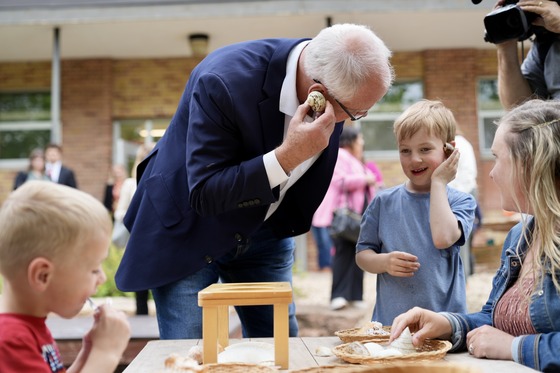 Last week, Governor Walz encouraged Minnesotans to file for the state’s nation-leading child tax credit, highlighting data showing that thousands of Minnesota families have already benefited from the credit, which helps families afford necessities and lifts children out of poverty.
So far this year, more than 154,000 tax returns have claimed the Child Tax Credit, benefiting over 318,000 children across Minnesota. Families are receiving an average credit of $2,669. The credit is estimated to reduce child poverty by up to a third in Minnesota, making it one of the most impactful investments in children and families in state history.
“These numbers show exactly why we created the Child Tax Credit: to put money in the pockets of working families and lift children out of poverty,” said Governor Walz. “Hundreds of thousands of Minnesota children are already benefiting this tax season, and we want every eligible family to make sure they claim the credit when they file their taxes this year.”
Minnesota’s Child Tax Credit allows families to receive up to $1,750 per qualifying child. The credit is refundable, meaning families can receive the full value even if they do not owe state income tax.
|