|
As the third quarter comes to a close, we look ahead to Crash Responder Safety Week, November 2–6, an opportunity to recognize the people behind the flashing lights and remind drivers to give them room to work. This edition highlights ways Minnesota’s response community can participate through local outreach, joint messaging and TIM training. Every agency and discipline has a role in sharing the message that responder safety matters on every call.
We also explore how Traffic Incident Management puts familiar National Incident Management System principles into practice during everyday roadway responses. Common terminology, clear responsibilities and a shared plan help responders anticipate one another’s needs and adapt as conditions change. Whether responding to a crash, assisting a stranded motorist or clearing debris, MnTIM helps connect each discipline’s skills through a coordinated approach to protecting responders and the traveling public.
With shorter daylight hours and changing weather ahead, now is a good time to reinforce the habits that support safer scenes: safe vehicle positioning, high-visibility practices, clear communication, and safe, quick clearance. The relationships and practices we build today help reduce responder exposure, prevent secondary crashes and get everyone home safely.
George Burger, Office of Traffic Safety
Tony Kasella, Department of Transportation
Lt. Brian Schwartz, Minnesota State Patrol
In this issue:
- Crash Responder Safety Week
- Parallels between TIM and NIMS
- Training
- Responder Resources
- Crash Data
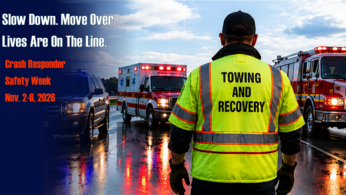
You can hear the tires approaching before you see the vehicle. You glance up from the patient, the tow hookup, or the debris you’re clearing and wonder: Does that driver see us?
That moment is why Crash Responder Safety Week matters.
Crash Responder Safety Week is November 2–6, 2026 and this year’s campaign carries a message every roadway responder can appreciate: “Slow Down, Move Over. Lives are on the Line!” It recognizes the risks faced by law enforcement, fire and rescue, EMS, towing and recovery, transportation, and public works personnel. The campaign asks drivers to stay alert and give responders room to work, whether they are handling a crash, helping a stranded motorist, or clearing debris. National Crash Responder Safety Week information
For Minnesota’s response community, the week offers an opportunity to put local faces behind that message. The person standing beside the road might be a neighbor, a volunteer firefighter, a parent, or a friend. A driver may see flashing lights and a temporary delay. Our outreach can help them see the people working beyond those lights.
Start planning now. Consider sharing a responder’s perspective on your agency’s social media, teaming up with a towing company or highway department for a joint message, or discussing a recent close call at a shift briefing. Ask your crew: What do we wish every driver understood about working beside traffic? Their answers could become your strongest outreach material.
The national campaign also encourages responders to complete the free, four-hour National Traffic Incident Management training. Agencies can find customizable outreach materials and participate using #CRSW2026. The national kickoff webinar is scheduled for November 2 at noon Central Time; event details and resources are available on the Crash Responder Safety Week webpage.
Choose one action your agency can take this November, and involve the partners you work beside on the roadway. Every uniform, every truck, and every person at the scene deserves enough space to do the job and the chance to get home afterward.
|
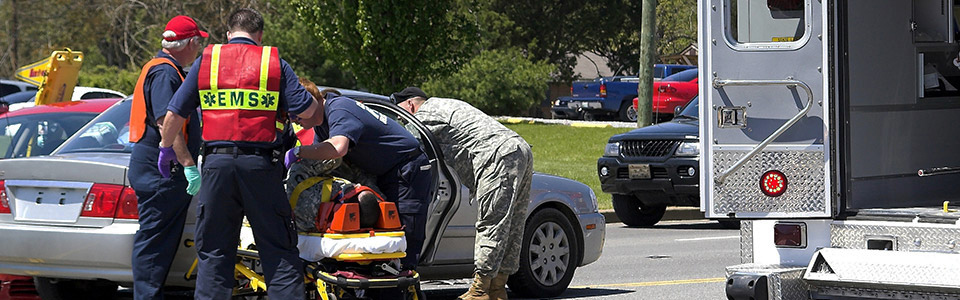 How TIM puts NIMS principles to work where responders need them most.
It’s dark. Two vehicles are blocking the roadway. Someone needs medical attention, traffic is backing up, and your radio won’t stop talking.
Fire needs room to work. EMS needs a way in and out. Law enforcement needs to investigate. The tow operator needs access to the damaged vehicles. Somewhere behind you, drivers are approaching a line of stopped traffic.
Everyone has a job. But does everyone have the same plan?
That’s where Traffic Incident Management (TIM) and the National Incident Management System (NIMS) connect.
You may associate NIMS with an online course and a certificate filed away somewhere. But its principles have a practical place at the crashes you handle every week. NIMS provides a framework for agencies to work together, including the Incident Command System (ICS) used to organize a response. TIM applies that coordination to the particular challenges of working on a roadway. FHWA’s guide to ICS for transportation professionals explains this relationship.
Consider a familiar scene: one responder expects a lane to reopen while another still has equipment in it. Both may have good reasons for what they’re doing. The missing piece is a shared understanding of what happens next.
Common terminology, clear assignments, and coordinated decisions help close that gap. When agencies share responsibility for an incident, Unified Command allows them to establish common objectives while retaining their own authority. The organization can also grow with the incident. A straightforward crash needs less structure than a major pileup. Remember, incidents expand and contract.
Picture a brief coordination conversation at that same crash: Where does EMS need access? What must investigators finish before a vehicle can move? What space does the tow operator need? Who will communicate a change in the lane closure?
Those questions turn individual tasks into a coordinated operation. They also give responders an opportunity to catch a problem before someone moves a truck, shifts a barrier, or steps into an unexpected traffic opening.
The benefit extends beyond the damaged vehicles. A growing backup exposes approaching drivers to another crash, while responders continue working near traffic. TIM emphasizes protecting people and clearing incidents safely and efficiently, helping reduce both exposure and secondary crashes. That makes traffic management part of scene safety from the beginning. FHWA’s overview of TIM
This is also why training together matters. A law enforcement officer, firefighter, EMT, highway worker, and tow operator can look at the same scene and notice five different problems. Hearing those perspectives before the next call helps everyone ask better questions when it counts.
At your next crash, try one simple check: Does everyone involved know the plan and how will they hear it when it changes?
The answer matters to the person treating a patient, the person loading a wreck, and the person watching traffic approach. TIM gives those responders a way to put familiar incident management principles into practice, with a shared goal: finish the work safely and get everyone home.
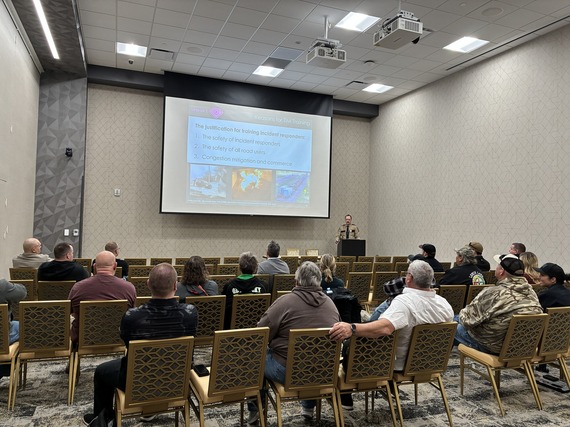 TIM training session at the Minnesota Tribal Traffic Safety Summit.
MnTIM training continues to build momentum across the state. So far in 2026, we have held 27 MnTIM classes and trained a total of 589 responders and partners.
This includes:
-
207 law enforcement responders
-
196 fire/rescue responders
-
62 towing and recovery professionals
-
39 EMS responders
-
95 transportation professionals
-
20 participants from other disciplines
These numbers reflect strong participation from the many disciplines that respond to traffic incidents in Minnesota.
Thank you to everyone who has attended a MnTIM class, helped host a training, or encouraged others in your agency to participate. Every trained responder strengthens Minnesota’s traffic incident response system and helps make our roadways safer for responders and the traveling public.
Wednesday, September 30, 2026
8 a.m.–Noon
Richfield Fire Department, 6700 Portland Avenue Richfield, MN
Register
Tuesday, November 3, 2026
5:30–9:30 p.m.
Worthington Fire Department, 830 2nd Ave, Worthington, MN
Register
Wednesday, November 4, 2026
1 p.m.–5 p.m.
Willmar MnDOT, 2505 Transportation Rd, Willmar, MN
Register
Wednesday, November 18, 2026
5:30–9:30 p.m.
Mahnomen Fire Hall, 124 E. Madison Ave., Mahnomen, MN
Register
Monday, January 4, 2027
8 a.m.–Noon
MSP Airport Fire Station #1, 6920 34th Ave S, Minneapolis, MN
Register
Monday, January 4, 2027
12:30 p.m.–4:30 p.m.
MSP Airport Fire Station #1, 6920 34th Ave S, Minneapolis, MN
Register
Thursday, January 7, 2027
8 a.m.–Noon
MSP Airport Fire Station #1, 6920 34th Ave S, Minneapolis, MN
Register
Thursday, January 7, 2027
12:30 p.m.–4:30 p.m.
MSP Airport Fire Station #1, 6920 34th Ave S, Minneapolis, MN
Register
Friday, January 8, 2027
8 a.m.–Noon
MSP Airport Fire Station #1, 6920 34th Ave S, Minneapolis, MN
Register
Friday, January 8, 2027
12:30 p.m.–4:30 p.m.
MSP Airport Fire Station #1, 6920 34th Ave S, Minneapolis, MN
Register
Tuesday, January 12, 2027
8 a.m.–Noon
MSP Airport Fire Station #1, 6920 34th Ave S, Minneapolis, MN
Register
Tuesday, January 12, 2027
12:30 p.m.–4:30 p.m.
MSP Airport Fire Station #1, 6920 34th Ave S, Minneapolis, MN
Register
Monday, March 29, 2027
1 p.m.–5 p.m.
Mystic Lake Center, 2400 Mystic Lk Blvd, Prior Lake, MN
Register
If you are interested in hosting a TIM training class click here.
Online Training is available through the FHWA and the Emergency Responder Safety Institute. Both offer the National TIM Training Certificate.
The Talking TIM webinar series provides a forum where TIM practitioners can exchange information about current practices, programs, and technologies. Each month, Talking TIM will highlight successful programs, identify best practices, and showcase technology that advances the profession.
https://transportationops.org/tim/talkingtim
Find various TIM-related publications from the Federal Highway Administration.
https://ops.fhwa.dot.gov/publications/publications.htm#tim
Visit mntim.org to find the latest news, training, and other information for Minnesota's Traffic Incident Management program.
MNCrash Data: January 1 - September 15, 2026
*Please note: Crash reports are continually being submitted to the database from which these results were calculated. Therefore, these results may continue to change depending on the search criteria used.
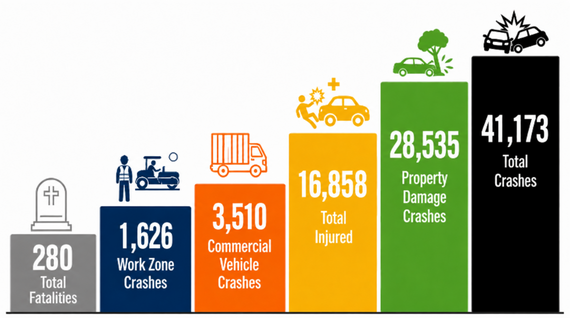 Source: https://mncrash.state.mn.us/
|