In this issue:
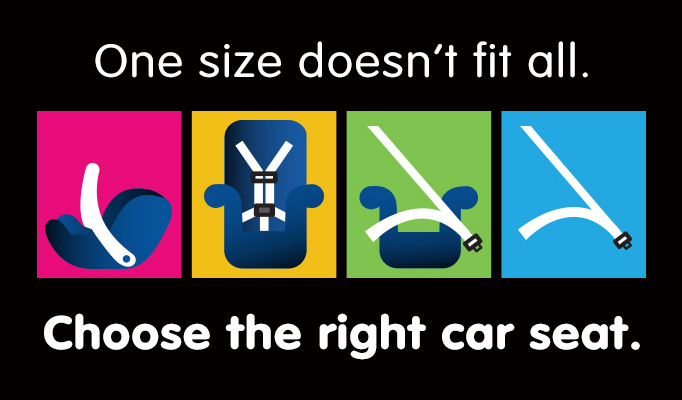 It’s important to follow best practices to keep your littlest passengers safe.
Figuring out the best way to keep kids safe in your vehicle can be complicated. The Minnesota Legislature has updated the Child Passenger Safety Law offering new guidance on child seats, booster seats and seat belts, adding increased safety measures to protect children. The law, which went into effect Aug. 1, may change how children ride in your vehicle.
-
Why it matters: Crashes are a leading cause of injury and death among children, according to our Office of Traffic Safety (OTS). Proper car seat use helps protect and minimize injuries to our youngest passengers.
-
What’s changed: Instead of just relying on the child's size, the law specifies ages for rear- and forward-facing car seats, booster seats and seat belts (subject to weight and height depending on the child seat manufacturer). In addition, the booster seat requirement has been increased from 8 to 9 years old.
-
Other rules: If a child falls into more than one category, then the child must be placed in the safer restraint for them.
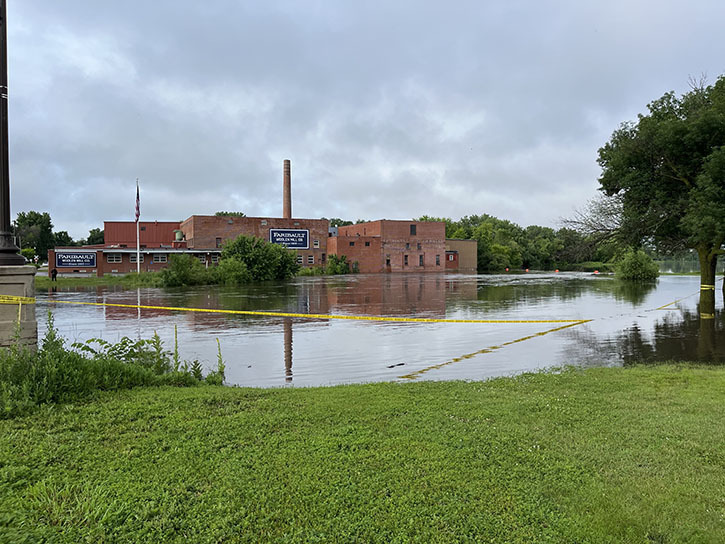 Faribault, Minn., in Rice County was one of many communities that struggled with flooding this summer. The Rice County Community Emergency Response Team was there to help.
When a flood hits a community like it did Faribault, Minn., earlier this summer, the amount of work that needs to go into responding and recovering can be overwhelming. While emergency services and public safety professionals jump into action, they don't always do it alone. Thankfully, Minnesotans are willing to step up to help their neighbors through the community emergency response team (CERT) program.
CERTs are coordinated with help from our Homeland Security and Emergency Management (HSEM) division, the Federal Emergency Management Agency (FEMA) and local partners — in the case of the Rice County CERT, the Faribault Fire Department.
-
Rice County CERT: During the emergency response, the team of 30 rolled up their sleeves and got to work filling sandbags, hauling damaged furniture out of flooded basements, removed damaged carpet and pushed water out of houses in the past weeks. They also pitched in to help in the emergency operations center.
-
Why it matters: “These are trained volunteers who make a huge difference for their neighbors," HSEM Director Kristi Rollwagen said. “It proves the value of these private-public partnerships, in which private individuals step in to help, adding to the resources provided by public servants."
-
There to help: It also lets professional responders focus on more complex tasks while CERT volunteers work together to make sure everyone's needs are met in the immediate aftermath of an emergency. Team members can help bridge the gap until professional responders are able to arrive on the scene of an emergency.
 The Minnesota Legislature enacted the law to reduce the number of vehicle and catalytic converter thefts in Minnesota.
Picture this: You get off work after a long day and head to the parking lot for your car. But it's not there. It's been stolen by someone intending to sell the pieces to a scrap metal dealer.
A set of new regulations for scrap metal dealers, including a new reporting system overseen by our Bureau of Criminal Apprehension (BCA), aims to help reduce the number of vehicle and catalytic converter thefts in our state.
-
The rules: Minnesota scrap metal dealers must register with the BCA and, starting Aug. 1, those that purchase vehicles or used, detached catalytic converters must report information about those purchases daily in compliance with Minnesota law.
-
How it helps: It will now be harder for catalytic converter thieves to find a buyer in Minnesota, due to the additional purchase criteria.
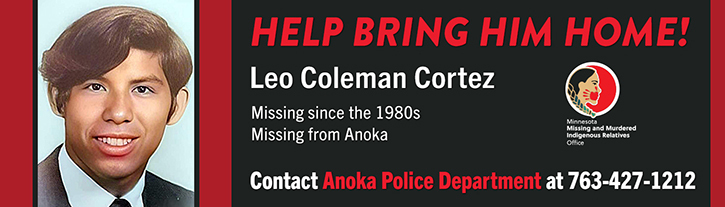
Our Missing and Murdered Indigenous Relatives (MMIR) Office is shining a new light on open cases through billboards in our area. The billboards are bringing hope to families, some of whom have been looking for their loved ones for decades.
The project features eight missing Indigenous people: Leo Coleman Cortez, Kateri Mishow, Mato Dow, Nevaeh Kingbird, Melissa Eagle Shield, Melissa Burt, Jeremy Jourdain and April Geyer.
The billboards went up this month in Minneapolis, Burnsville, Shoreview, Mounds View, Maplewood and Columbus township. MMIR collaborated with the families of each missing Indigenous person featured, as well as law enforcement agencies and Crimestoppers to pull together information on each person's case.
|