In this issue:
-
SFM: Fire sprinklers help save lives
-
OJP: New grants to address critical shortage of peace officers
-
DVS: Service numbers go up as more people get licensed
- Commissioner's corner: Flooding facts
- Featured social media
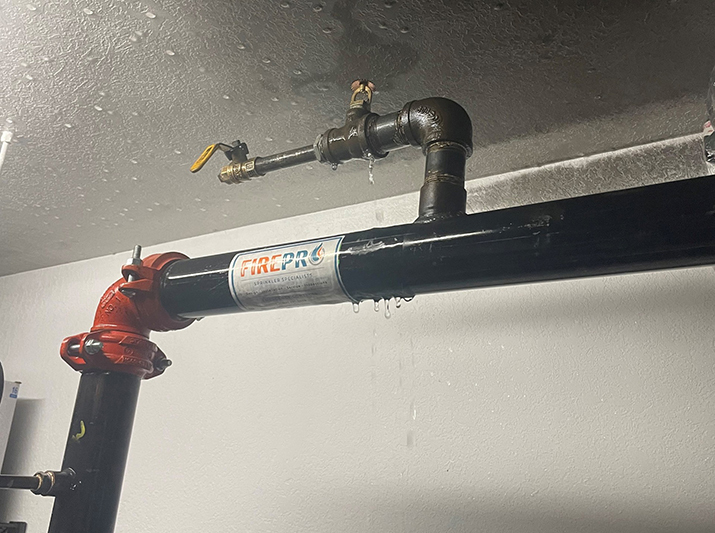 This sprinkler system helped prevent a May fire from turning deadly.
It was just before 5 in the morning on May 1 when an air exchange unit malfunction caused a fire at an assisted living facility in Meadowlands, Minn. Thankfully, the building had a fire sprinkler system, which activated and alerted both staff members and residents to the problem and extinguished the flames.
Fire sprinkler systems can mean the difference between life and death, according to experts in our State Fire Marshal (SFM) division.
-
Seconds count: “You may only have minutes to escape from a burning building, and fire sprinklers give you time when time is limited," Chief Deputy State Fire Marshal Amanda Swenson said. “Each second gives you and your loved ones more time to get to safety."
-
Making a difference: Our partners across the state reported 92 buildings were saved by sprinkler systems in 2023; however, we know not every save gets reported.
-
How they work: Fire sprinkler systems are designed to control fires until the fire department arrives. They increase fire safety in every building they are installed in.
Learn more about fire sprinklers and fire safety here.
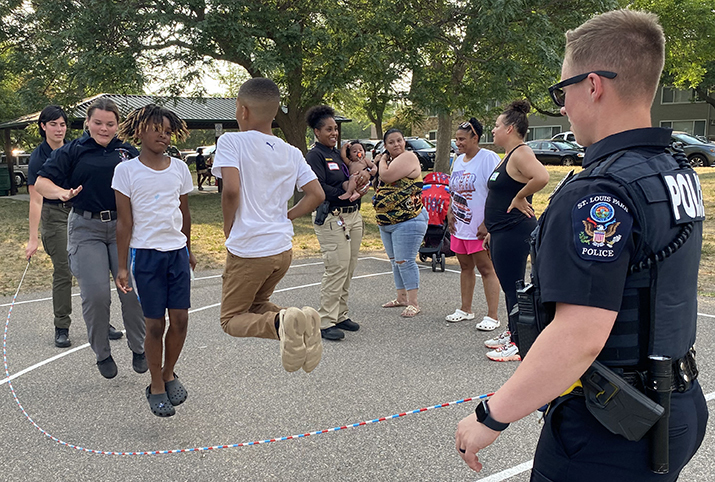 Officers from the St. Louis Park Police Department join local kids at a community event. The department is one of 35 agencies that received the Intensive Comprehensive Peace Officer Education and Training grant from our Office of Justice Programs.
As staffing shortages at law enforcement agencies across Minnesota are reaching critical levels, more and more agencies are looking to non-traditional job candidates — for example, those who have a career in another field and are looking to switch — to serve their communities.
A new grant program administered by our Office of Justice Programs (OJP) aims to help agencies fill their ranks with qualified candidates who are ready to step up for their neighbors
-
The program: The Intensive Comprehensive Peace Officer Education and Training (ICPOET) grant program, which was created by the Minnesota Legislature, will support law enforcement agencies who have a plan to recruit, educate, hire and train qualified two and four-year college graduates to become licensed peace officers.
-
ICPOET benefits: The program will offer $50,000 for each eligible candidate within a law enforcement agency, paying for the candidates' training and allowing them to earn a salary while in school.
-
Second round of funding: OJP will offer another $2.25 million in funding for agencies interested in participating in the second cohort. The request for proposal period will open on June 11 and close on July 31.
Learn more about the program and how you can apply here.
 Minnesotans take their written exams at a Drivers and Vehicle Services exam station.
Getting a driver’s license is a huge milestone. For many, it’s a special moment when they first hold that card in their hand.
The hardworking staff in our Driver and Vehicle Services (DVS) division are busier than ever making sure you get to experience that moment, serving 100,000 more Minnesotans between October 2022 and May 2023 than during the same time period the year before. We experienced a 10 percent increase, processing 1,134,477 licenses this year, compared to 1,027,387 last year.
-
New funding: The Minnesota Legislature gave DVS funding for 12 new examiners and more people to review applications.
-
Studying is important: Fifty-six percent of people statewide who take the written test, fail. The more you study, the more likely you pass on the first try.
-
Make your appointment: About a quarter of our exam appointments are wasted by no-shows. "We want folks to do the Minnesota nice thing and cancel their appointment if they know they're not going to be able to make it," Jody-Kay Petersen, Driver Services program director, said. “This way it can go back into the system so someone can grab that appointment."
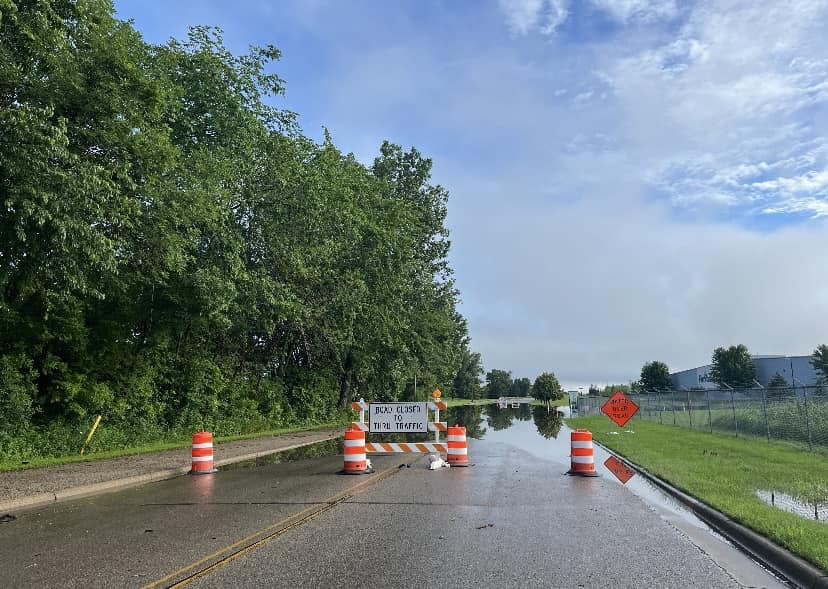 If you see a road closed for flooding, never try to drive through it.
Did you know that only 6 inches of fast-moving water can knock over and carry away an adult? Twelve inches of fast-moving water can carry away a car and 18-24 inches can carry away SUVs, vans and trucks. That's why you should never try to drive through flood waters.
Flooding has left parts of communities across the state underwater. The water continues to rise in some spots while cleanup has begun in other areas.
If there's flooding in your area:
- Stay out of floodwater, even if it is in your house. Floodwater may contain dangerous debris and could be contaminated with sewage, insects or animals. Water that covers outlets, appliances or cords may contain an active electrical current.
- Do not attempt to cross a flowing stream on foot. When it's moving fast, even water only six inches deep can knock you off your feet.
- Remember, “Turn Around, Don't Drown!" Never drive through flooded areas or standing water. Shallow, swiftly flowing water can wash a car from a roadway. Also, the roadbed may not be intact under the water.
- If the vehicle stalls, abandon it immediately and seek higher ground. Rapidly rising water may engulf the vehicle and its occupants.
|