In this issue:
- OJP: MMIR joins in search for Nevaeh Kingbird
- ECN: National alert test gives peace of mind
- HSEM: Take control in an emergency with three steps
- BCA: Drug dashboard to help fight opioid epidemic
- Commissioner's corner: Thousands to be licensed as Driver's License for All begins
- Featured social media
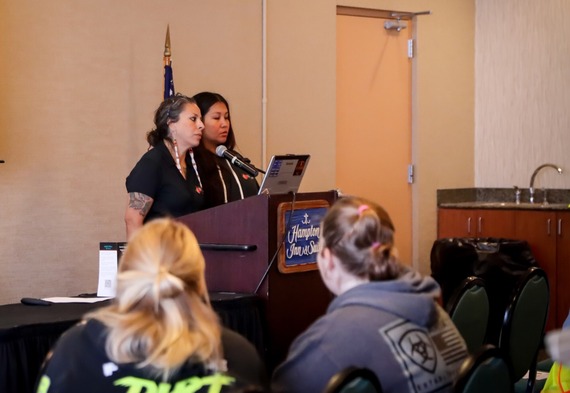 Ana Negrete of the Missing and Murdered Indigenous Relatives Office addresses the people gathered to search for Neveah Kingbird. Neveah’s mother, Teddi Wind, stands next to her.
For nearly two years, loved ones of Nevaeh Kingbird have lived with the pain of not knowing what happened to their beloved daughter, sister, niece and friend. A group of about 100 people came together Monday and Tuesday to see if they could find any sign of what happened the teen.
The two-day search marked the first time the Missing and Murdered Indigenous Relatives Office put boots on the ground alongside lead law enforcement agencies, Indigenous groups, family members, volunteers and private partners to conduct a large-scale search for evidence in a case of a missing Indigenous person.
-
Common goal: After months of organization, representatives from each group sat around the table with a common goal: bringing justice and comfort to an Indigenous community dealing with an insurmountable loss.
-
Evidence: Any potential clues, evidence or relevant items collected during the search will be taken to the Bemidji Police Department to be analyzed.
-
Vital work: “Our missing Indigenous loved ones matter and are not forgotten,” MMIR Director Juliet Rudie said. “We have to show up, and we have to keep looking until we bring them home.”
Learn more here.
 Picture this: It's raining cats and dogs outside. Meteorologists spot a tornado and issue a warning. But it doesn't get to you. You learn the storm has turned deadly as it whips through a neighborhood near your home.
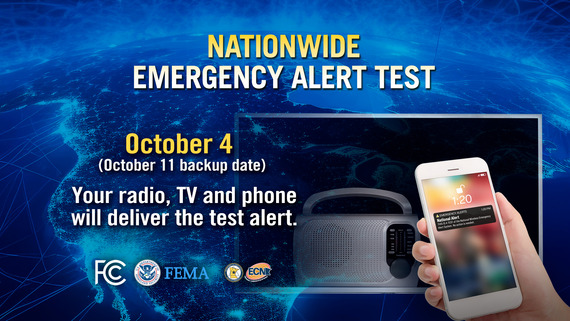
Our Emergency Communication Networks (ECN) is dedicated to making sure that never happens. That's why we are coordinating with the federal government to conduct a test of the Emergency Alert System (EAS) and Wireless Emergency Alerts (WEA) at approximately 1:20 p.m. Wednesday.
-
Time for troubleshooting: “When a tornado is coming, you need to know your warning system works; you don't have time for troubleshooting," John Dooley, ECN's deputy statewide interoperability coordinator, said. “This annual test gives us confidence in our technology and our ability to protect our friends, neighbors and loved ones across the state — and across the country."
-
No set up: You don't need to do anything special to make sure your phone will receive it. There's no sign-up, account or subscription to the WEA system.
-
Backup date: If the test is postponed due to severe weather, the testing date is Oct. 11.
Learn more here.
 As National Preparedness Month comes to a close, make sure you’re ready for an emergency.
Having a plan can save you precious time in an emergency, when every second counts.
That's why our Homeland Security and Emergency Management (HSEM) division is teaming up with the Federal Emergency Management Agency (FEMA) to support local efforts to get ready with three steps this National Preparedness Month:
-
Assess your needs: What those steps look like will be different for each person. Do you have medications that need refrigeration, rely on mobility or assistive devices or take care of a pet? Each of those will factor into what you'll need to stay safe in a disaster or emergency.
-
Make a plan: Once you assess your needs, you can tailor your plans to make sure they are met. This can include building a kit that includes extra medication, having a way to store medications in an emergency and planning for your pets or service animals.
-
Engage your support network: Reaching out to family, friends and neighbors can help you build a support network that can support you before, during and after a disaster or emergency.
Learn more here.
 Synthetic opioids such as fentanyl contributed to the deaths of 958 people in our state last year. While the opioid epidemic is not new, here in the state of Minnesota, we are finding new ways to address the complex law enforcement and public health challenges caused by illicit drug use.
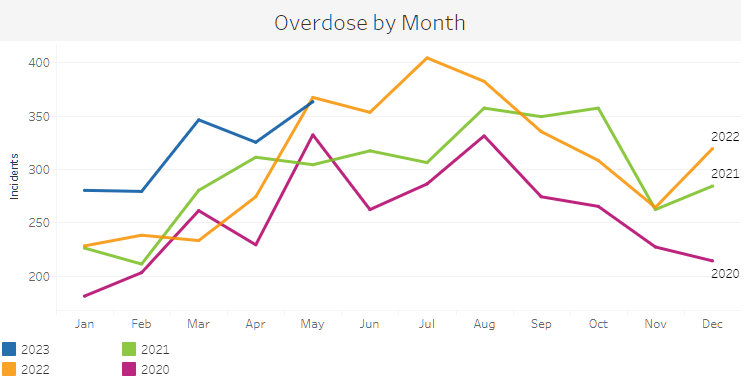
Our Bureau of Criminal Apprehension (BCA) launched a new dashboard this week to help inform efforts to prevent and respond to drug overdoses, drug-related deaths and drug-related crimes in Minnesota. The Minnesota Drug Crimes and Overdose Dashboard is a tool for trend analysis that aims to help people across our state prevent tragedies.
-
Understanding the problem: “We hope that making information about drug arrests, overdoses and deaths available in a single location will help law enforcement, medical service providers and others as they work to understand illicit drug use and its impact on our communities," BCA Superintendent Drew Evans said.
-
Publicly available data: With a few clicks on the interactive graphics, you can narrow down drug overdoses by month, examine crime rates by county or discover what percentage of drug-related deaths were caused by opioids compared to methamphetamine.
-
Not just numbers: “EMS data is not just numbers; it embodies the stories of real people, families and communities affected by the opioid epidemic," said Dylan Ferguson, executive director of the EMS Regulatory Board. “It provides us with a unique lens into the challenges faced on the front lines and can help craft tailored strategies that make a difference."
Learn more here.
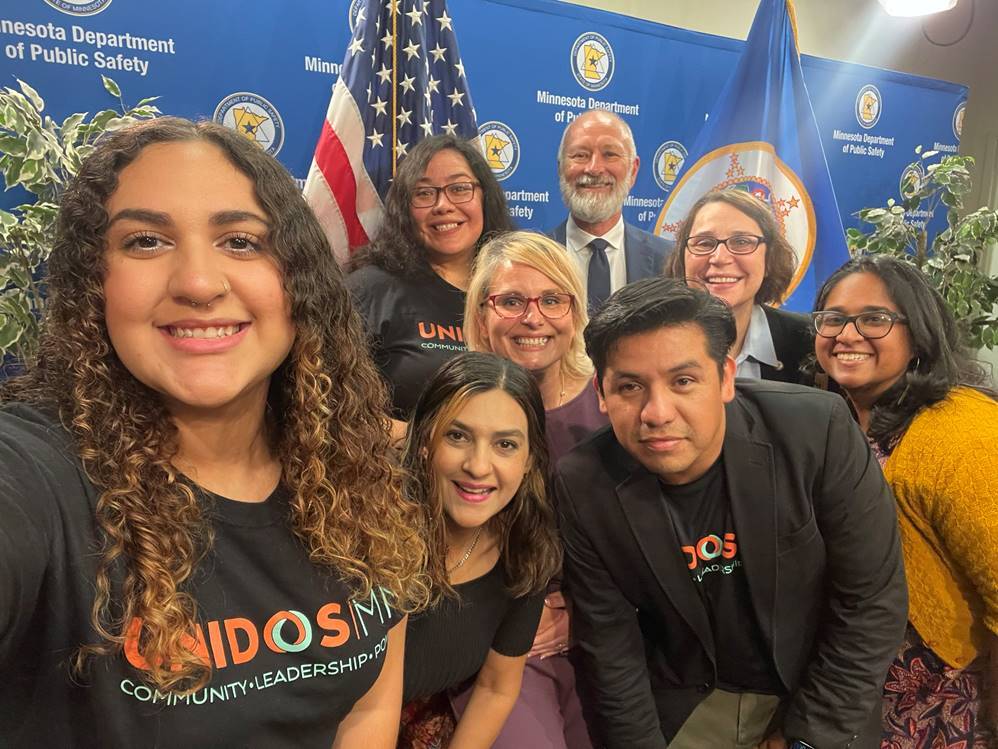 An estimated 81,000 Minnesotans are eligible to become licensed drivers as of this week, when Driver's License for All went into effect.
Starting this week, Minnesotans no longer need to provide proof of legal presence in the U.S. to obtain a standard driver’s license. You will need to provide proof of your identity with documents either in English or translated into English. DVS has a list of accepted documents.
Driver’s License for All increases equity by providing individuals access to legal driving and valid identification across the state, making it easier for people to do things like drive to school, get their groceries or even pick up their kids from daycare. It improves road safety, because licensed drivers must demonstrate their familiarity with driving laws by passing the knowledge and driving exams.
|