In this issue:
- BCA: Changes to labor trafficking law protect Minnesotans
- ECN: Training specializes in keeping up communication when it’s critical
- OJP: Grants put resources in hands of local community experts
- Commissioner's corner
- Featured social media
 Our Bureau of Criminal Apprehension has more tools to stop labor trafficking thanks to changes approved earlier this year by the Minnesota Legislature.
Imagine: You're offered a job that sounds too good to be true. You take it, but before you start, your boss explains that there is required equipment you have to buy upfront that costs thousands of dollars. When you explain you can't pay, he says he'll loan you the money. He pressures you to turn over your car title as collateral since he says he's worried about you not paying back the loan. He expects you to work for free until he decides your debt is clear.
This is a crime in Minnesota and one our Bureau of Criminal Apprehension (BCA) now has more tools and ongoing, dedicated funding to put a stop to thanks to changes approved by the Minnesota Legislature earlier this year.
-
Changes to the statute:Minnesota's legislators updated the state's human trafficking law to further protect Minnesotans from labor trafficking, including situations where a trafficker coerces a victim with a real or alleged debt, effective Aug. 1
-
Expanded penalties:The updates create enhanced penalties for labor trafficking that results in death, continues for an extended period or causes great bodily harm.
-
What to do: If you suspect you or someone you know is being exploited for their labor, contact the BCA tip line at 651-793-7000 or tips@state.mn.us.
Learn more here.
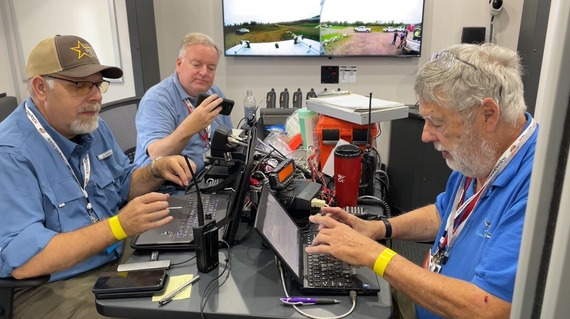 Participants in an Emergency Communication Networks training prepare to send an email message over the radio.
A windstorm has knocked out cell towers and phone lines — but residents and emergency responders still need to communicate. That's where our Emergency Communication Networks (ECN) division comes in.
As first responders rely more upon new communications technologies to better serve you in an emergency, it becomes critical that those who specialize in keeping communication networks up and running are prepared for anything.
That's why ECN's Communications Unit worked with Minnesota National Guard, federal, state and local organizations to conduct a joint communication exercise last month at Camp Ripley.
-
Alternative communication: The exercise brought together emergency responders from across Minnesota to learn more about alternative communication methods, such as sending an email message over the radio.
-
Hands-on experience: Participants learned more about the technical side of communications, such as putting up a reserve radio tower and working on an antenna.
-
Working together:At the end of the training, participants not only took home knowledge of the latest communications technology but also a familiarity with their counterparts across Minnesota.
Learn more here.
 Community organizations across Minnesota are there to lend a helping hand to those in need.
All across our state, Minnesotans are putting their passion to work and serving their community. Our Office of Justice Programs (OJP) currently has two funding opportunities available to support community-based violence prevention and intervention programs as well as youth early intervention programs.
-
Crime prevention: The Community Crime Intervention and Prevention Grant Program is designed to support what community members feel is the best way to address issues of violence. What that looks like can vary widely based on the needs of the people who live in a particular community.
-
Youth intervention: Communities have developed programs for youth and their families to serve those experiencing personal or familial problems. They are set up specifically to serve those under age 24.
-
Deadline approaching: The deadline to apply is 4 p.m. Sept. 25. Learn more about the programs and grant requirements on the OJP website.
Learn more here.
Our Driver and Vehicle Services (DVS) division aims to answer questions from Minnesotans of all backgrounds through our multilingual virtual assistant, found in the bottom right corner of drive.mn.gov. The project was recognized last month with the Google Cloud Customer Award for Diversity, Equity and Inclusion.
The virtual assistant leverages Google artificial intelligence to make interactions with DVS better for English, Hmong, Somali and Spanish speaking customers. As of Sept. 7, people have used the virtual assistant 120,526 times.
|