In this issue
- OTS: Minnesota’s summer off to deadly start
- AGE: Training the people on the front lines of alcohol enforcement
- DVS: Skip the line, get your tabs at our new kiosks
- ECN: FirstNet keeps first responders talking
- Commissioner's corner: Driving high is a DWI
- Upcoming events
- Featured social media
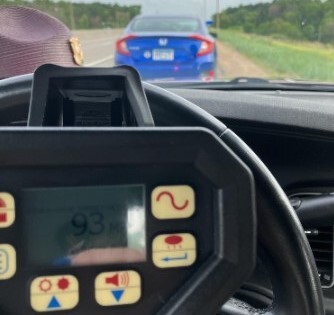 If a driver flies by you at 93 mph in a 60-mph zone, getting pulled over could save their life and yours. A trooper cited a 21-year-old male on Interstate 494 driving that fast on the Fourth of July.
We call the days between Memorial Day and Labor Day “the 100 deadliest days" to be on Minnesota's roads. So far this year, that name is turning out to be all too true.
Preliminary figures show 46 people have lost their lives in crashes during the first 25 days of the current 100 days.
-
Deadly start: This summer is off to one of the deadliest starts on our roads in more than 10 years. Sadly, those crashes are all about speed, lack of seat belt use, impairment and distraction.
-
Speed: Speed continues to be one of the leading causes of fatal and serious injury crashes across Minnesota. It contributed to an average of 85 deaths per year from 2013-2017, but an average of 122 deaths per year from 2018-2022.
-
Extra enforcement: To help motorists make safe driving decisions, our Office of Traffic Safety (OTS) launched a speeding extra enforcement and awareness campaign July 1. It runs through July 31.
Learn more here.
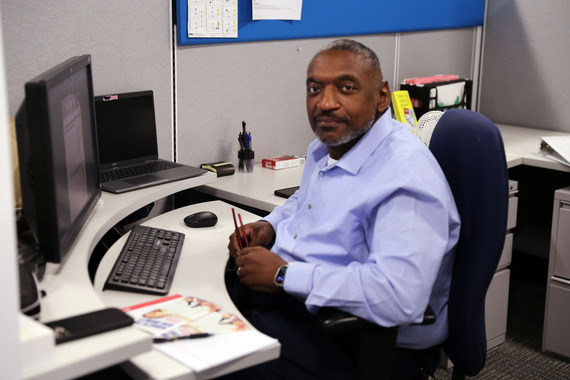 When not traveling across Minnesota, Responsible Beverage Server Liaison Cleven Duncan reviews the curriculum of the Train the Trainer Program out of the Alcohol and Gambling Enforcement division headquarters in St. Paul.
Those in the hospitality industry need to know the signs of intoxication and how to spot an invalid ID. The Office of Traffic Safety (OTS) and our Alcohol and Gambling Enforcement (AGE) division worked together to develop a Train the Trainer Program to share their expertise with people across Minnesota. AGE Responsible Beverage Server Liaison Cleven Duncan travels the state to make sure Minnesotans know what the law is and how to best follow it when serving alcohol.
-
Extensive benefits: “The benefits of responsibly consuming alcohol go well beyond AGE,” Duncan said. “With this partnership, we can reduce crime, reduce traffic crashes and save lives.”
-
Sharing knowledge: Duncan discusses not only how to prevent irresponsible drinking behaviors, but also how to teach others the same techniques. After the course is done, each participant can take the knowledge back to their organization and use it to help keep their communities safe.
-
Real-world impact: “When you put actual numbers like the more than 30 deaths so far this year in front of students, they understand how important their work can be,” Duncan said. “After that, when we discuss cutting customers off or identifying invalid IDs, people are always engaged.”
Learn more here.
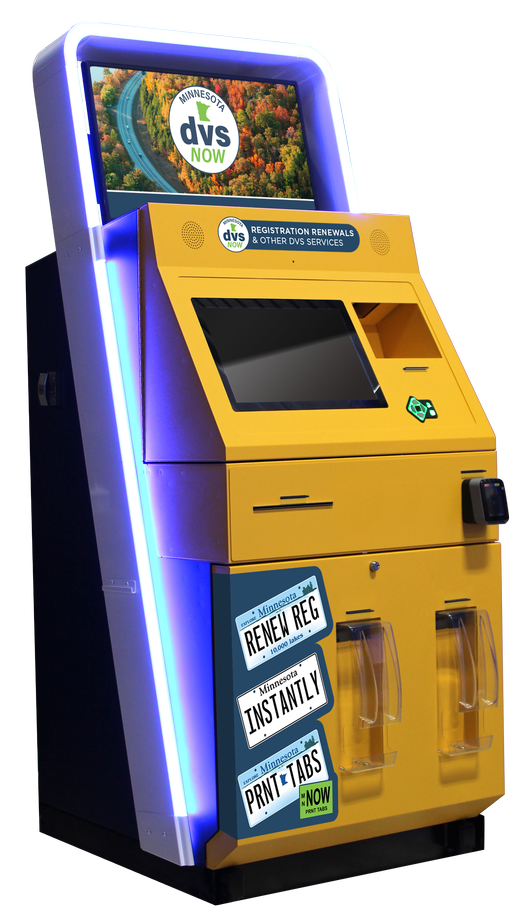 DVS Now kiosks, seen here, are being installed in Minnesota as part of a new program.
With the implementation of Driver's License for All and new ways to get services in multiple languages, our Driver and Vehicle Services (DVS) division staff will be busier than ever. That's why we're looking at ways to save you time.
A new program will make getting your tabs as easy as hitting an ATM for some cash. Our DVS Now kiosks are being installed at select locations throughout the state.
-
Convenient: The kiosks allow you to skip the line and renew your registration with a touch of a few buttons at a deputy registrar office or even the grocery store.
-
Easy to use: DVS Now kiosks use scanning and touchscreen technology to securely update registration information. Step-by-step instructions, along with optional voice assistance, are provided on-screen in English or Spanish. After you put in the information, your tabs print instantly at the kiosk.
Learn more here.
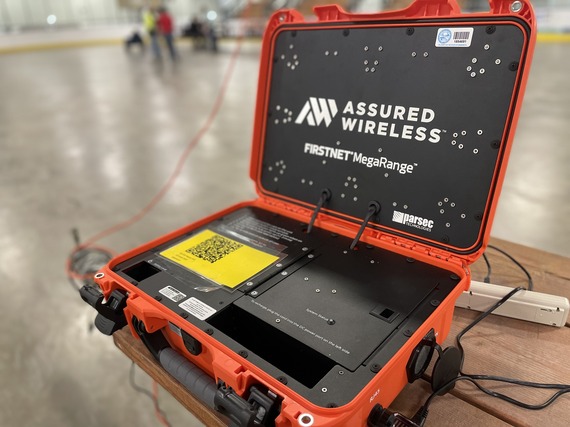 First responders used FirstNet technology during a recent training exercise in greater Minnesota.
We've all been there: You're standing in a crowd of people, and you need to meet up with your group. You try to call them, but the call won't go through. There are too many people on the network.
Now imagine that you're a paramedic and you're trying to get information about your patient to the doctors who will take care of them at the hospital. You run into the same problem.
Without a program like our Emergency Communication Networks (ECN) division's partnership with FirstNet and the federal First Responder Network Authority, those two vastly different communications needs would be treated the same by the network, neither given priority over the other.
-
Communication is vital: “Communication during an emergency can literally save lives," ECN's wireless broadband program manager Melinda Miller said. “It is the No. 1 reason plans fail or succeed in the field."
-
Increased connectivity: The program is meant to supplement voice communication, offering affordable and reliable internet access, even in rural areas. While nothing beats ECN's Allied Radio Matrix for Emergency Response (ARMER)system for voice communication, FirstNet offers first responders unparalleled data services.
-
Future expansion: While the terms of the initial state plan have been met, FirstNet will continue developing the network. Technology is always evolving, and the network will evolve with it.
Learn more here.
Drugged driving-related incidents on the road are increasing in Minnesota. Drugged driving accounted for 6,941 DWI incidents from 2012-2016 compared with 15,747 from 2017-2021 — that’s a 127 percent increase.
In cases involving driving under the influence of drugs, cannabinoids are one of the most prevalent drug classes indicated in the screening of blood and urine samples. They are often seen in conjunction with other controlled substances and alcohol.
The legalization of cannabis — effective Aug. 1 — has far-reaching effects. As we adjust, it will be important for everyone who lives here to have accurate information to help keep themselves and their loved ones safe. Learn more in our cannabis FAQ.
Upcoming events
National Night Out — Tuesday, Aug. 1
- 4:30-7 p.m. at Parque Castillo, 149 Cesar Chavez St., St. Paul
- 5-8 p.m. at BCA Headquarters, 1430 Maryland Ave. E., St. Paul
|