In this issue
- Speed survey to give direction as we tackle dangerous driving
- Permit to Carry annual report shines light on handguns
- When emergencies know no bounds
- Ask a trooper with Sgt. Jesse Grabow
- Featured social media
- Commissioner's corner: The first Experienced Traffic Safety Officer Academy
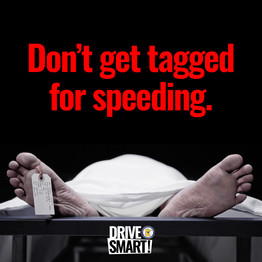
Our Office of Traffic Safety (OTS) knows how serious the speeding problem is in Minnesota. OTS is taking the problem seriously, working with partner agencies to create a speed survey intended to identify factors that contribute to speeding and other risky behaviors.
-
By the numbers: Last year, preliminary data show that approximately 27 percent of fatalities were speed related. Compare that with 35 percent in 2021 and 31 percent in 2020.
-
Our goal: “We really want to learn what the public thinks and to seek their input on the solutions that they think are going to be effective. We're not the only ones with good ideas out there," OTS Director Mike Hanson said.
-
How it will be used: After the survey results are in, M. Davis will complete their final report this fall. OTS and its traffic safety partners will then use the report to identify ways to help drivers make better decisions behind the wheel.
Learn more here.
|
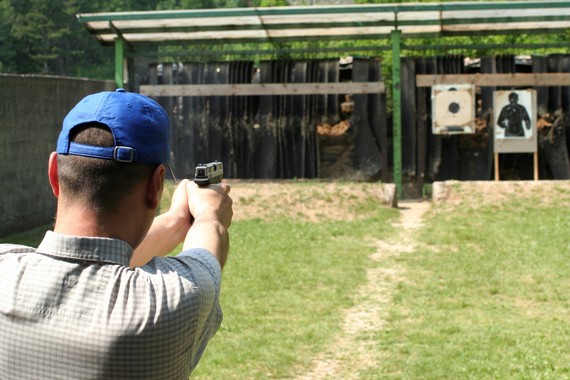 A man fires a handgun at a target.
Our Bureau of Criminal Apprehension (BCA) compiles a Permit to Carry report each year based on data submitted by Minnesota law enforcement agencies. Minnesota law requires us to release the report, but, more than that, it is information the public has a right to and an interest in.
-
Handgun permits: Just under 400,000 people have a permit to carry a handgun in Minnesota.
-
Leveling off: Minnesota saw a significant drop in the number of firearms permit applications and issuances after historic highs over the past two years.
-
Permit rules: To carry a pistol in Minnesota, you must apply for a permit from your local county sheriff's office in person and meet the certain requirements, listed here.
Learn more here.
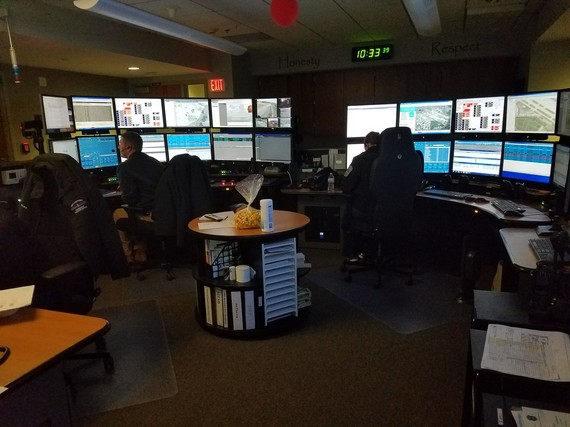 Dispatchers concentrate on their work to answer the call in an emergency in a 911 center.
Picture this: You're spending a long weekend camping near one of Minnesota's borders. You're having a good time on a hike or in a lake, then emergency strikes. That's where our Emergency Communications Networks (ECN) division comes in with an initiative to ensure efficient and fast response to 911 calls — no matter where you are. ECN is working with states alongside the Minnesota border to transfer 911 calls between dispatch centers on either side of the state border.
-
Why it matters: The program improves communication between agencies in different states, building on our common mission: Getting you help when and where you need it.
-
Information sharing: This system provides dispatchers the call back phone number of the wireless 911 caller as well as location information. This information allows dispatchers to immediately identify when a 911 call placed along the border is routed to a 911 center in the neighboring state.
Learn more here.
Ask a trooper with Sgt. Jesse Grabow
Question: What am I supposed to do if I am at a railroad crossing and need to report an emergency?
Answer: Call 911 and provide the needed information. Every highway-rail crossing has an Emergency Notification System (ENS) sign that provides a telephone number to report problems or emergencies at the railroad location. The blue ENS sign is located on the railroad crossing posts or the metal control box near the tracks. By providing the number on the sign, the dispatchers know exactly where the grade crossing is and can notify trains moving in that direction to either come to a stop or be placed on a speed restriction.
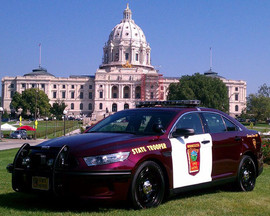
Twelve troopers joined the ranks of the Minnesota State Patrol Friday after graduating from the first Experienced Traffic Safety Academy. The academy — open to cadets with at least two years of sworn full-time experience in law enforcement — offered cadets a fast-tracked course in motor vehicle crash investigation, traffic law, emergency vehicle operations, scenario-based de-escalation, communication, and mental health crisis training and defensive tactics.
With the course complete, the troopers will attend additional training at the BCA before starting field training with another trooper. Following successful completion of field training, they will begin their solo patrols on June 21.
|
|