D1 - I-535 Blatnik Bridge in Duluth: 2027 construction
 
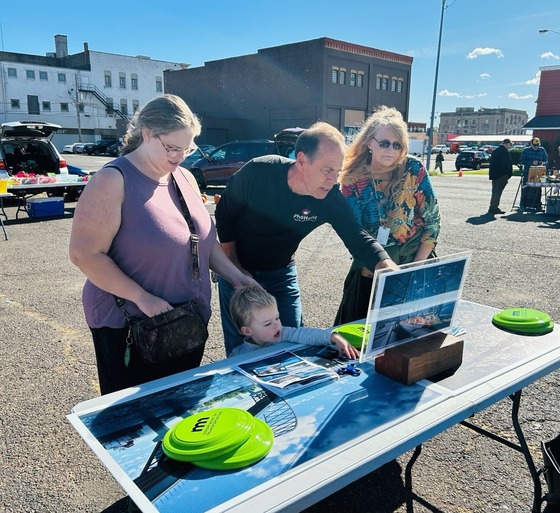
MnDOT and WisDOT staff hosted a pop‑up table at the Superior Farmers Market on Oct. 8 to meet community members where they are and share updates on the Blatnik Bridge project. Additional pop‑ups will be held across Superior in the coming weeks to keep the conversation going and connect with locals about the upcoming project. If your business or organization would like to host a pop-up event, please reach out.
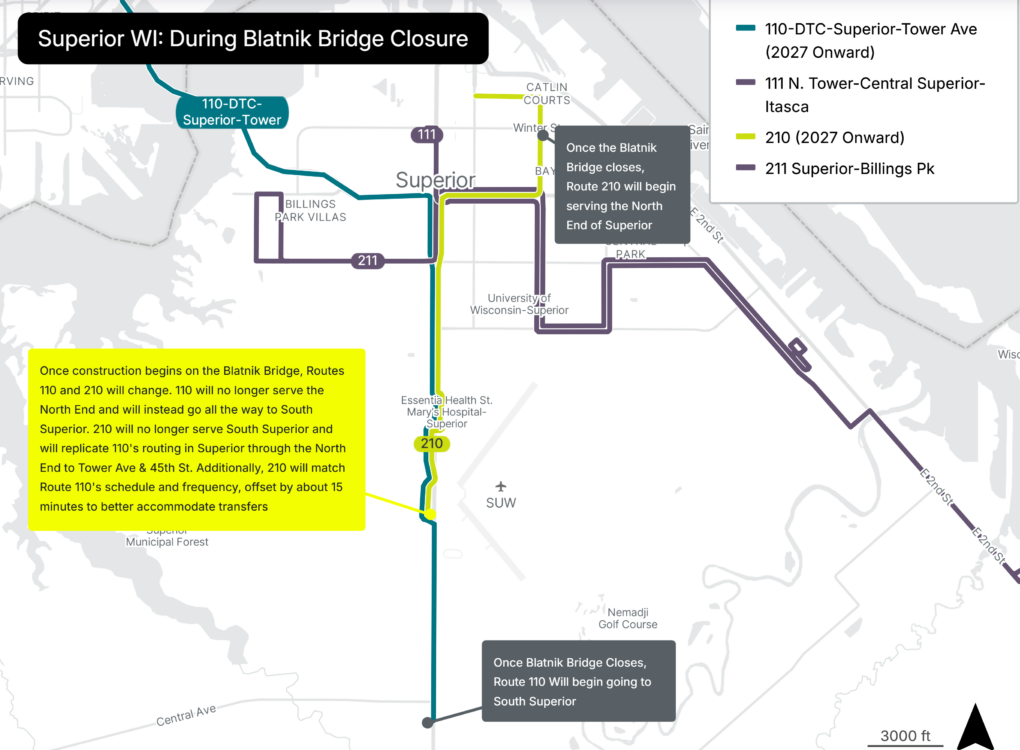
MnDOT and WisDOT are working hard ahead of the Blatnik Bridge closure to ensure everyone can get around the Twin Ports safely and efficiently. One of those ways is working with the Duluth Transit Authority (DTA).
At the end of August, the DTA added Route 210 to serve portions of south Superior, connecting that neighborhood with all other Superior routes during high commute times. The additional route is the first phase of a plan to provide more service to Superior. Route 210 operates seven days a week except on holidays. Service runs approximately 6-10 a.m. and 2-6 p.m., much in the way recently added Route 111 operates.
Today, the DTA has one route, Route 110, using the Blatnik Bridge to connect Duluth and Superior. Once the bridge closes in March, the DTA will adjust routes to serve commuters between Duluth and Superior. For the duration of construction, Route 110 be rerouted to the Bong Bridge, which will be the signed detour route for all traffic.
During that time, Routes 111 and 211 will remain in place but may experience slight changes in scheduled times to ensure all the routes connect. Route 110 will no longer serve the north end of Superior and will instead go all the way to south Superior. Route 210 will no longer serve south Superior but will instead replicate Route 110’s service in Superior through the north end to Tower Avenue and 45th Street. Additionally, Route 210 will match Route 110’s schedule and frequency, offset by about 15 minutes to better accommodate transfers.
On the Duluth side of the bridge, a shuttle route will operate between the Duluth Transportation Center and Garfield Avenue, terminating at Goodwill. This shuttle will operate approximately eight hours a day (split into morning and afternoon four-hour segments), a significant reduction from the Route 110 coverage but maintaining essential access to major employers along the corridor.
The DTA’s webpage is dedicated to keeping the public informed on routes and providing a preview of routes during the bridge construction. You can stay connected through the DTA Facebook page for opportunities and events to learn more about route changes and preview how the system will look in Superior after March 1.
The DTA also plans to collaborate with the Superior Public Library throughout the winter on route preview sessions/open houses and route previews.
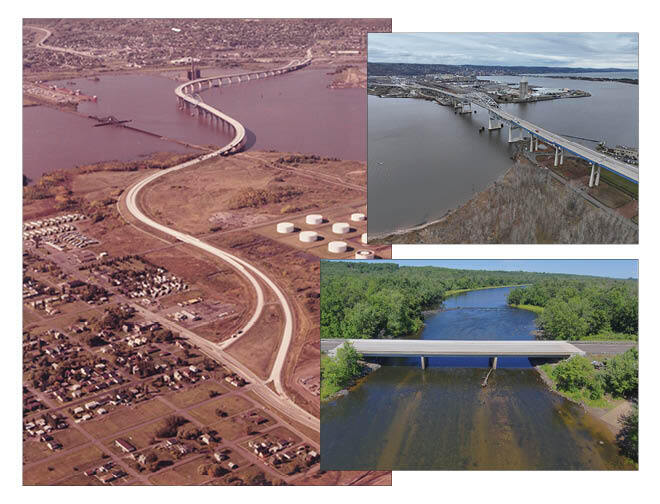 Above left: Bong Bridge, 1984, carries traffic across between Duluth and Superior. Top right: Blatnik Bridge also carries traffic between Duluth and Superior. Above right: MN 48/WIS 77 carries traffic between Hinckley and Danbury. Below: MN/WIS 70 carries traffic between Rock Creek and Grantsburg.
Six bridges cross from Minnesota into Wisconsin between the Minnesota Department of Transportation’s District 1 and Wisconsin Department of Transportation’s Northwest Region.
Of those, the states share ownership and maintenance of four bridges. Of those, the Blatnik Bridge is the oldest of the structures.
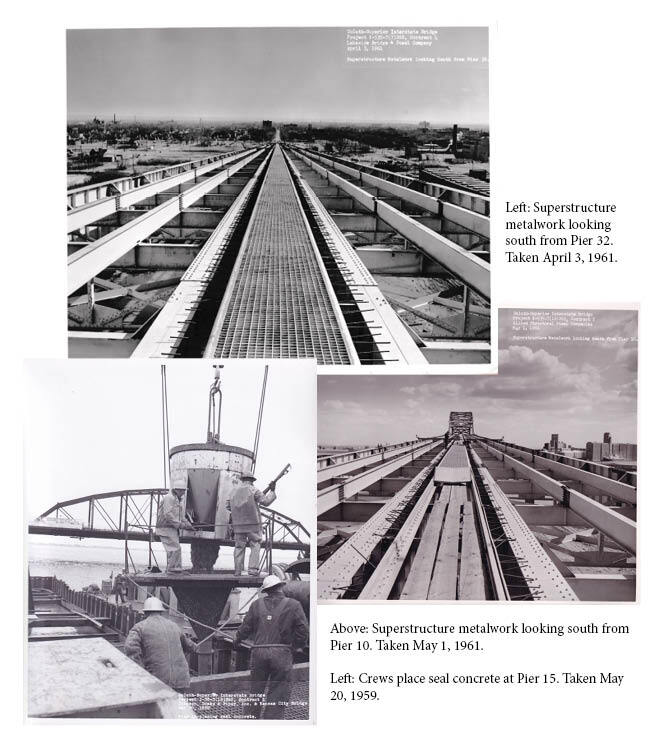
The Blatnik, which carries US 53 and I-35 over the St. Louis River between Duluth, MN, and Superior, WI, opened to traffic in December 1961. The structure is scheduled to close in early March. It will be demolished, and a new bridge will be built on the existing structure’s alignment.
The remaining three opened to traffic in:
- 1984: Bridge carrying MN 48 and WIS 77 over the St. Croix River between Hinckley, MN, and Danbury, WI
- 1985: Bong Bridge carrying US 2 over the St. Louis River between Duluth and Superior
- 1991: Bridge carrying MN/WI 70 over the St. Croix River between Rock Creek, MN, and Grantsburg, WI
In addition to these structures, the Oliver Bridge carries WIS 105 and rail traffic over the St. Louis River. Built in 1910, it’s maintained by the railroad. Built in 1919, the St. Louis River Bridge carries MN 23 between the states. That structure is maintained solely by Minnesota.
|

I came to Superior as a college student in the fall of 1997. I attended UWS for three years before I had to transfer elsewhere to obtain my engineering degree. I bought my first house in Superior fall of 2002, but my job has always been in Duluth. My quick “napkin math” pencils out to me crossing the bridge more than 12,000 times over the past 29 years.
The bridge has always offered me a great vantage point for catching the sunrise (or sea smoke) over the lake as I head to work, or the sunset over the Proctor hill as I head home. It also offered me the multitude of things that my career as a civil engineer has afforded me to work on from designing improvements for any of the rail-served terminals on the harbor, stormwater management systems that improve the river’s water quality for all users, or the roadways that are such a crucial part of our transportation economy.
My numerous trips across the bridge, especially in the winter, have empowered me to advocate for roadway safety elements that are part of the new design. Additionally, I am very excited for the addition of the shared-use path to the new bridge, as it carries many opportunities for both cities beyond the basic function of this new amenity.
Although he passed before I had a chance to meet him, I learned from my wife that her grandfather was an ironworker. And while his career took him many places away from home (Duluth), the years that he spent working on the Blatnik bridge while my mother-in-law was a preteen to teenager, was undeniably valuable during such a formative period in her life.
The Blatnik Bridge, when it was constructed, was a monumental upgrade from its predecessor, which among other things had limited structural capacity and was susceptible to vessel collisions (and experienced a couple during its lifespan). This next version will bring back the ability to cross on foot (or bike), upgrades the load-carrying capacity necessary for our economy and is better designed to fit our society’s needs.
It is incredibly rewarding to be involved with the next version of bridge that will last at least the next 4-plus generations, replacing the bridge my wife’s grandfather was part of constructing, while also living in the community that is affected by its temporary absence.
~ Pete Marthaler, MnDOT construction manager
|
More information
For more project information, please visit the project website.
Have a story idea or a question you'd like more information about? Email us.
Sign up for project email updates.
|