D1 - I-535 Blatnik Bridge in Duluth: 2027 construction
 
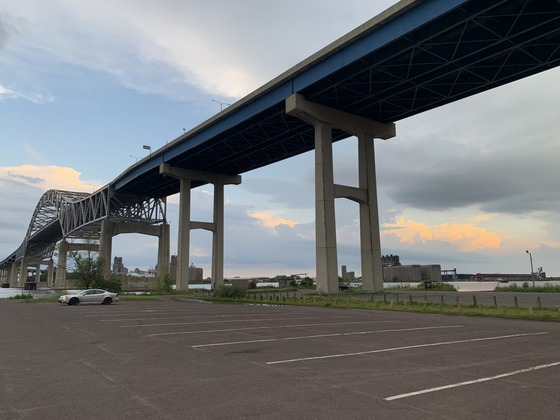 The Rice's Point public water access will be closed during the duration of the Blatnik Bridge project.
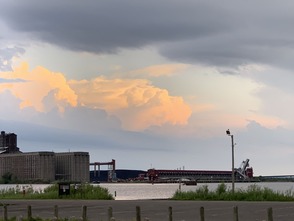
Every year thousands of people launch their boats from Rice’s Point public water access (PWA). Since the PWA will be closed during the Blatnik Bridge construction, boaters who use Rice’s Point as their go-to launch will need to find an alternative water access.
Rice’s Point use is diverse. Several charter fishing trips are launched from the PWA each summer. Fishing tournament organizers use Rice’s Point as a staging location. Anglers, pleasure boaters and paddlers use the PWA to access the water hundreds of times a year. Some boats require deep water for launching, while charter trips and tournaments need ample parking. Rice’s Point accommodates each of these needs. There is plenty of parking for large trucks and long trailers, even on the busiest summer day. Rice’s Point is also centrally located and, best of all, it’s free.
Rice's Point PWA will close this October, so, what’s everyone supposed to do during the roughly five-year closure? Given the multiple uses of Rice’s Point, it would be impossible to recommend a PWA that would work for everyone’s unique water access needs. But, it will be important that boaters with the trickiest requirements are prepared for the late 2026 season and beyond. That’s why you’re hearing about the closure well in advance of it impacting your use of Rice’s Point.
To get you started, the Minnesota DNR has a map of every PWA in the state by county. Check out the map for Southern St. Louis County PWAs. You can request a hard copy by calling the DNR’s information center at 651-296-6157. There are many other public and private launches up the North Shore as well as along the St. Louis River.
The Wisconsin DNR also offers a map to research access points.
Use this opportunity to explore our waterways and all that the estuary and Lake Superior have to offer. You might even find a new go-to spot to launch your boat.
|
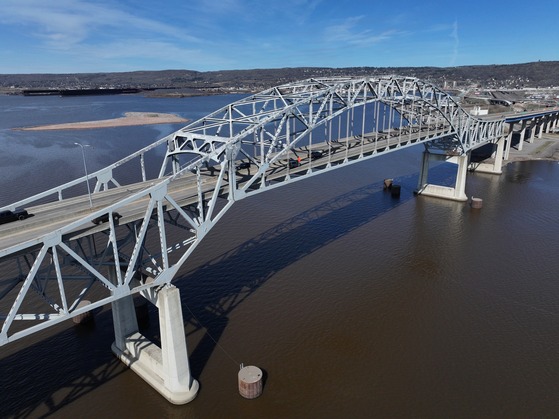 The round structures in the water near the bridge are called dolphins and are in place to protect the bridge piers.
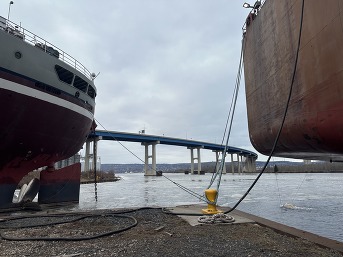
More than 30,000 vehicles per day cross the Blatnik Bridge between Minnesota and Wisconsin. Since its opening to traffic on Dec. 2, 1961, the bridge hasn’t been struck – despite having ships measuring just over 1,000 feet or less in length pass underneath the main span and the section of the bridge over the entrance to Howard’s Bay coming or going from docks or repairs.
The Blatnik is protected by “dolphins,” an impact protection system designed to protect bridge piers from vessel impacts – not the highly social marine mammal. Dolphins – round cylinders made of steel sheet pile filled with rock and topped with concrete – are positioned in the St. Louis River between the piers supporting the Blatnik Bridge’s main shipping channel and piers supporting the bridge over the entry to Howard’s Bay to protect the structure. If a ship or a barge struck the bridge piers, the hit could damage the bridge or cause it to collapse, possibly endangering the lives of motorists crossing it.
Nearing the end of its service life, the Blatnik Bridge is scheduled to be replaced in a multiyear project set to begin this fall. In planning for its replacement, the Minnesota and Wisconsin Departments of Transportation are planning to include dolphins to protect piers on the new structure from a possible collision in the future. The new pier protection system could include using some of the piers from the existing bridge.
|
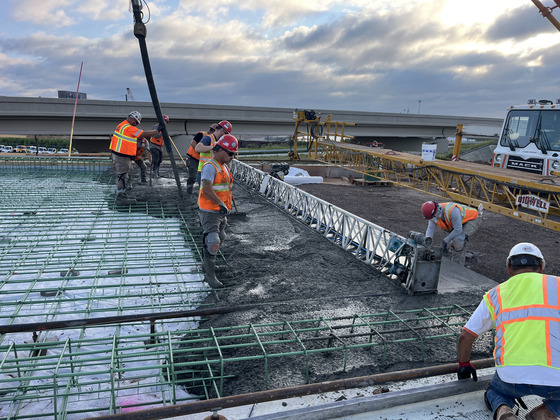 Workforce needs will be high on the Blatnik Bridge project.
The Blatnik Bridge project is the largest in both Minnesota's and Wisconsin's history, and the labor hours it will take to complete the project is also historic. While the number of workers isn't known yet, replacing the bridge is estimated to take 1.5-1.75 million labor hours.
With the design-build project, one main contractor is hired to be responsible for the project, but there will be numerous subcontractors hired to complete all the tasks required for such a major project.
Some of those jobs include
- Ironworkers
- Concrete pumping
- Erosion control
- Trucking
- Electrical
- Design
- Rebar supplier
- Structural metals supplier
Since MnDOT is the lead agency for the Blatnik project, Minnesota workforce goals apply: 12 percent people of color and 9 percent women. These county‑based goals are set by the Minnesota Department of Human Rights, and contractors must make a good‑faith effort to meet them.
The project also includes On-the-Job Training (OJT) goals, which are 195 trainees and 113,750 hours. The primary objective of MnDOT's OJT program is to assist with the development of a skilled and diverse highway construction workforce.
Learn more about the MnDOT and WisDOT workforce training programs.
Will any dredging be occurring as part of the project?
Dredging of the St. Louis River will occur to remove contaminated sediment in selected areas near the bridge as a part of the project. Minnesota and Wisconsin will be coordinating will all necessary agencies.
Will construction impact boat and ship traffic?
The Port of Duluth-Superior is the largest on the Great Lakes, and industries in both states rely heavily on boat and ship access. The project team coordinates with the US Coast Guard and must follow the agency's requirements for facilitating marine traffic. Construction will be staged to allow for boat and ship traffic to continue during bridge replacement.
For more FAQs, visit the project website.
More information
For more project information, please visit the project website.
Have a story idea or a question you'd like more information about? Email us.
Sign up for project email updates.
|