D1 - I-535 Blatnik Bridge in Duluth: 2027 construction
 
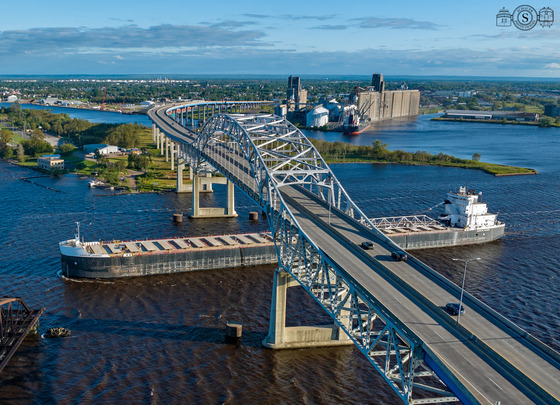 Photo courtesy of Schauer Photo Images
Editor’s note: This is the second story in a series of three, sharing the process of how we got to where we are today on the Blatnik Bridge project. Last month we talked about determining the purpose and need statement for the project.
Let’s talk NEPA process. As explained last month, states are required to follow the National Environmental Policy Act (NEPA) process. NEPA is a federal law that requires agencies to look at how major projects affect people, communities and the environment. States must follow this process – we don’t set the rules, we just follow them. Public input is included at every step.
At the start of the NEPA process, states are required to consider all possible options — from doing nothing to starting fresh with a completely blank slate. Technical teams then narrow down these options based on scope, schedule and budget before making a final decision. Again, the public is involved throughout.
How we evaluate options
There are multiple steps to find the best possible option.
First, we look at the technical questions:
- Will it extend the life of the structure?
- Will it make the structure stronger?
- Can it fix roadway and design issues?
- Will it improve traffic flow?
- Will it restore freight movement and keep port access?
- Will it improve bike and pedestrian connections?
Next, we look at the social, economic and environmental factors.
- Will it affect parks or historic sites?
- Can we reduce impacts to wetlands and waterways?
- How much land will we need? (including railroad and land-use changes)
- What are the economic impacts from closures or travel changes?
For the Blatnik Bridge possible alignments, the team
- Assessed general connection points, such as Garfield Avenue to Hammond Avenue, Garfield Avenue to Hwy 53, Garfield Avenue to Connors Point, etc.
- Did not include design details such as geometrics of intersection/interchanges
- Ran alignments through a screening process
- Eliminated tunnels and Connors Point bridge alignments from further evaluation
- Went through public and agency review
- Received informal concurrence from Federal Highway Administration (FHWA)
At least 25 different alternatives were explored, including closing the bridge, building the bridge on another alignment and building a tunnel. Each alternative was judged against the same determining factors. After review, we narrowed it down to five alternatives.
Why the existing alignment?
Reasons the team chose the existing alignment include
- Minimizes impacts to property and wetlands
- Allows for one phase construction, providing the shortest overall construction duration
- Provides greatest schedule acceleration opportunity since crews can work on any portion of the project at any time
- Closing the existing bridge eliminates risk of construction next to traveling vehicles
- Provides the lowest cost alternative
Other milestones
In January 2024, the project secured over $1 billion in federal Infrastructure for Rebuilding America (INFRA) grant funds.
In March 2024, the project received a Finding of No Significant Impact (FONSI). This confirmed the preferred option and allowed the project to move into the next phase.
Next month’s Part 3 of the series will cover what groundwork has been done to set the stage for bridge construction later this year.
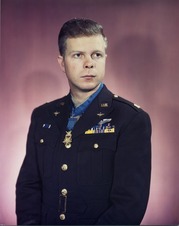
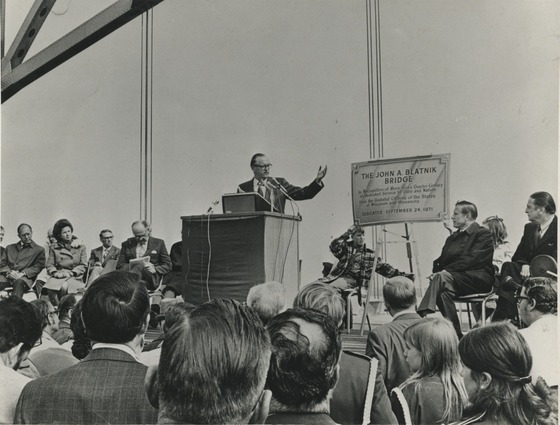 John Blatnik speaks at the Blatnik Bridge naming dedication held on the bridge, in 1971, which was 10 years after it opened to traffic. Bottom photo: The Bong Bridge is named for Richard I Bong, Medal of Honor recipient and America’s top pilot.
The Blatnik and The Bong. Thousands of people drive across these two bridges every day as they travel between Superior and Duluth. But did you know that both bridges are named after World War II heroes?
The Richard I. Bong Veterans Historical Center has created a new traveling exhibit that features the WWII experiences of Major Richard Bong and Capt. John Blatnik Jr. and the essential roles they both played in winning the war.
Bong, from Poplar, grew up a Wisconsin farm boy. His love of flying took him across the world in WWII, and while flying his beloved P-38, he shot his way to the very top of the list of American fighter pilots. He earned the title of America’s Ace of Aces and became a national hero.
Blatnik, from the Iron Range, served in the Office of Strategic Services (OSS), predecessor to the CIA, during WWII. After extensive training, he spent eight months hiding behind enemy lines in Slovenia and Croatia helping to evacuate downed Allied airmen. Blatnik’s story, due to classified information, is little known and shared in this exhibit for one of the first times publicly.
The exhibit features nine pull-up banners, along with many photos of both Bong and Blatnik during their military service, and, in Blatnik’s case, his impressive career in Congress after the war. It is available for temporary installation throughout the Twin Ports and beyond. For more information, please reach out to Briana Fiandt, director of exhibits and collections at the Richard Bong Veterans Historical Center, at fiandt@bongcenter.org or 715-718-7023.
|
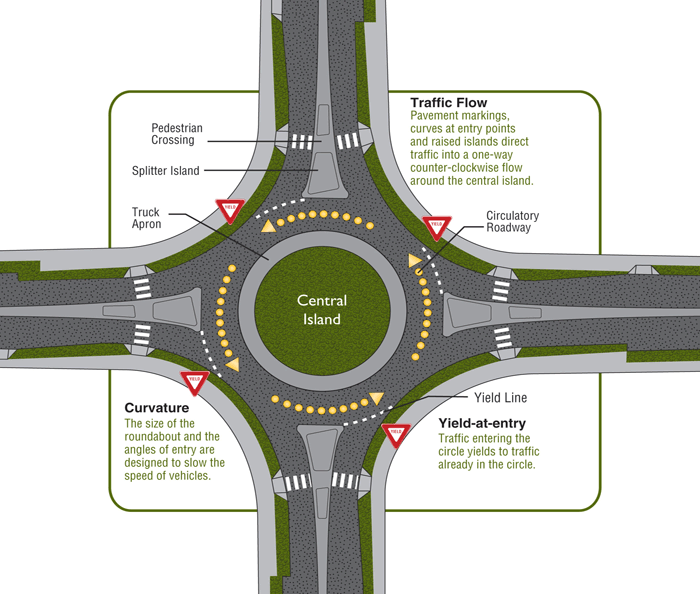 Graphic of a single-lane roundabout.
The Blatnik Bridge project includes two roundabouts in Superior so I-535 will no longer direct traffic onto Hammond Avenue. Instead, traffic will flow to Hwy 53, and those wishing to access downtown Superior will exit the interstate and navigate a roundabout to access city streets.
Both single-lane roundabouts will be built to accommodate semi-trucks and oversize, overweight loads.
While roundabouts are not new to Minnesota or Wisconsin, or even Superior and Duluth, the two states recognize the need for more education around driving the intersection controls. Roundabout education is included in driver training and discount classes for both young and seasoned drivers.
Drivers
- Slow down when approaching a roundabout. For multi-lane roundabouts, similar to the one on Hwy 2 in Superior at the Bong Bridge, get into the appropriate lane.
- Yield to pedestrians in the crosswalk whether you are entering or exiting the roundabout. It is the law.
- Yield to vehicles already in the roundabout. Merge into the traffic flow when it is safe.
- Continue through the roundabout until you reach your exit. Do not stop or pass in a roundabout.
- Exit the roundabout immediately if an emergency vehicle approaches, and then pull over. Do not stop in the roundabout.
- Give large trucks extra space in a roundabout. Large trucks may straddle both lanes while driving through a multilane roundabout.
Pedestrians
-
Cross only at crosswalks, and always stay on the designated walkways.
- Never cross to the central island.
- Cross the roundabout one approach at a time. Use the median island as a halfway point where you can check for approaching traffic.
-
Always check for vehicles before starting to cross, just like you would any street.
Bicyclists
- Ride with traffic inside the roundabout or use the crosswalks appropriately.
-
Follow the same rules as vehicles when riding with traffic and yield when entering the roundabout. Since traffic is slower inside the roundabout, cyclists should be able to travel at or near the same speed as motorists, staying in line with the circulating traffic.
Learn more about roundabouts.
Will any businesses be displaced with this project?
Replacement of the Blatnik Bridge required relocating five business properties in Wisconsin and three business properties in Minnesota. Additionally, there were numerous parcels in Wisconsin and Minnesota that were either acquired in whole or in part, but these acquisitions did not require any additional relocations.
Real estate teams from both states worked with the businesses being relocated beginning in 2023 and had titles to the properties and relocations will be complete by summer of 2026. Relocatees received relocation benefits.
No homes were displaced due to this project.
Why does the bridge need to be closed during construction?
During the environmental process where MnDOT and WisDOT studied the various alternatives, it was determined that constructing the bridge on the same alignment is least impactful overall. This will minimize right-of-way impacts and costs, minimize disturbance of contaminated materials and allow for a shorter construction timeline. It also reduces the risk of constructing and demolishing bridges next to each other while traffic is present.
For more FAQs, visit the project website.
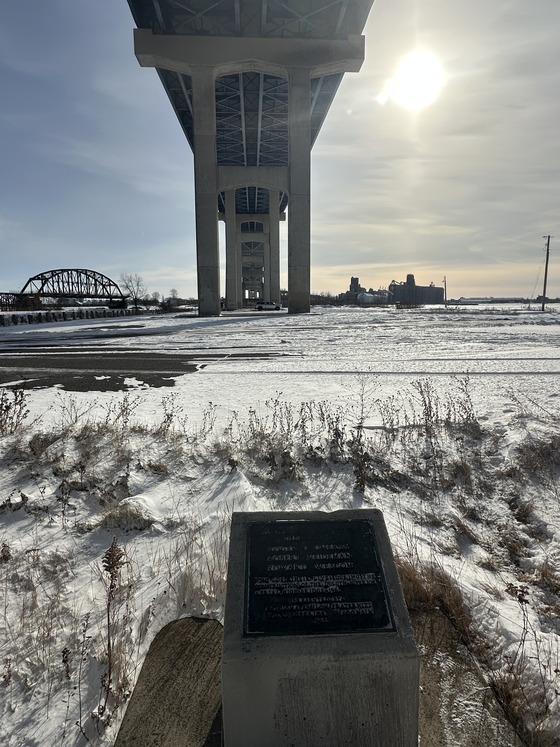
In the early 1960s, building the close to 8,000-foot Blatnik Bridge cost $21 million, involved 1.6 million manhours and took three years to complete.
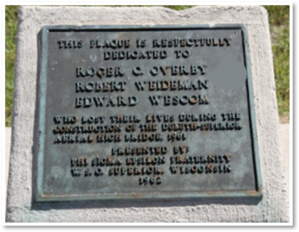
Constructing the bridge, which carries I-535 and Hwy 53 traffic over the St. Louis Bay between Superior, Wis., and Duluth, Minn., also cost the lives of three men – Roger C. Overby, Robert A. Weideman and Edward R. Wescom.
According to newspaper accounts:
-
Aug. 3, 1959: During work on pier 24 on Connors Point, the leads holding pile-driving equipment in place pulled loose from the top boom of a crane, causing the entire pile-driving apparatus to fall on Overby, killing him. The 21-year-old Two Harbors, Minn., man was an inspector for Howard, Needles, Tammen & Bergendoff (now referred to as HNTB), an engineering firm.
-
July 7, 1960: Weideman, 24, also of Two Harbors, drowned after he plummeted from the bridge’s superstructure into the St. Louis Bay. The ironworker was survived by his wife and daughter.
-
Feb. 13, 1961: Wescom, also an ironworker, was working between piers 24 and 25 on the Connors Point section of the bridge and fell from a girder. The 23 year-old-man from Waterloo, Iowa, was survived by his wife and son.
Members of the Phi Sigma Epsilon fraternity of Superior State College dedicated a memorial marker to the three men on May 30, 1962. It is located directly beneath the bridge on the Duluth side near the former Interstate Bridge fishing pier on Rice’s Point.
During construction, the marker will be moved, but it will be reinstalled once the new bridge is completed.
|
More information
For more project information, please visit the project website.
Have a story idea or a question you'd like more information about? Email us.
Sign up for project email updates.
|