Transportation Research Update


The pedestrian safety impacts of dedicated right-turn lanes are primarily a concern at intersections with high pedestrian and traffic volumes. Although dedicated right-turn lanes on higher-volume roadways are associated with slower turn speeds, the rate of drivers stopping for pedestrians in the crosswalk is lower. While research has found that right-turn-only, or dedicated right-turn lanes, at intersections reduce traffic delays and vehicle crashes, their impact on pedestrian safety has been unclear. To better understand these impacts for future intersection design and countermeasure considerations, this project investigated driver response to pedestrians in or near crosswalks at dedicated right-turn lanes.
|
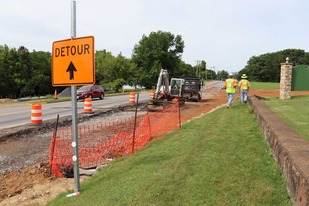
Highway detours route heavy trucks onto local roads not designed for the frequency of heavy weights, which results in accelerated pavement consumption. Reimbursements to counties are often not enough to restore the roads to their pre-detour service life condition. This project investigated methods to predict pavement consumption and developed an algorithm to map detours away from the most vulnerable roads. This framework represents a promising starting point to map cost-saving detour routes. Future field studies will help to refine the process for determining pavement consumption assessments and detour routing.
|
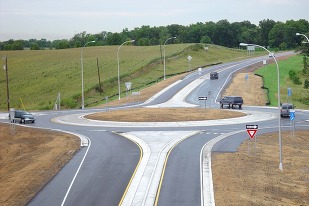
Roundabouts are popular forms of intersection control due to their proven safety benefits like decreasing speeds and reducing crashes. In rural areas where volumes tend to be lower, roundabouts can be practical solutions as they require less maintenance than traditional signals and can facilitate more efficient traffic flow than other traffic control options. MnDOT has been steadily increasing the number of roundabouts constructed in rural areas for these reasons. This Transportation Research Synthesis (TRS) investigates design considerations for roundabouts in rural settings, highlighting design treatments and facilities for non-motorized users. This research leverages national and state-level design guidelines and practitioner input to summarize best practices from other states concerning rural roundabout designs and how these findings can align with Minnesota’s needs.
|
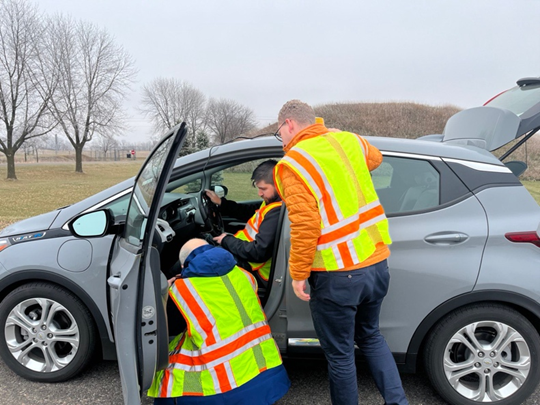
Onboard data from electric vehicles can effectively assess pavement conditions for continuous infrastructure monitoring. This methodology leverages vast amounts of low-cost, low-quality data into valuable pavement condition information to achieve more comprehensive coverage of Minnesota’s entire state highway system. Investigators evaluated numerous machine learning models by comparing their predictive output to pavement assessments conducted by MnDOT’s Pathways van—the current method used to assess pavement condition. The best-performing model predicted pavement roughness with approximately 94% accuracy. MnDOT has recently contracted with a firm that collects similar network-level data to take advantage of the benefits of onboard vehicle data.
|
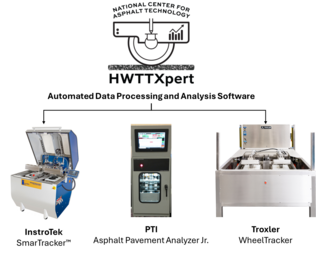
The stripping inflection point (SIP) is a parameter derived from the Hamburg Wheel Tracking Test (HWTT) to assess the moisture susceptibility of asphalt mixtures. Different calculation methods have been developed by equipment manufacturers and asphalt practitioners, but resulting inconsistent calculations may lead to disputes when evaluating SIP results for mix design approval and production acceptance. The aim of this project was to develop software to standardize and automate the calculation of SIP. These efforts resulted in selecting the most robust method for software development and a web-based program, named HWTTXpert, was developed. The software is now accessible with login credentials available upon request.
|
Upcoming Webinars
Research Radar: ✅ Inclusive and Accessible Transportation for All ✅
|
Thursday, February 19, 10-11:15 a.m.
Join MnDOT’s Office of Research & Innovation and the Minnesota Local Road Research Board for this month’s Research Radar: ✅ Inclusive and Accessible Transportation for All ✅
In this webinar, we’ll feature the following research projects:
|
|
 |
Minnesota Electric Aviation Network Webinar Series: Advanced Air Mobility National Strategy and Comprehensive Plan, Thursday, February 19, 9-10 a.m.
Annual Research Ethics Day Conference 2026 — The Future of Research Ethics: Threats & Opportunities | consortium, Wednesday, March 4, 9 a.m. - 3 p.m.
Technical Webinar Series: Blueprints of the Airfield—Making Airport Layout Plans Work | Airport Technical Assistance Program (AirTAP), Tuesday, March 10, 9-10 a.m.
Minnesota TZD Traffic Safety Hotdish: The Power of Partnership—How Collaboration is Driving Results in Road Safety, Tuesday, March 10, 11 a.m. – 12:15 p.m.
2026 Minnesota Transportation Conference & Expo
See you at the Minnesota Transportation Conference March 18-19! Stop by our booth – 201 – to learn about the latest cutting-edge research sponsored by MnDOT and the LRRB. Make plans to attend these presentations featuring our research:
- Art of the Street: Guiding Creative Pavement, March 18, 10:30 a.m.
- Beyond Infrastructure: A Wrap-Around Approach to Safe Routes to School Program, March 18, 1:00 p.m.
- More Perfect: Enhancing Safety for Pedestrians and Bicyclists at Roundabouts, March 18, 1:00 p.m.
- Proving the Payoff: Performance and Economic Benefits of Pavement Preventive Maintenance in Minnesota, March 18, 2:30 p.m.
National Road Research Alliance is hosting the NRRA Pavement Conference, April 29-30, Shoreview Community Center, 4580 Victoria Street N. Shoreview Minnesota
|