D1 - I-535 Blatnik Bridge in Duluth: 2027 construction
 
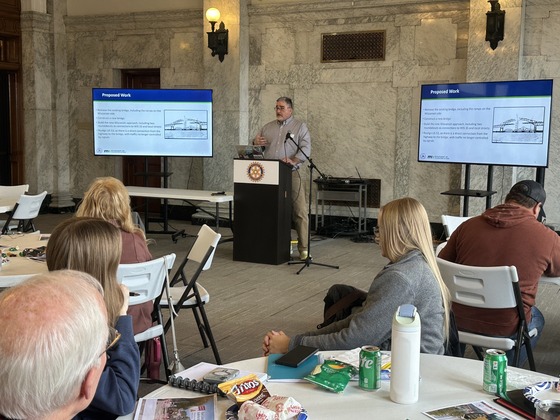 WisDOT Project Director Paul Conlin spoke at the Blatnik Bridge Business Boot Camp on Nov. 10 in Superior. Below: MnDOT Construction Manager Pete Marthaler answers questions about the Blatnik Bridge project.
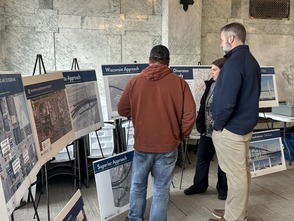
On Nov. 10, members of the Blatnik Bridge project staff spoke in Superior at a Blatnik Bridge Boot Camp for businesses. WisDOT Project Director Paul Conlin, pictured above, spoke to the group about the project, anticipated impacts, ways the states can help businesses and more.
More information on WisDOT's In This Together program and other business-related resources can be found on the project website under the business tab.
MnDOT and WisDOT are more than happy to speak at other events around the Twin Ports area. Email us to request our participation in your events.
|
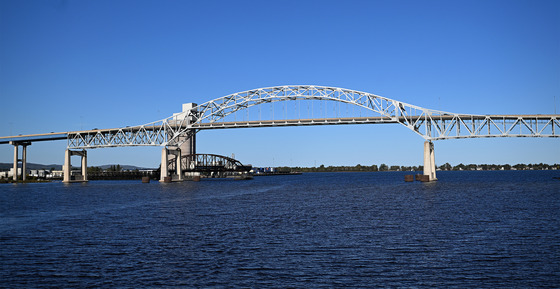 A view of the Blatnik Bridge in October 2025. The bridge will likely close in early 2027 for construction of a new bridge.
Because MnDOT is the lead agency on this project, there are three different delivery methods MnDOT uses for construction projects: Design-Bid-Build, Design-Build and Construction Manager/General Contractor. The Design-Build process was chosen for the Blatnik Bridge project for efficient coordination between the design team and the construction team, a lower cost and more innovative design and construction.
So what does Design-Build mean?
Design-Build means MnDOT and WisDOT define the standards and general specifications expected for the bridge project and then hire a contractor to design and construct the bridge to meet those requirements. Design-Build projects increase the state’s ability to be both nimble and responsive as conditions change during project delivery. Designers and contractors team up and work concurrently rather than design needing to be complete before construction can begin. This increases the reliability, speed and quality of a project.
One of the biggest advantages of Design-Build is that it encourages creative solutions. Because the design and construction teams work together, they can suggest new ideas and methods that still meet or exceed the project’s goals. This can lead to faster construction, better quality, and lower costs. Design-Build also helps manage risks by giving more responsibility to the team best equipped to handle them.
More information on design-build.
Design-Build teams
The Request for Qualifications opened toward the end of this summer, and on Nov. 4, after a Statement of Qualifications evaluation, Ames-Kraemer Joint Venture II and Lunda Construction Company were announced as the two potential Design-Build teams.
The two construction teams will spend the next seven months working on their proposal and bid for the project. Letting date for the project is June 23, 2026, when the teams will submit their proposals. The two states will review the two proposals, and a construction team will be chosen by the end of the summer.
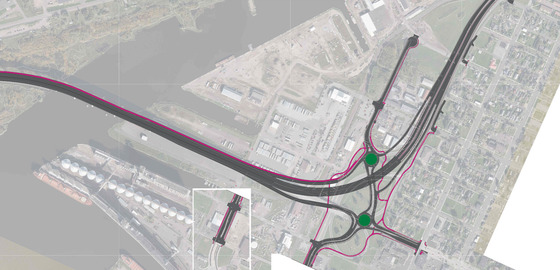 Renderings of the proposed approach in Superior include a direct connection to Hwy 53. Traffic wanting to access Tower Avenue and other local streets will exit the bridge using an off-ramp. Below is an enlarged map of the Superior connection to downtown streets. The pink lines on both maps represent the multi-use path.
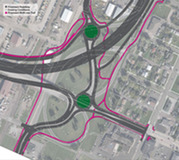
Traffic volumes have grown significantly since the existing bridge and interchange were constructed more than 60 years ago, which has led to increased crashes, congestion, poor operations and redirection of traffic.
Having an interstate (I-535) end on a city street is very unusual. The new interchange will eliminate the need for the traffic signal on Hwy 53 at the approach to the bridge and reduce the amount of traffic currently using local streets to avoid the congestion that the existing structure has created.
Changes to the Wisconsin side also will encourage slower speeds for traffic entering the city and provide a direct connection from Hwy 53 to the bridge.
|
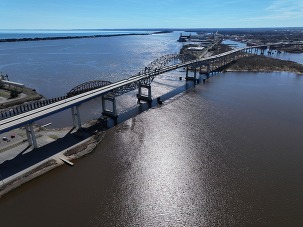
What will happen to the DNR boat access under the bridge?
MnDOT has been working with the Minnesota Department of Natural Resources for a few years on the Rice's Point boat landing. MnDOT and the DNR will work closely on messaging regarding the closure and rebuild of the landing during the bridge project. The landing will be closed for about five years, beginning the fall of 2026. The area will be used for construction, staging and access during the bridge replacement. When the project is complete, MnDOT will reconstruct the parking area.
Will there be a multiuse path on the new bridge?
Yes. The plan for the new bridge includes a 12-foot-wide multiuse path along the bridge. The existing bridge does not include a sidewalk, and members of the public strongly supported the addition of a pedestrian facility on the new structure.
The path will also be used for our under bridge inspection vehicle (snooper). This will eliminate the need for lane closures on the trail side during bridge inspections, providing a safer environment for both traffic and crews.
For more FAQs, visit the project website.
|
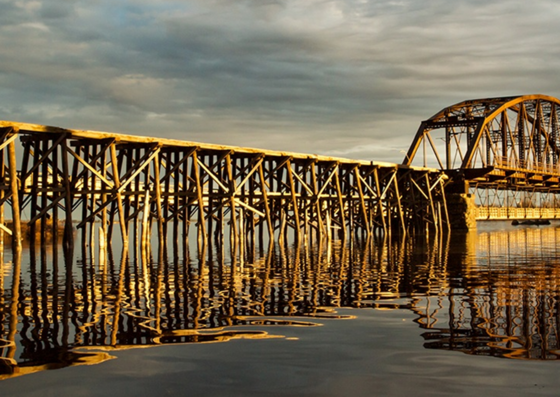 The Interstate Bridge opened to traffic in July 1897. It was replaced in 1961, when the High Bridge (now named Blatnik Bridge) was opened.
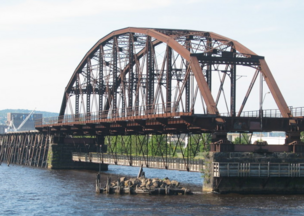
The Blatnik Bridge, known initially as the High Bridge, replaced the Interstate Bridge as the crossing of the St. Louis River between Minnesota and Wisconsin. Part of the former structure stands today in the shadow of the bridge that replaced it.
The Duluth-Superior Bridge Co. was incorporated in 1894 with the purpose of building a bridge that connected Rice’s Point in Minnesota and Connor’s Point in Wisconsin. The Interstate Bridge opened to traffic in July 1897.
The bridge had a long trestle approach on either side, a through truss on the Minnesota and Wisconsin sides and a swing span in the middle, which swiveled to allow shipping traffic to pass. At the time of the Interstate Bridge’s opening, the swing span was the largest in the world.
Two parallel railroad tracks running down the center of the bridge carried trains and trolleys. Travelers crossed on a platform that hung off the western side of the structure. Use of the bridge required payment of a toll.
The bridge was struck by a 3,665-ton freighter on Aug. 11, 1906, after the bridge operator fell asleep, missing the signal to open the swing span. It took 10 days to clear the channel with work occurring around the clock and almost two years for the bridge to be repaired.
The Interstate Bridge eventually was retrofitted for automobile traffic, and most of the structure was dismantled in the 1970s.
More information on the Interstate Bridge, including photos, can be found at Forgotten Minnesota.
Demolition of the Blatnik Bridge is anticipated to start in early 2027. Like the Interstate Bridge, part of the structure – some of its piers – are expected to remain as pier protection devices for the new bridge that will take its place.
|
More information
For more project information, please visit the project website.
Have a story idea or a question you'd like more information about? Email us.
Sign up for project email updates.
|