Great River Bluffs State Park
Sweeping views of bluffs and river valley await.
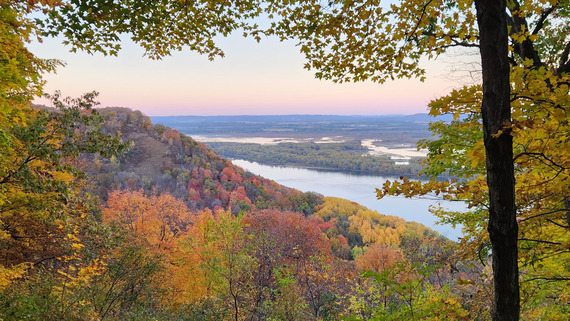 📷: Tim Massaro, 10/26/25
2026 marks 50 years since Great River Bluffs State Park opened to the public, and the park’s anniversary is a great reason to visit this fall!
Rising 500 feet above the Mississippi River near Winona, the bluffs at this state park deliver vast views of the river valley. Even Mark Twain took notice of these bluffs; he referred to one of them as Queen's Bluff in his 1883 memoir Life on the Mississippi, and the name stuck.
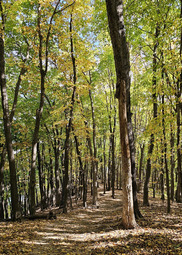
King's and Queen's Bluffs are within the King's and Queen’s Bluffs Scientific and Natural Area that’s inside the state park. King’s Bluff is the one you can hike. The King's Bluff Trail is 1.25 miles each way through oak savanna and hardwood forest to an overlook of the Mississippi River Valley. From the overlook, you can see Queen's Bluff. Dogs aren't allowed in the SNA, so if you plan to take this hike, leave your canine companion at home. It’s also important to stay on the trail to protect the rare species found within the SNA.
There are six overlooks of the river valley within the park. If you’re short on time, the South Overlook Trail (0.2 mile) and East Overlook Trail (0.3 mile) get you to river views quickly.
Great River Bluffs is also a prime birdwatching spot. In late October, the river valley is a major flyway for waterfowl, eagles and hawks. While raptors fly at eye level, look for ruffed grouse, wild turkeys and songbirds in the woods below.
Some views are worth the climb. This fall, head to the bluffs, look out over the river valley and enjoy the last of fall colors.
|
 |
 |
Great River Ridge State Trail
Catch the last glimpses of fall color in southeast Minnesota.
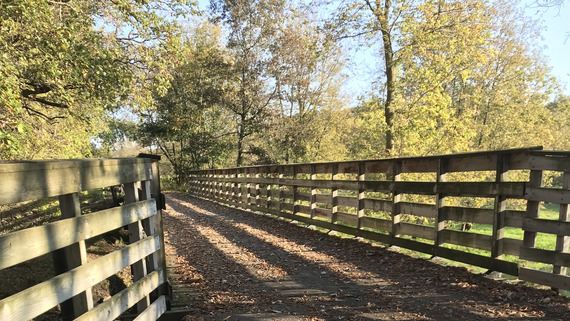 📷: M.Wick, 10/4/20
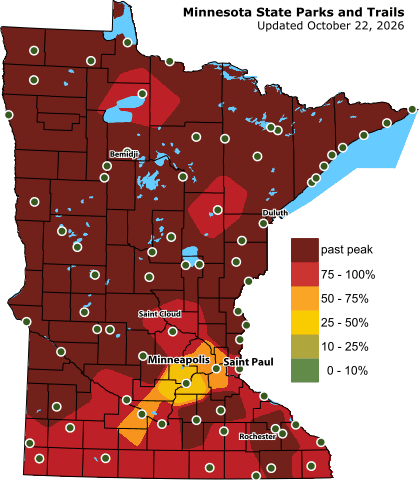
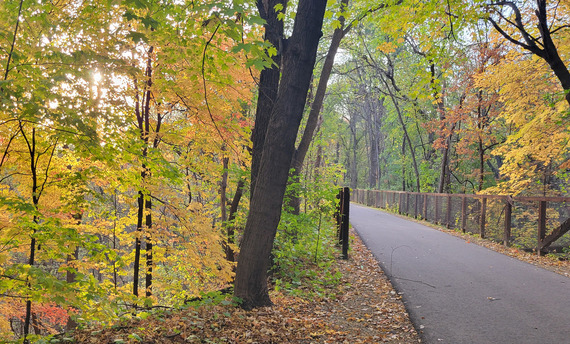
Southeast Minnesota is the last part of the state to hit peak fall color, and the Great River Ridge State Trail is a fantastic spot for those looking for a peaceful fall bike ride, walk or even horseback ride.
Starting in Plainview, the paved trail follows a former railroad grade for 13 miles, traveling through the towns of Elgin and Viola and stopping at County Road 9, just north of Eyota. Eight miles of natural surface trail run parallel for horseback riders to enjoy, starting in Elgin and heading south (don’t forget your Horse Pass!).
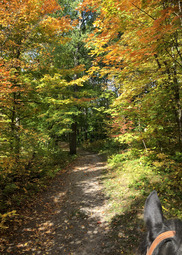
The trail snakes through everything from rolling hills to woodlands to cornfields. Plenty of bridges take you over ravines and wetlands, and once you hit Elgin, the trail frequently crosses the Middle Fork of the Whitewater River.
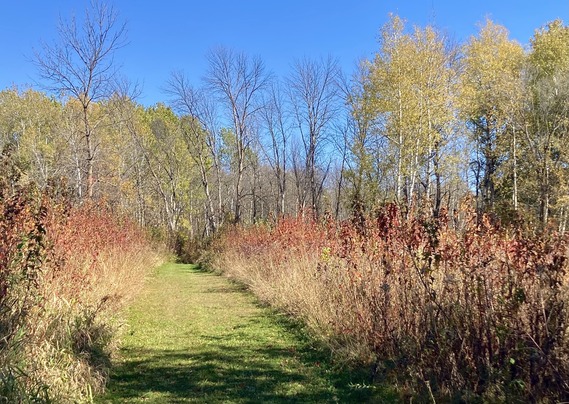
This state trail is a great spot to admire the colors of fall harvest, red sumac and Virginia creeper and wildflowers like goldenrod and aster. Keep an eye and ear out for various birds enjoying the woods and fields; on an October bike ride, one staffer spotted many northern flickers foraging along the trail.
Trailheads at Plainview, Elgin, Viola and County Road 9 offer amenities, like parking, restrooms, bike tune-up stations and picnic areas to stop for lunch or a snack break.
Here are a few other local spots to stop by:
-
Carley State Park is six miles southeast of Elgin with five miles of hiking trails, rustic campsites and excellent trout fishing in the North Branch of the Whitewater River.
-
Whitewater State Park has 2,700 acres of adventure. Consider a climb up to Chimney Rock, Inspiration Point or Coyote Point for some of the best views of limestone bluffs and foliage turning across the Whitewater River Valley. Or race to the top of the 110-foot Elba Fire Tower, located about two miles away from the state park.
- Stretched across southeast Minnesota, the Richard J. Dorer Memorial Hardwood State Forest has opportunities for hiking, horseback riding, mountain biking, motorized recreation, camping and more while enjoying fall color.
|
|
 Little Brown Bats
Mammals capable of true, powered flight.
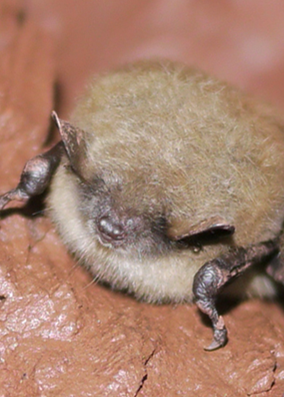
As fall settles in, little brown bats begin heading toward the caves and mines where they’ll spend the winter. Before hibernation, bats may gather and fly around the entrances to these sites in a behavior known as swarming.
Little brown bats weigh less than half an ounce and have wingspans of only about 8 to 11 inches. Despite their size, they can eat hundreds of insects in a single night—keeping our camping experiences a bit less buggy.
Once one of Minnesota’s most common bats, the little brown bat now faces an uncertain future due to white-nose syndrome, a disease caused by a fungus that affects bats during hibernation. If you spot a little brown bat darting through the sky, take a moment to watch; soon it will trade starry nights for months tucked away in winter hibernation.
|
|