Father Hennepin State Park
Home to walleye and white deer.
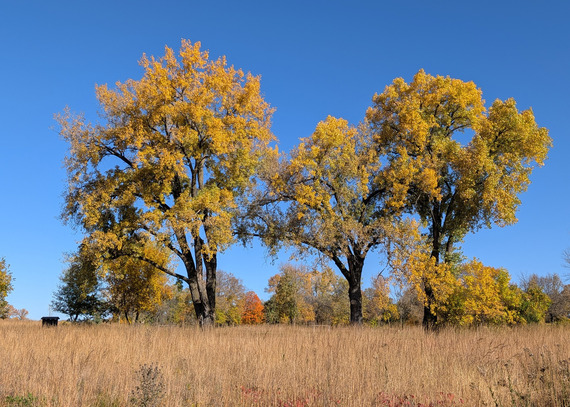
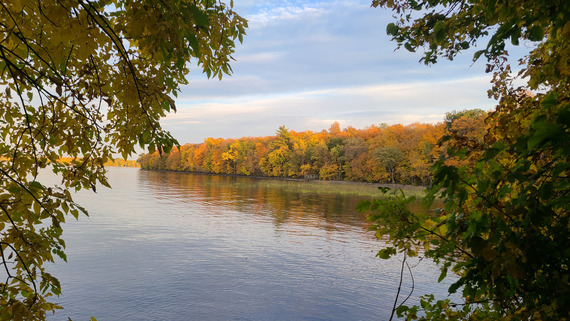 📷: Cecelia Rost, 10/5/22
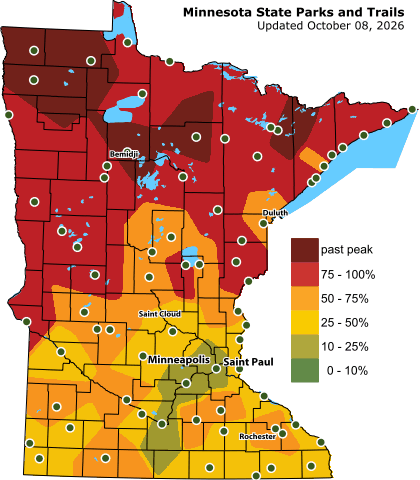
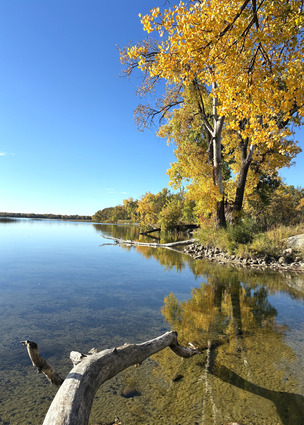
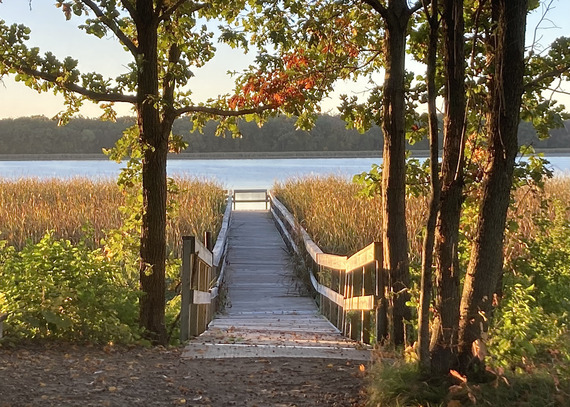
On the southeastern shores of Mille Lacs Lake, you can find 344 acres of fall color enjoyment at Father Hennepin State Park. Fall color in central Minnesota usually begins in late September and typically peaks in the first weeks of October—making now a great time to visit! While its sister park, Mille Lacs Kathio State Park can often get busy in the fall months, Father Hennepin offers a quieter, peaceful alternative near the town of Isle.
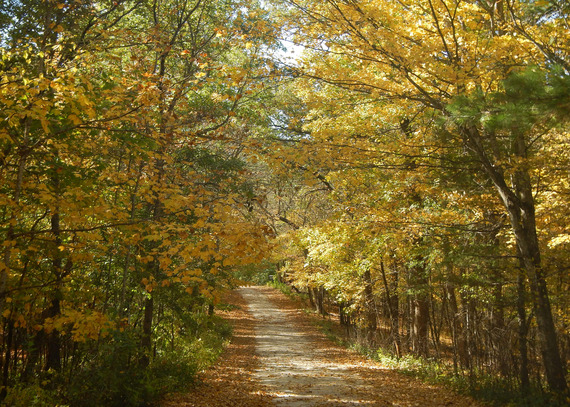
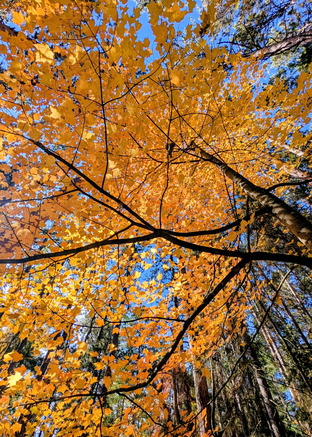
The park’s hardwood forest offers a rainbow of tree color to explore, ranging from yellow basswood to red maples to red-orange oaks. To fully enjoy the color, hit the Hiking Club Trail, a two-mile loop that offers beautiful views of the woods and along the lakeshore. Venture another 0.5 miles to reach Pope’s Point Overlook, a great spot to watch the sunset over the lake.
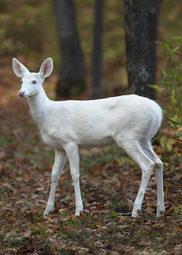
Keep your eyes open for wildlife, including bald eagles, ruffed grouse, raccoon and mink. The park is also known for the albino deer in its woods. This year, look for an albino doe and her two typical-colored fawns enjoying the state park.
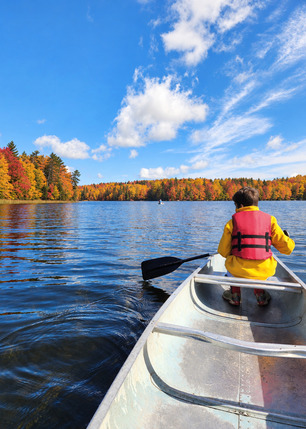
A trip to the Mille Lacs area isn’t complete without wetting a line on one of Minnesota’s best fishing lakes. In fall, you’ll find walleye, muskie, northern pike and smallmouth bass biting and ready to catch.
For shore fishing enthusiasts, the park has two accessible fishing piers. If you’ve brought your fishing boat, head to the park’s public boat access. Overnight visitors can also enjoy a campers-only boat launch and even moor watercraft for the night at the Lakeview Campground.
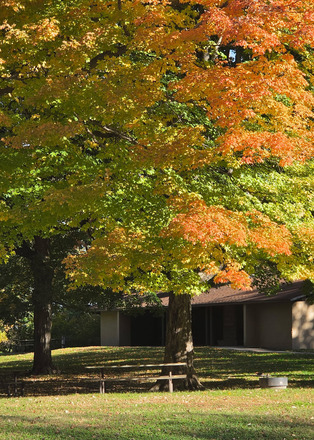
For those looking to camp in the crisp fall night air, Father Hennepin has 103 drive-in sites in two campgrounds: the waterfront views of Lakeview Campground or the woodsy Maple Grove Campground. But be sure to grab your autumn campsite sooner rather than later! The campgrounds close for the 2026 season after MEA weekend (Sunday, Oct. 18).
|
 |
 |
Paul Bunyan State Trail
Miles of autumn magic.
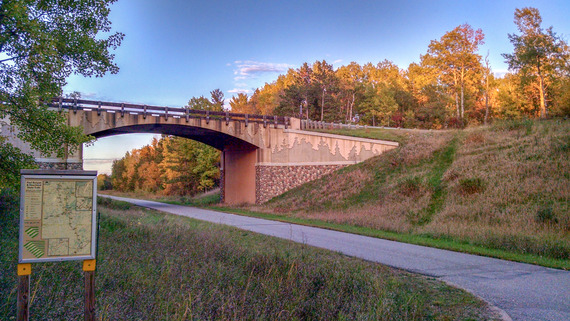 📷: DNR staff, 10/2/16
Fall color is peaking in northern and central Minnesota this week. If you're looking to get out and enjoy the show, try a walk, roll or ride along the Paul Bunyan State Trail, one of Minnesota’s longest state trails.
The Paul Bunyan State Trail stretches for over 100 miles from Crow Wing State Park to Lake Bemidji State Park. The trail passes through forests, goes by lakes and streams, and connects various communities in north-central Minnesota. Following a former railroad line for much of its route, the trail is generally level and paved, making it a great choice for an easygoing fall bike ride or walk.
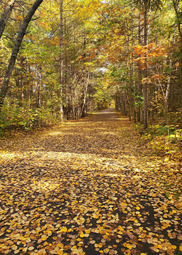
In autumn, the Northwoods provide plenty to look at along the way. Reds, oranges and yellows appear among the hardwoods while evergreens keep their deep green, creating layers of color along the trail.
You don’t have to tackle all 100+ miles to enjoy the view. Towns including Nisswa, Pequot Lakes, Hackensack and Walker offer trail access and places to begin a shorter outing. Riders looking for a little more adventure can try a nine-mile section through the Chippewa National Forest, where the generally level trail gives way to rolling hills, curves and grades reaching 8%.
Whether you make it a quick afternoon ride or string together several trail towns for a longer adventure, fall is a great time to see just how much scenery can be found along one trail.
|
 Busy Beavers
Meet North America's largest rodent.
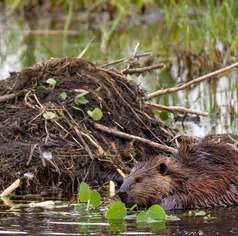
Few Minnesota animals can change a landscape quite like a beaver. By cutting trees, building dams and creating ponds, beavers shape the places they call home. They’re also North America’s largest rodent, weighing an average of 40 to 50 pounds.
Much of a beaver’s work revolves around trees. They use their strong jaws and large orange teeth to cut trees for food and to build dams and lodges. Fall is an especially busy season. Before ice covers the water, beavers gather tree branches and store them underwater for winter food.
Look for gnawed trunks and stumps along the shoreline—signs that a beaver has been hard at work. Even if you don’t spot a beaver, chances are you’ll see evidence of the work they leave behind.
|
|