 October 2026
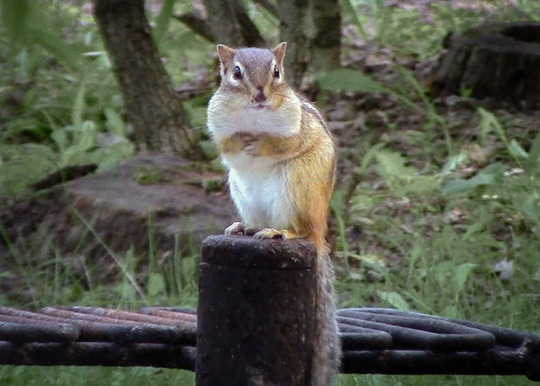 📷: Mark Photiades, Crow Wing State Park
Preparing for Winter - Wildlife Edition 🐿️❄️
Fall is a season of change in Minnesota state parks and trails, and colorful leaves are only part of the story! All around us, wildlife is preparing for what comes next. Some animals are eating as much as they can, others are heading south or settling in for a long winter, and a few are just arriving. This month, discover how some of Minnesota's wildlife gets ready for the snowy season ahead.
  📷: Gregory Gerhart, Glendalough State Park
Winter Survival Strategies 🌨️
Stay, go, or slow down!
As temperatures drop, you may find yourself wondering: How on earth does Minnesota's wildlife survive our winters? For most animals, it comes down to three main strategies: leave, adapt or slow down.
Leave 🛫
And who wouldn't want a beach vacation? Many bird species migrate south for winter, but so do some bats! Eastern red bats, hoary bats and silver-haired bats leave Minnesota in the fall for warmer parts of the U.S. and northern Mexico.
Adapt ↪️
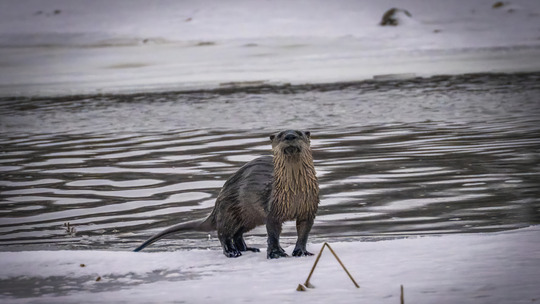
Other species, like otters, are well-adapted to winter and actually thrive during the chilly months. River otters have exceptionally dense two-layer fur, keeping them warm and making them virtually waterproof. Their coat contains anywhere from 100,000 to 450,000 hairs per square inch. Keep an eye out for otters at parks like Grand Portage or Buffalo River, where lakes and waterways provide year-round habitat.
Slow Down 💤
For many animals, like turtles, mussels and badgers, the key to surviving winter is hunkering down. Most turtles become relatively dormant, moving very little as they lie along the bottom of a pond, lake, stream or river. Mussels will move from shallow to deeper water to avoid freezing, barely moving the rest of the winter. Flying squirrels do not hibernate, but become less active in winter and sometimes nest in groups to stay warm.
Black bears take slowing down especially seriously — but first, they have some eating to do. Before winter arrives, bears may gain 20% to 50% of their summer body weight and build about 4 inches of fat, allowing them to live off those reserves during hibernation.
When temperatures plunge, slowing down until spring can sound pretty appealing. But winter doesn’t have to mean hunkering down! Take a cue from the otters: bundle up, embrace the cold and find an adventure worth leaving your den for.
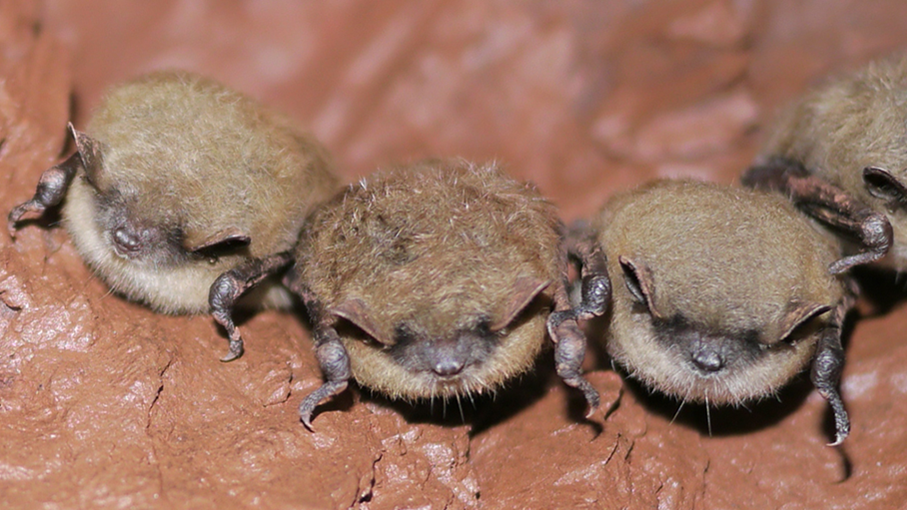 📷: Christine Salomon, University of Minnesota
Small Mammals with Mighty Appetites 🦇
Bats pack on the pounds in fall.
Bears aren’t the only animals packing on fat before hibernation. Many bats bulk up for winter, too. Minnesota has eight bat species, all of which are insectivores with voracious appetites. A single bat can eat its body weight in insects each night — that's up to 1,500 mosquitoes!
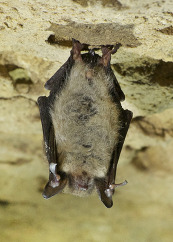
Minnesota state parks are home to many bats, with two very important hibernating colonies: one at Forestville/Mystery Cave State Park and another in the mine at Lake Vermilion-Soudan Underground Mine State Park. In years past, the little brown bats (yes, that's their name!) within Mystery Cave have gotten so plump that the naturalists had a hard time identifying what species they were. Hint: They weren't so little anymore!
Those extra fat reserves are critical once hibernation begins. Unfortunately, winter is also when bats are most vulnerable to white-nose syndrome. The disease causes infected bats to wake more frequently during hibernation, burning through the precious fat reserves they need to survive until spring. Restricting winter visitor entry into Mystery Cave and Soudan Mine helps give these colonies a safe, undisturbed place to hibernate.
|

Bats may have a frightening reputation, but these insect-eating mammals are an important part of Minnesota’s ecosystems. Interested in learning more? New this year, a second Junior Ranger activity booklet was released that focuses on investigating Minnesota's misunderstood wildlife, such as bats, snakes and turkey vultures. The young (age 9+) and young at heart can complete activities within the book to collect points towards a brand-new bat patch. Booklets and patches are available at most ranger stations or visitor centers. We also have free downloads of the booklets on our website for you to print at home.
|
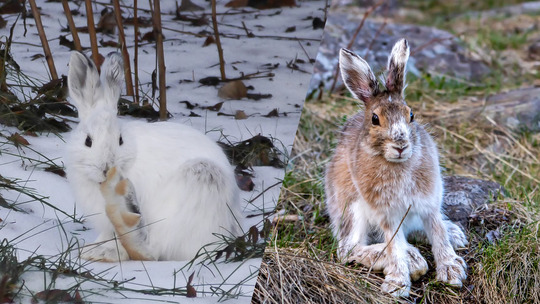 📷: Matthew Muir, left. Jay Brasher, right.
New Winter Wardrobe 🧥
Mammals that change coats for the season.
It's about that time: break out the winter coat! And you'll be in good company from the animal world. In the summer, snowshoe hares are brown, but they grow an entirely new coat that is white in the winter to blend with the snow. Other Minnesota mammals that change fur color include three species of weasels and white-tailed jackrabbits.
For snowshoe hares, the winter wardrobe isn’t their only cold-weather adaptation. Snowshoe hares get their name from their enormous, furry feet, which help them travel across soft snow without sinking. And they’re fast! A snowshoe hare can reach speeds of 30 mph and leap up to 12 feet in a single bound.
Snowshoe hares live in dense woodlands and forest bogs across the northern half of Minnesota. Keep an eye out at northern destinations like Bear Head Lake, Itasca and Gooseberry Falls state parks. You may be more likely to spot their tracks in the snow than the hare itself.
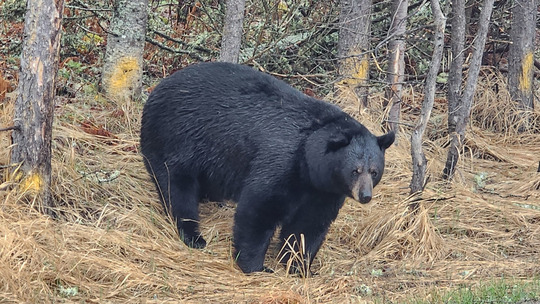 📷: Norma Malinowski, iNaturalist
The Hungry, Hungry Black Bear 😋
Enjoy the outdoors while giving bears space to snack.
While Minnesotans head into the woods for fall colors, black bears have something else on their minds: food.
Fall is an important season for Minnesota’s black bears. Before spending winter in their dens, bears need to build up fat reserves that will sustain them through months of hibernation. They may spend much of the day feeding and can consume thousands of calories as they prepare for winter (lucky them!). Nuts, especially acorns and hazelnuts, are important natural foods this time of year.
All that searching for food can also put bears on the move. The DNR calls these autumn travels the “fall shuffle.” Bears may roam long distances looking for areas rich in food before eventually returning to their home range to den. That means state park visitors have a better chance of spotting a black bear in fall, so it's important to be BearWise!
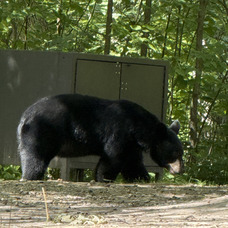
Minnesota black bears are naturally cautious and usually avoid people. However, when bears learn to eat human food, it can change the way they interact with people. The process of wild animals becoming used to and attracted to human food is called “food conditioning.” Black bears can smell the scent of ripe berries, a steak on the grill, or that apple core you threw in the bushes from nearly a mile away.
For campers, preventing a bear from finding food is one of the most important ways to avoid conflict. Keep a clean campsite and never store food, trash, toiletries or clothing worn while cooking inside your tent.
When hiking in bear country, stay aware of your surroundings, make noise periodically and always keep dogs on leash. Also remember to pack out all food and trash, including scraps such as apple cores. Leaving food behind can teach bears to associate trails with an easy meal.
If you happen to see a black bear while exploring Minnesota state parks and trails this fall, enjoy the opportunity from a respectful distance and remember to always be BearWise!
|
 |
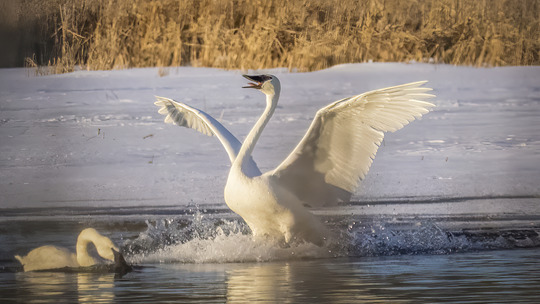 📷: Gregory Gerhart, Glendalough State Park
The Other Kind of Snow Birds ❄️
Not all birds migrate south in the winter.
Fall migration may be underway, but don’t put away the binoculars just yet. Plenty of birds stick around for a Minnesota winter, while others are making their way here from farther north. As the seasons change, a new cast of birds is ready to take center stage.
Of the nearly 240 bird species that nest in Minnesota, only about 20 are considered nonmigratory. One of Minnesota’s iconic birds, the trumpeter swan (above) can be found throughout the winter where rivers and other bodies of water remain open, like Glendalough State Park. These large, cold-climate-loving swans can have wingspans around 7 feet, and their return to Minnesota is a major wildlife conservation success story after they disappeared from the state in the late 1800s.
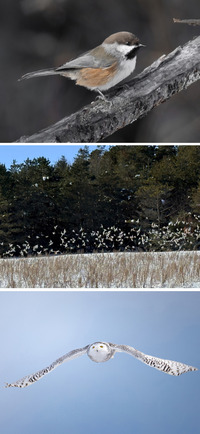
But winter means major changes in available food, so birds that stay must adapt. Black-capped and boreal chickadees (right top) eat more seeds and berries as insects become scarce and cache food in tree bark and other small crevices. On cold nights, they can generate heat by shivering while sheltering inside tree cavities.
For some birds, migration means flying south to Minnesota. From late October through November, snow buntings make their way to Minnesota from summer nesting grounds on the Arctic tundra. Also known as “snowflakes,” these birds take flight in unison, flushing together so it looks like snow blowing in the wind (right middle).
One of Minnesota’s most striking winter visitors is the snowy owl (right bottom). These large white owls nest in the Arctic, but some travel south into Minnesota during winter. Look for them in wide-open areas such as fields, where their white plumage can make them surprisingly difficult to spot against the snow. Some winters bring only a few snowy owls to the state, while other years see much larger numbers.
Birdwatching opportunities don’t end after migration season. Many state parks offer birding events year-round. Check out the events calendar and find a birding event near you!
|
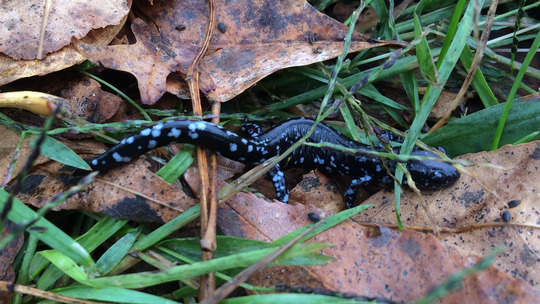 📷: Blue-spotted salamander, Crow Wing State Park
Going Undercover 🐢
Discover where reptiles and amphibians spend winter.
As fall temperatures drop, some of Minnesota’s smallest wildlife begins disappearing from view. Turtles retreat beneath the water, salamanders tuck into protected places and frogs settle in for winter. But they aren’t simply sleeping until spring. Reptiles and amphibians have some remarkable ways of surviving a Minnesota winter.
Painted turtles are among Minnesota’s most familiar reptiles. In warmer months, visitors may spot them basking on logs or rocks near the water at parks like Lake Shetek or Lac qui Parle. Basking helps warm their bodies after time spent in chilly water. As temperatures drop, many turtles spend the winter in the water or mud.
Salamanders also seek protection from freezing temperatures. Blue-spotted salamanders spend much of their active season hidden beneath logs, bark and leaves. In winter, they move underground into burrows that extend below the frost line.
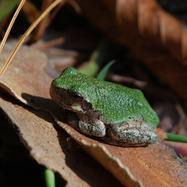
Frogs take different approaches. Some species overwinter in well-oxygenated lakes or streams, taking cover among rocks, logs and leaves. Wood frogs, however, overwinter beneath fallen leaves on the forest floor and can tolerate partial freezing. A wood frog’s breathing and heartbeat stop, while a natural antifreeze protects its cells until temperatures rise again. Gray treefrogs (right) can also survive winter in a partially frozen state beneath leaf litter, rocks and logs.
Snakes and lizards have their own winter strategies. In fall, they return to wintering areas called hibernacula. During winter, they move underground below the frost line and become inactive. Common garter snakes may use rock crevices, ant mounds or tunnels made by burrowing animals as winter dens.
By late fall, many of these animals may have disappeared from sight, but they haven’t gone far. Beneath the water, soil and fallen leaves, they’re waiting out winter — ready to emerge when warmer days return.
|
 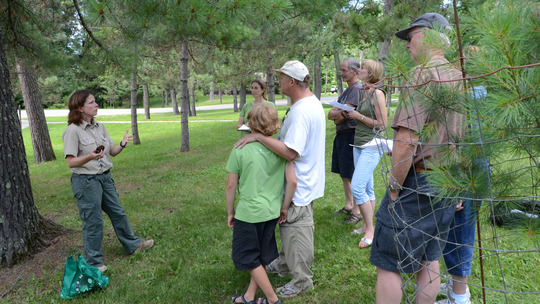 📷: Sandra shares information during a naturalist event at Itasca State Park.
Meet Sandra Lichter 👋
The naturalist who knows Itasca’s wild side.
Wildlife is never far away at Itasca State Park. Loons call across the lakes, red squirrels race through the forest and, every once in a while, a bear, bobcat or other unexpected visitor makes an appearance. For interpretive naturalist Sandra Lichter, noticing those moments — and helping visitors notice them, too — is one of the best parts of the job.
Sandra grew up on a family farm in Iowa with three sisters, spending much of her childhood outside and helping her parents on the farm. Her love of animals eventually led her to Iowa State University, where she began studying zoology before switching to fisheries and wildlife biology.
But summer jobs working with people helped her discover another interest. Through experiences at Iowa’s Living History Farms and a 4-H camp, Sandra spent time teaching children about animals, streams, plants and other natural resources.
“I really realized how much I loved working with people, but also being able to share wildlife and their stories with people,” she said.
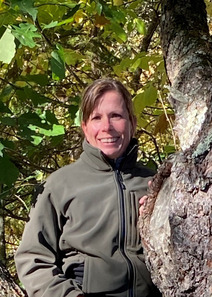
This led her into the naturalist field and eventually to Itasca State Park. Sandra has worked at Itasca since 2001 and has also worked with DNR's Fish and Wildlife division and in resource management. Today, as an interpretive naturalist, she helps visitors discover the natural world around them.
Wildlife is part of her everyday work. Sandra pays attention to seasonal changes and animal activity throughout the park, both because she enjoys it and because visitors regularly arrive with questions about what they have seen.
“There’s always something happening that’s exciting,” she said.
For Sandra, some of the best wildlife experiences happen when an animal appears at exactly the right moment. During one school program near Lake Itasca, Sandra was preparing to talk with students about turtles when the group discovered a large snapping turtle laying eggs among the benches of the park’s amphitheater. The students quietly watched from a distance. By the end of the program, the turtle had finished laying her eggs and began walking away, giving the group an unexpected firsthand look at the animal they had just been learning about.
Sandra calls experiences like that "interpretive moments."
“It’s when you’re talking about something, and then you actually see it,” she said. “You can’t plan it, but if it happens, it’s so exciting.”
After more than two decades at Itasca, Sandra still finds joy in helping visitors notice what is happening around them. School groups remain some of her favorite visitors, especially when students arrive excited simply to be out of the classroom, then leave with a new wildlife story to tell.
“Just take some time and slow down a little bit and get outside,” Sandra said. “We live in a pretty amazing state.”
|
|