Lower Shore: Duluth to Two Harbors
Surface temps near Duluth were 65-70°F and as low as 60 °F further north. Construction continues on Highway 61 at the McQuade intersection, and on Lighthouse Point Road in Two Harbors. Anglers from all stations reported fairly slow fishing for 18-33 inch Lake Trout. Anglers near Duluth found success trolling spoons, flasher flies, and stick baits in the top 20-50 feet in 70-120 feet of water. Further north, anglers found success jigging on structure around depths of 80-120 feet and trolling bright spoons, stick baits, and flasher flies in 150-300 feet of water with fish being fairly spread out throughout the water column. Salmon were not reported from any stations this week. On the St. Louis River Estuary anglers reported catching 15-19 inch Walleye and a few Muskies and Pike. Trolling stick baits and worm harnesses on the flats and jigging live bait on deeper structure was most productive.
Upper Shore: Twin Points to Hovland
Surface water temps were 60-63 °F both close to and far offshore. Anglers reported good fishing for Lake Trout, especially from Grand Marais, where anglers reported some as large as 10 pounds in the first deep water near shore, especially in the early mornings. Lake Trout have moved close to shore, 70-100 feet of water, and remained deep but backed away from shore as daytime hours progressed. Green and orange spoons were the most effective. Anglers targeting fish in the top 60 feet of water found few fish during this reporting period. Coho Salmon were scarce this week and very few were caught. Anglers reported that Coho are changing color and appearance as the spawn approaches. Very few Chinook Salmon were reported from any station. No Pink Salmon were observed in rivers, but they are still very low and warm. Shore anglers reported slow fishing in the persistent warm water near shore.
Management Updates
 |
|
|
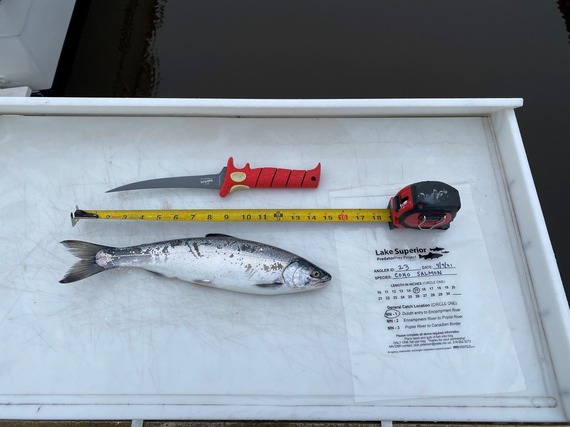
The MNDNR Lake Superior Area Fisheries Office started the Predator Prey Project in 2020. The MNDNR has teamed up with several other agencies and tribes in Lake Superior to evaluate the lake’s food web. This project collects diets and tissue samples from the carcasses of Lake Superior fish carcasses provided by anglers. So far, anglers have contributed over 10,500 fish carcasses over the last 6 years! From these samples we have learned that introduced species, like Brown Trout, Coho, and Chinook Salmon, consume different things than native Lake Trout and occupy different positions in the food web. We have also been able to track shifts in their diets and growth rates in response to the massive Cisco boom that took place in 2022. Some strange diet items we have observed include: a star faced mole, a bratwurst, wasps, a duck leg, a tobacco pouch, and plastic! If you fish on Lake Superior and would like to contribute to this project please contact Nate Beckman at (218) 302-3277 or Nathan.beckman2@state.mn.us for more details and to get your free collection bags. A huge thank you to all of the anglers that have contributed to this important research!
Helpful Links
 Questions?
Email us at Lake Superior fishing report
Give us a call at 218-302-3277
Report suspicious activity at 800-652-9093
Visit us online at mndnr.gov
If this message was shared with you, sign up to receive it at the link above or text MNDNR SUPERIORFISHING to 66468 to subscribe for text updates.
Message and data rates may apply. Message frequency varies. Reply HELP for help or contact support@Granicus.com. Reply STOP to cancel. To view terms and conditions and privacy policy visit: https://public.govdelivery.com/accounts/MNDNR/text-message
|