|
August 2026


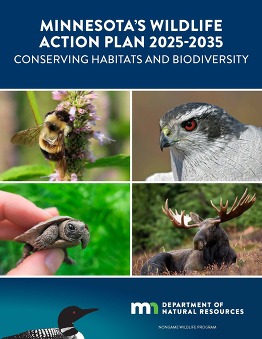
The Nongame Wildlife Program has launched new interactive online resources featuring Minnesota’s Wildlife Action Plan 2025–2035: Conserving Habitats and Biodiversity. This 10-year conservation plan guides, facilitates and inspires conservation actions for a diversity of wildlife and plants, with a focus on at-risk species and their habitats. The updated lan was developed by the Nongame Wildlife Program, with input from 327 individuals representing 64 organizations.
The plan identifies 1,142 Species in Greatest Conservation Need (rare, declining or vulnerable species) including 543 animals and 599 plants and lichens. An additional 860 species are classified as Species in Need of Information (believed to be rare in Minnesota, but lacking information to assess conservation status), underscoring the importance of ongoing surveys and research. In addition, the plan identifies 15 habitats that support these at-risk species and Conservation Opportunity Areas where partnerships can focus on habitat conservation.
The Nongame Wildlife Program leads the Wildlife Action Plan, but conserving at-risk species and their habitats involves everyone, including other agencies, Tribes, conservation organizations, private landowners, educators and Minnesotans across the state. To help facilitate participation, the plan outlines numerous conservation actions to recover species and habitats, including recommendations for public engagement.
“People and partners working together with a coordinated approach can accomplish so much more for wildlife and habitats than any one entity on their own,” said Alison Cariveau, State Wildlife Action Plan Coordinator. “Engaging in wildlife conservation strengthens our connection to nature and is meaningful because we are preserving this legacy for future generations.”
|

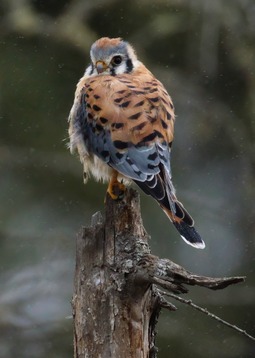
American kestrels may be North America’s smallest falcons, but don’t be fooled. These small raptors are all predator.
Kestrels are skilled hunters of open habitats, pouncing upon insects, spiders, small rodents and other birds. You can often spot an American kestrel perching on wires or poles looking for lunch.
Similar to the Predator character (from the Predator films), kestrels can see in ultraviolet light, allowing them to follow urine trails of their mammal prey when hunting on the ground.
Learn more about this fascinating Species in Greatest Conservation Need, and how our program is working to help them, in “Flying with Kestrels” by Julie Forster.
Photo by Alyssa Sheffield, shared with the DNR at mndnr.gov/sharephotos.
|

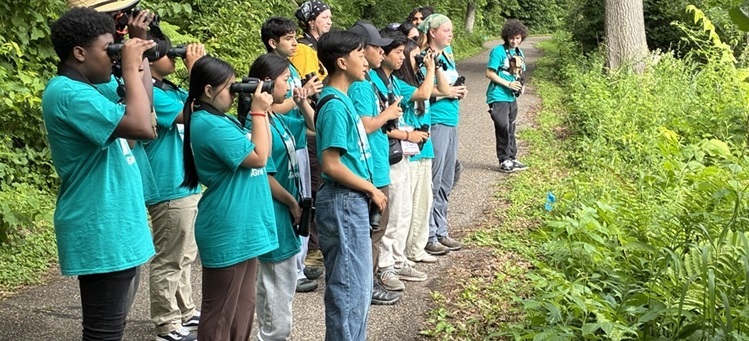 The EPIC team out birding.
This summer, 18 students from the Minneapolis Parks and Recreation Board and Mississippi Watershed Management Organization's "Green Team" are participating in the Nongame Wildlife Program's Empowering Pathways Into Conservation (EPIC) program.
These students have the unique opportunity to learn directly from wildlife and conservation professionals at the DNR and partner organizations about their work and get hands-on experience of a day in the life of these amazing scientists. Participants started the year learning about American kestrel banding from our partners at the National Guard and followed it up with a day learning about river health and ecology with DNR fisheries and community science specialists.
The EPIC team will also have the chance to learn about the DNR's forestry division, our SNA program and more. Who knows, someday one of these young people might be banding birds or monitoring river ecology themselves!
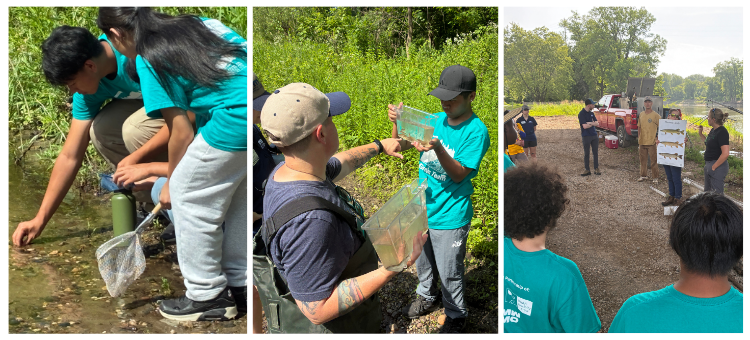 Funding for this program was provided by the Minnesota Environment and Natural Resources Trust Fund as recommended by the Legislative-Citizen Commission on Minnesota Resources (LCCMR) and the Minnesota DNR’s Nongame Wildlife Program.

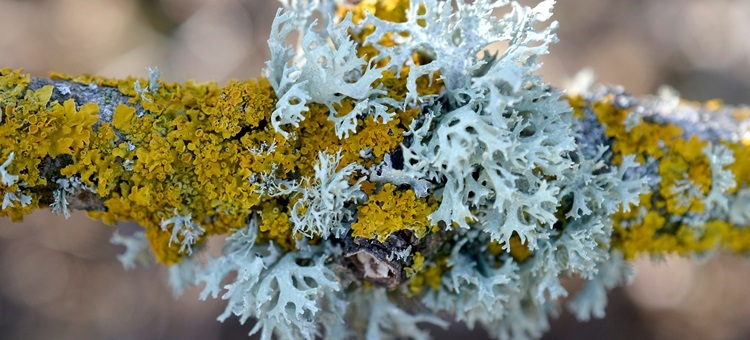 Moss lichen
Lacy, crusty, scraggly, everywhere. Lichen is an incredible and often overlooked life form.
Lichen is a symbiotic partnership (a dream team) of fungus and algae. An important part of our ecosystem, lichen provides food for herbivores, and even some siding for hummingbird and gnatcatcher nests.
Minnesota is home to more than 700 species of lichen, so you’ll likely find some as soon as you head out the door. Lichens only need sun and water to grow, so look for them on rocks, trees, moss and in the soil. Once you start looking for lichen, you’ll likely find it everywhere you go.

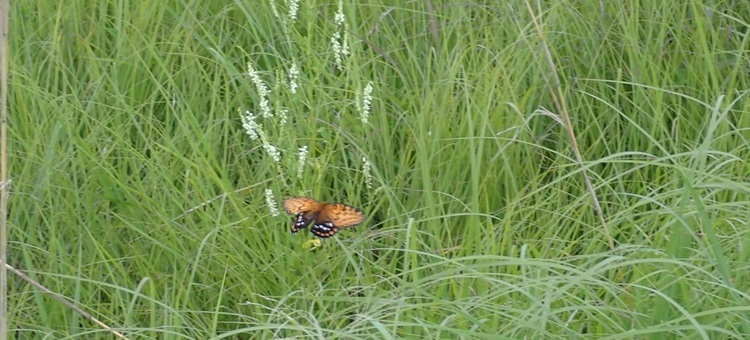 A male regal fritillary in flight at Crow-Hassan Park Reserve. Male regals are fast fliers, and this photo demonstrates how difficult it is to get clear shots of them in flight.
We’re having a great 2026 community science season, thanks to all our amazing volunteers who make this work possible. The field season is already winding down for some projects and fall is fast-approaching. DNR staff will analyze the project data this fall and we are looking forward to sharing our results.
If you’d like to receive regular updates on our community science projects, sign up for our new Community Science Bulletin to receive emails about upcoming trainings, events, project results and news. Just enter your email address in the sign-up box at the top of the webpage.
MN Statewide FrogWatch
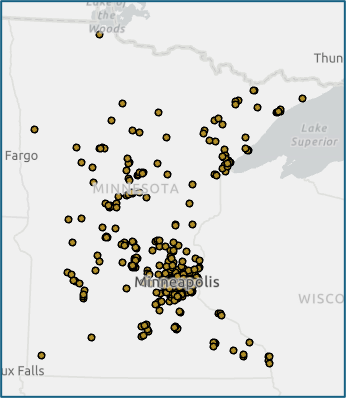
FrogWatch’s 2026 season is starting to wrap up. Most species are quieting down across the state as their mating season comes to a close. Volunteers have submitted more than 1,500 observations. Thank you, volunteers!
FrogWatch Sites monitored by volunteers in 2026
Bat Roost Watch
Our second round of bat roost monitoring took place in mid-late July, with volunteers counting bat pups that are now out flying with their mothers. This project focuses on Minnesota’s two non-migratory species of bats that use structural roosts like bat boxes, barns and attics for their maternity colonies. Counting the roosting bats before and after the pups begin flying helps us gauge how many new bats are entering the population. We are excited to expand to more roosts in 2027. Please report any bat roosts you know of and encourage others to do the same.
Bat Echo Locators
The second round of bat audio monitoring occurred in late July. Our bat echo locator volunteers set up ultrasonic recorders to record as many bat species as possible, helping us determine when and where different species are active. This project primarily focuses on Minnesota’s migratory bat species that don’t use structural roosts and are very difficult to see. The field of bat acoustic research is relatively new, and we’re fortunate to have dedicated volunteers willing to help us expand our knowledge of bat activity statewide.
Regal Quest
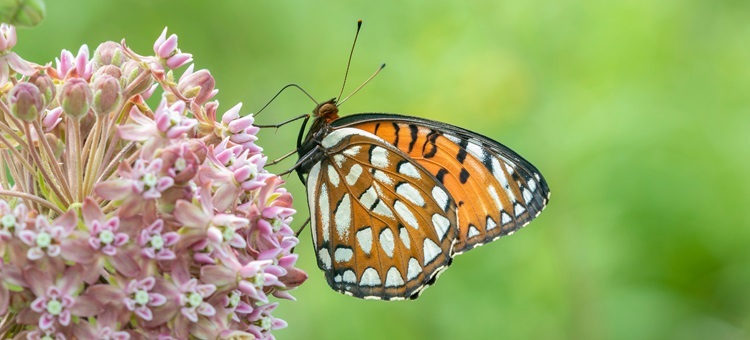
The regal fritillary flight is past its peak, but regals can still be spotted well into September. Nongame Wildlife Program and Minnesota Biological Survey staff had a great time co-leading a regal fritillary field day July 15 with Three Rivers Park District staff at Crow-Hassan Park Reserve. Participants persevered despite the extreme heat, and we were able to see regal fritillaries up close. Thanks to everyone who attended and helped make this opportunity possible. We look forward to more regal events next year. In the meantime, please report any sightings of regals using the links available on our project webpage.
Chimney Swift Roost Counts
Chimney swift roost monitors have been busy monitoring known roosts and searching for new roosts. Young swifts have left the nest and are out learning how to forage on their own and strengthen their flying skills before the fall migration. Stay tuned for public chimney swift roost monitoring events in late August and early September. Don’t miss your chance to witness hundreds of chimney swifts descending into a single chimney at dusk–it’s quite the spectacle! Signup for our Community Science Bulletin and follow the Nongame Wildlife Program on Facebook to stay up to date on these events.
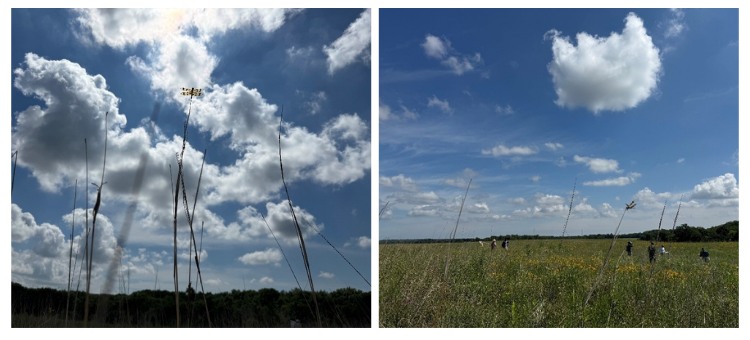 Photos from the field. Left: A dragonfly photographed during our recent regal field day at Crow-Hassan. Right: Searching for regal fritillaries in the prairie at Crow-Hassan.
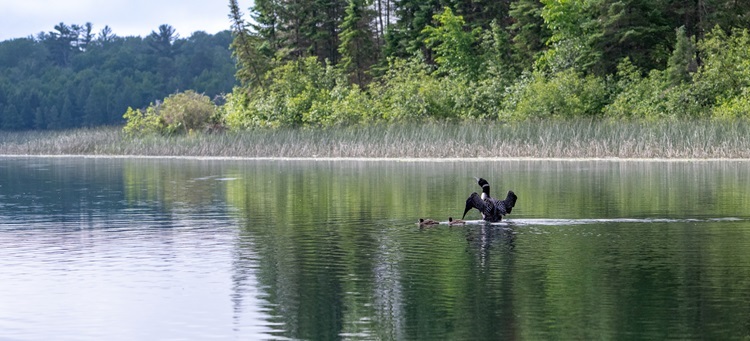 A loon and chicks meander just off the newly protected shoreline at Mantrap Lake in Hubbard County, MN.
We’re celebrating the completion of a 5-year effort to protect critical loon habitat. The Minnesota Loon Restoration Project has completed six land acquisitions in north central Minnesota, protecting loon nesting and chick rearing habitat. In total, seven miles of shoreline are now permanently protected from development and are being managed as loon habitat. These parcels have islands, protected coves, healthy natural vegetation communities and other features making them prime loon habitat.
We are incredibly grateful for our partners and collaborators in these acquisition efforts. This work was made possible with the help of our federal partners at the U.S. Geological Survey and U.S. Fish and Wildlife Service, our DNR colleagues in the Fish and Wildlife and Lands and Minerals Divisions, the Northern Waters Land Trust and Minnesota Land Trust.
The Minnesota Loon Restoration Project has been funded by the Open Ocean Trustee Implementation Group, which administers settlement funds from the Deepwater Horizon oil spill. While the funding from this settlement is winding down, the Loon Restoration Project lives on and is funded by proceeds from the Minnesota United FC soccer team (the Loons) license plate!
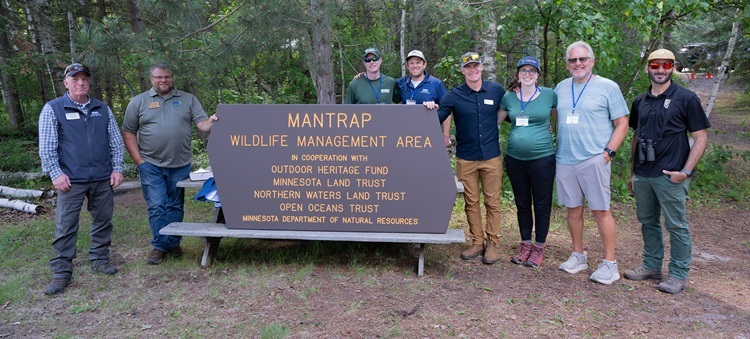 Partners pose at the June 25, 2026 celebration of the new Mantrap Lake Wildlife Management Area that protects loon habitat. From left: DNR Northwest Regional Wildlife Manager Blane Klemek, DNR Park Rapids Area Wildlife Supervisor Erik Thorson, United States Geological Survey Biologist Luke Fara, DNR Loon Restoration Program Coordinator Tim Mitchell, Minnesota Land Trust CEO Kris Larson, Northern Waters Land Trust Executive Director Annie Knight, Mantrap Lake Association President Bill Dinger, and U.S. Fish and Wildlife Service Project Manager Luis Ramos Vazquez.

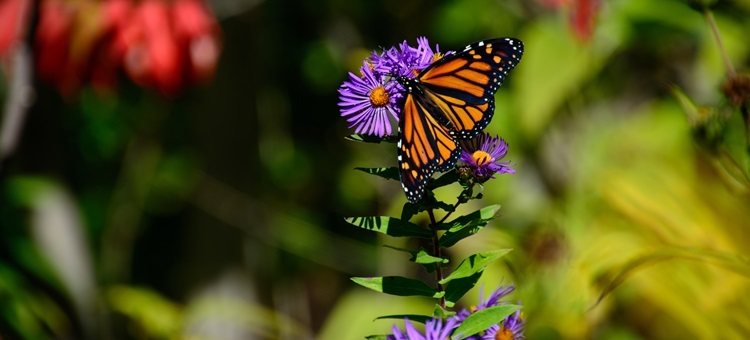 Monarch butterfly, photo taken by Angie Soller and shared with us at mndnr.gov/sharephotos.
Minneapolis Monarch Festival
Join a long-standing celebration of the monarch butterfly.
The Minneapolis Monarch Festival will take place from 10 a.m. to 4 p.m. Saturday, Sept. 12 at Lake Nokomis Community Center. This festival celebrates the monarch butterfly’s incredible migration from Minnesota to Mexico, with music, food, dance and giveaways.
The Nongame Wildlife Program will be at the DNR table this year and we’d love to talk with you about our beautiful state butterfly! Visit the festival website for more details: https://monarchfestival.org/.
Swift Sits
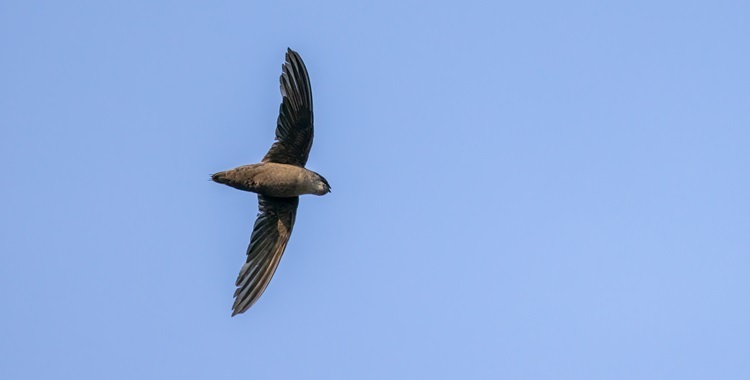 A chimney swift soaring overhead.
Come watch an incredible spectacle of chimney swifts at one of our upcoming Swift Sits!
Chimney swifts are fast, acrobatic birds that roost together by the hundreds during the spring and fall, flying into chimneys around dusk. Our community science program will host Swift Sits throughout the Twin Cities metro area in late August and early September. Sign up for our Community Science Bulletin and follow us on Facebook to get the latest on dates, locations and times. We hope to see you there!
Scientific and Natural Area events
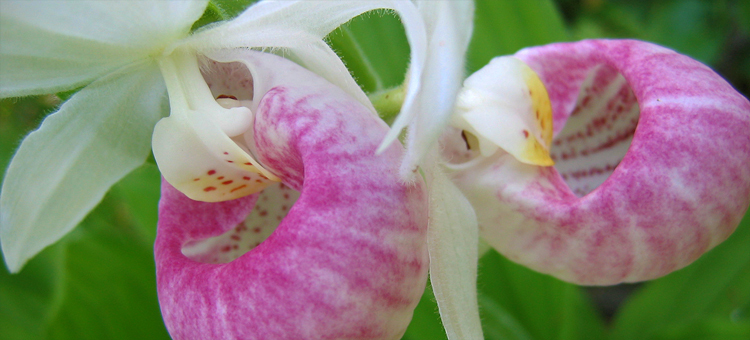 Showy lady’s slippers in an SNA
Scientific and Natural Areas (SNA) are exceptional places where native plants and animals flourish. Want to help them thrive and get to know them a bit better? Volunteer for one of these upcoming events:
|