Lower Shore: Duluth to Two Harbors
Surface water temps varied dramatically this week with windy conditions causing upwelling of cold water near shore and temps as low as 41 °F, but offshore water was as warm as 60 °F in some areas. Construction continues on Highway 61 at the McQuade intersection, and on Lighthouse Point Road in Two Harbors. Lake Trout anglers reported a steady bite for 18-30 inch fish in 150-250 feet of water. Lake Trout were fairly spread throughout the water column and bright spoons and stick baits were the most productive presentations. The Coho Salmon bite was best from McQuade to Two Harbors with anglers reporting the best luck in the top 50 feet of water, over 75-150 feet of water. Coho Salmon were 16-21 inches and flasher flies, peanut flies, and bright spoons worked best. A few 20-24 inch Chinook Salmon were reported and were typically caught amongst the Cohos. Large surface slicks of flies, ants, and moths were reported by anglers and the stomachs of harvested fish were often full of them. The St. Louis River Estuary bite was consistent for 14-20 inch Walleye and a some Crappie and Pike. Anglers found success trolling stick baits and worm harnesses on the flats and jigging live bait on deeper structure.
Upper Shore: Twin Points to Hovland
Fires in the BWCA and heavy winds led to extremely smokey conditions on the lake and kept angler pressure low. Near shore surface water temps were 40-42 °F but were slightly warmer offshore. Anglers reported tough Lake Trout fishing as fish were scattered in deep water areas. Anglers did best, targeting Lake Trout near the bottom in 90-180 feet of water, using bright colored and glow spoons. Silver Bay Salmon Classic anglers reported good fishing for large Lake Trout several miles offshore and poor fishing near shore. The top 3 Lake Trout int he contest were all over 20 pounds. Coho Salmon fishing was also best offshore with most caught in the top 100 feet of water. Very few Chinook Salmon were reported during the contest and the largest was just over 7 pounds. Shore anglers from Grand Marais reported fair fishing for Brook Trout, but no Lake Trout were reported in the shallow waters yet.
Management Updates
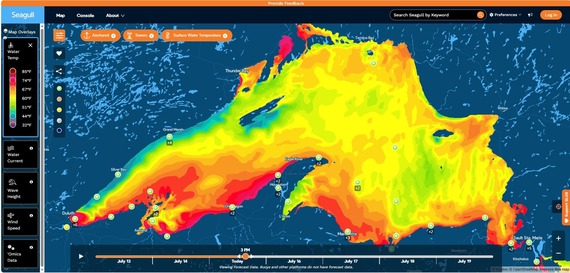
The previous Management Update discussed the water temperature difference between Lake Superior and the other Great Lakes, but water temperature also differs considerably across Lake Superior itself. On the Great Lakes Observating System’s (GLOS) Seagull water temperature map above, surface water temperatures for July 15th show 42 degrees near Silver Bay, Minnesota, and only 25 miles away in the Apostle Islands surface water temperature approached 70 degrees!
Anglers fishing for salmon on Minnesota’s North Shore know this all too well. Salmon fishing, especially for Coho, can be really good close to Duluth in early April where it is shallower, warmer and more productive; however, salmon fishing anywhere else along the coast can be tough until warmer water progresses northeasterly throughout the summer. The unusually cold water (compared to the rest of the lake) on Minnesota’s North Shore can be attributed to the over 900-foot-deep mid-shore trench that extends from just north of Two Harbors past Schroeder. Prevailing west winds, especially strong winds, will cause an upwelling effect along this deep trench pushing warm surface water east and bringing cold water from the depths to the surface. On the water, DNR Fisheries staff have seen 30-degree temperature swings in less than 24 hours!
Easterly winds can have a similar effect with warm water, pushing warm surface water westward and “stacking” warm water along the North Shore. In October 2025, water temperatures of over 50 degrees persisted into late October, when lake trout are typically spawning, and extended from the surface to over 100 feet deep. As summer progresses and the warm days continue, anglers are reminded that as surface temperatures approach 50 degrees it is believed that post-release mortality on lake trout increases to approximately 43% based on the most recent science.
These warm days are sure welcome after a long winter and we know colder temperatures are not too far away, so if you need a swim in Lake Superior to cool off from this heat, you may want to check which way the wind is blowing first!
Helpful Links
 Questions?
Email us at Lake Superior fishing report
Give us a call at 218-302-3277
Report suspicious activity at 800-652-9093
Visit us online at mndnr.gov
If this message was shared with you, sign up to receive it at the link above or text MNDNR SUPERIORFISHING to 66468 to subscribe for text updates.
Message and data rates may apply. Message frequency varies. Reply HELP for help or contact support@Granicus.com. Reply STOP to cancel. To view terms and conditions and privacy policy visit: https://public.govdelivery.com/accounts/MNDNR/text-message
|