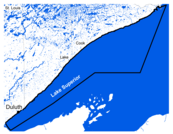
Lower Shore: Duluth to Two Harbors
Surface water temps were around 38 °F near Two Harbors as high as 52 °F near Duluth. Anglers found success in the warmer pockets of water trolling bright spoons, stickbaits, and flasher flies 20-50 feet down over 70-120 feet of water. Anglers reported catching good numbers of 19-29 inch Lake Trout, 16-19 inch Coho Salmon, and a few 20-32 inch Chinook Salmon. Several anglers reported having to go many miles out to find warmer water and feeding fish, especially close to the Wisconsin and Minnesota boarder line. On the St. Louis River Estuary, anglers reported steady action for 14-24 Walleye trolling stickbaits and worm harnesses on the flats or jigging minnows near structure.
Upper Shore: Twin Points to Hovland
Surface water temps were 37-40 °F degrees along the Upper Shore this week. A few anglers reported catching good numbers of larger suspended Lake Trout using dipsy divers in less than 100 feet of water. Anglers who were trolling deep structures saw less success than previous weeks, likely due to fish dispersing throughout the water column. Brightly colored and glow spoons were still the most productive presentations. The first Chinook Salmon was reported this week, but no other reports were received despite large numbers of Coho Salmon being caught on the Lower Shore. Shore anglers in Grand Marais reported catching several big coaster Brook Trout that were 18-21 inches. Brook Trout were also reported in other near shore locations, including Horseshoe Bay, Taconite Harbor, and Silver Bay.
Management Updates: Lake Superior is Unique!
Lake Superior is just different than the other Great Lakes…it’s bigger, deeper, colder, and is dominated by native predator and preyfish like lake trout, cisco, bloater, and kiyi. In an average year, Lake Superior surface temperatures are 3-9 ⁰ F colder than the other Great Lakes. The cold, deep waters and high abundance of native species helps prevent the establishment of invasive species like alewife, Eurasion ruffe, round goby, threespine stickleback, and zebra and quagga mussels.
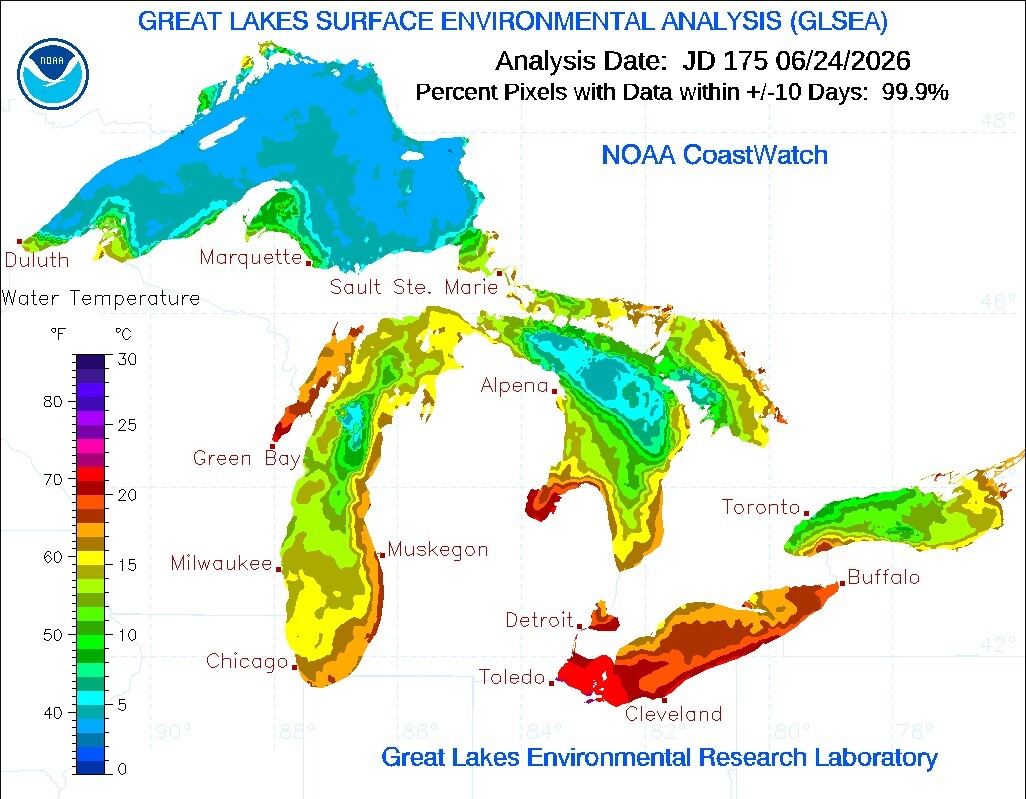
If you have been on the water this year, you have noticed this has been a colder than normal spring and water temperatures are still very cold except closer to Duluth. Although it makes fishing for salmon a bit more difficult, it is a good “reset” for the system which in recent years has seen unusually warm waters extending as far into the year as late October when lake trout are typically spawning. Cold springs, especially cold water in June, is one driver of cisco year-class success which we had seen the past few years from the historic 2022 year-class. Because of the lack of alewife which is the preferred diet of salmon in the Great Lakes (especially Chinooks or Kings), juvenile cisco provide an incredible food source that we have seen produce record-breaking coho and enormous Chinooks.
The problem is that over the past 30 years, successful cisco year-classes have become smaller and further apart with only a few successful but very small year-classes being produced in a ten-year period likely due to warmer springtime water temperatures and a lack of ice-cover. These small year-classes do not produce enough fish to provide enough forage for salmon like we had seen from the 2022 historic year-class. Compared to lake trout that can live well over 15 years, salmon have a short life cycle and need ample forage to grow from a newly hatched fry to a spawning adult in only 3 to 4 years and in most years that is just not what Lake Superior provides. Coho have a bit more diverse diet strategy than Kings, which is likely why we see higher coho abundance, and lake trout are extremely opportunistic eaters that can shift their diets to whatever forage is available which is why they truly are built for Lake Superior and why anglers have enjoyed record catches the past two years.
Diversity in the fishery is a great thing and although cold years make for short summers here on the North Shore, they just might provide the forage we need to continue to enjoy this great fishery!
For more information, questions about fisheries management in Minnesota waters of Lake Superior, or to suggest a topic for a Management Update, please contact Lake Superior Fisheries Supervisor Cory Goldsworthy at cory.goldsworthy@state.mn.us or 218-302-3268.
NOAA CoastWatch: Great Lakes Surface Environmental Analysis (GLSEA)
Helpful Links
 Questions?
Email us at Lake Superior fishing report
Give us a call at 218-302-3277
Report suspicious activity at 800-652-9093
Visit us online at mndnr.gov
If this message was shared with you, sign up to receive it at the link above or text MNDNR SUPERIORFISHING to 66468 to subscribe for text updates.
Message and data rates may apply. Message frequency varies. Reply HELP for help or contact support@Granicus.com. Reply STOP to cancel. To view terms and conditions and privacy policy visit: https://public.govdelivery.com/accounts/MNDNR/text-message
|