|
June 2026


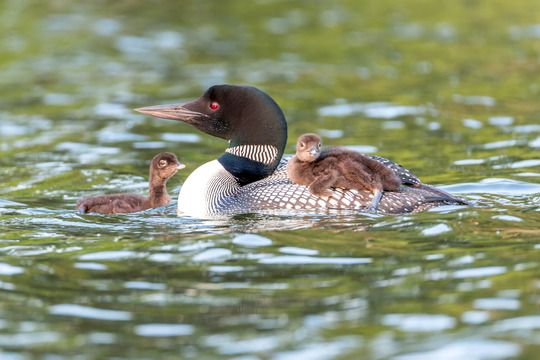 Common loon family, photo taken by D. Cronk and shared with the DNR at mndnr.gov/sharephotos.
While you’re out and about this summer, make sure to give wildlife their space.
We know, there’s a bunch of cool critters in Minnesota! While we encourage you to get outdoors and enjoy watching wildlife, remember that how we interact with nature makes a difference, especially when it comes to rare or sensitive species. Extra disturbance from people trying to “see” wildlife without respecting their need for space can add stress, disrupt their care of their offspring and, in some cases, put the animals directly at risk.
For example, June-September is a particularly dangerous time for loons. Common loon chicks are extremely vulnerable, unable to dive to safety if a boat gets too close. Staying alert for signs of loons and keeping your distance this summer are key to our state bird’s survival.
A good rule of thumb: if a species is rare, sensitive or hard to find, the best way to help is often to not seek it out. Ethical wildlife viewing practices help our rare species and their habitat:
- Give rare species space—observe from a distance with the help of binoculars or spotting scopes
- Avoid crowding or sharing precise locations of sensitive species
- Stay on roads, trails or in your vehicle when appropriate
- If an animal changes its behavior because of your presence, you’re too close
- Prioritize the animal’s welfare over the “lifelist” moment of seeing it
Enjoying Minnesota’s amazing wildlife doesn’t require close approach or disturbance. In fact, the best wildlife viewing often happens when the animals don’t even know you’re there.
Let’s keep Minnesota’s wildlife wild, safe and thriving!

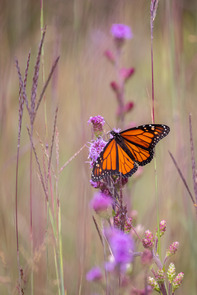
We aren’t the only ones planning trips for this summer.
The monarch butterfly has the longest migration of any insect. Every spring, monarchs fly over 3,000 miles from their winter homes in Mexico to their summer homes in Minnesota. They can fly up to 100 miles per day during their journey.
Like the road trips you may be going on this summer, this is a family affair. The monarchs that leave Minnesota in the fall are not the same individuals that return in the spring. Monarchs go through many generations during their travels, so the monarchs arriving in Minnesota now are the children and grandchildren of those that left Mexico earlier this year. You can be a good host to these returning migrants by planting milkweed and reducing your pesticide use. Let’s welcome them home!
Photo of a monarch taken by Alyssa Sheffield, shared with the DNR at mndnr.gov/sharephotos.
|

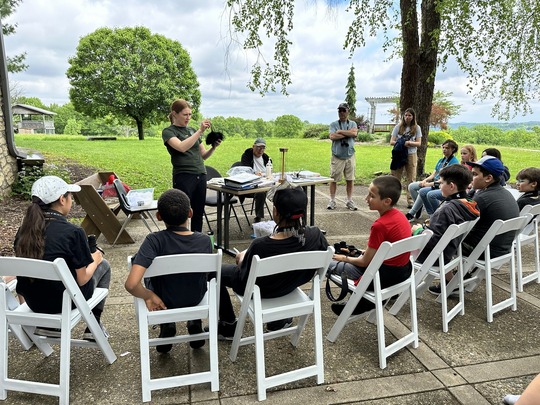
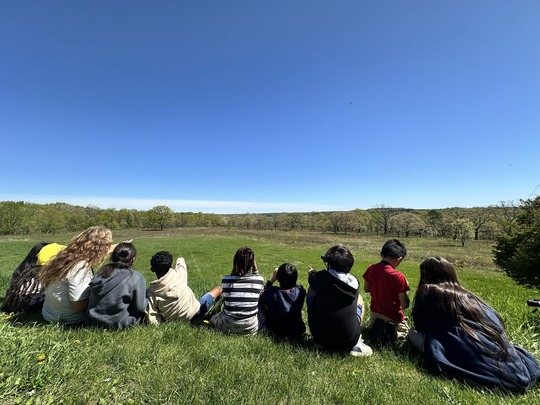 Students at schools enrolled in the Nongame Wildlife Program’s Bird by Bird program concluded their year by visiting Carpenter Nature Center. Over the past year, these students learned all about birds, honed their binocular and field guide skills, and got the chance to practice on the nature center’s beautiful forest and prairie habitats. Carpenter Nature Center staff also presented the center’s diverse ambassador bird team, including a peregrine falcon, red-tailed hawk and common raven. They also did a bird banding demonstration and spoke to the students about the importance of bird banding in wildlife research.
Classrooms enrolled in Bird by Bird receive binoculars, field guides, bird feeders, curriculum, in-class support and an end of the year field trip as part of their participation in the program. Do you know a school in the metro area that would be a good fit for Bird by Bird? We are accepting new applications to the program this spring, so encourage your favorite teacher to apply!
Visit our website for more information: mndnr.gov/eco/nongame/bird-by-bird.html
 Funding for this program was provided by the Minnesota Environment and Natural Resources Trust Fund as recommended by the Legislative-Citizen Commission on Minnesota Resources (LCCMR) and the Minnesota DNR’s Nongame Wildlife Program.

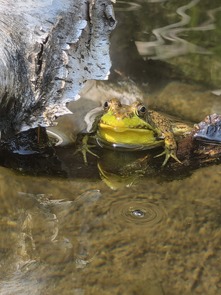
Whether you’re enjoying a “stay-cation” or traveling far for adventure, chances are you’re going to encounter a critter you’re curious about this summer. Keep these apps in your back pocket and you’ll know who you’re meeting along the way.
Merlin is like Shazam for bird calls. Simply hit the “Sound ID” button in the app and it will listen for bird calls to identify. You may be surprised by the many different birds around you!
Seek is great for identifying plants and animals alike. Simply take a photo of what you’ve noticed, and the app will pull up information about the species.
Still not sure what you spotted? Upload a photo to iNaturalist, where a community of scientists and nature lovers can help you identify what you’ve found.
Photo of a green frog by Chrissy Economos, shared with the DNR at mndnr.gov/sharephotos.
|

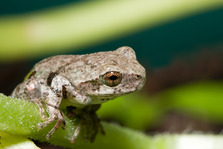
This has been an exciting season for our community science program as we launched new projects, including two new bat projects. We also revamped our long-running frog and toad calling project, renamed Minnesota Statewide FrogWatch, which now has more than 500 people participating!
Want to stay in the loop? Sign up for our community science bulletin to get the latest volunteer opportunities and project updates! Just enter your email address in the sign-up box at the top of the webpage.
|
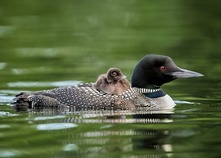
The Minnesota Loon Monitoring Program needs more volunteers for this summer, especially at lakes in the following counties: Otter Tail, Kandiyohi, Becker, Cook and Lake.
If you live in one of these counties or visit them frequently, please consider volunteering. This is a low commitment volunteer project that's great for groups and appropriate for all ages.
Visit our website to sign up: mndnr.gov/eco/nongame/projects/mlmp_state.html.
|

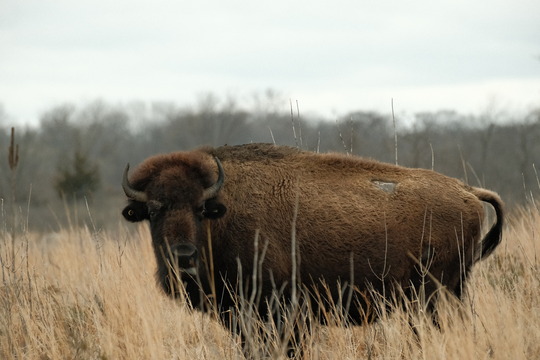 Photo by Emily Liebl, shared with the DNR at mndnr.gov/sharephotos.
You don’t need to travel far to make some amazing memories this summer. We’ve gathered a list of some incredible wildlife viewing opportunities right here in Minnesota.
Bison tours
You don’t have to drive all the way to Yellowstone to encounter bison; simply visit Minneopa State Park and Blue Mounds State Park. Both parks have bison from the Minnesota Bison Conservation Herd and offer unique opportunities for you to experience the largest terrestrial animal in North America.
The National Eagle Center
If you want an eagle experience this summer, add The National Eagle Center in Wabasha to your travel list. This award-winning museum is full of interactive exhibits, expert naturalists, daily programs and live eagles. It’s the perfect place to learn about one of Minnesota’s greatest conservation successes.
Sax-Zim Bog
Sax-Zim Bog in northern Minnesota is THE place to visit to experience wildlife this summer. This sprawling wildlife area covers over 300 square miles and includes a “magic mix” of bogs, forests, rivers, lakes, farms and meadows that attracts hundreds of wildlife species (some of which aren’t found anywhere else in the country).
International Wolf Center
Head to the heart of the Superior National Forest and you’ll find a gem unlike anything else in the state. The International Wolf Center in Ely, Minnesota is a renowned non-profit educational facility dedicated to teaching the world about wolves. It features an interpretive center, a pack of "ambassador" wolves and science-based exhibits, making it the perfect place to experience and learn about wolves.
Your neighborhood
Sure, you can travel to sights unseen this summer, but why not take a walk around your neighborhood and see what you can find? You may be surprised by all the critters living right outside your door!
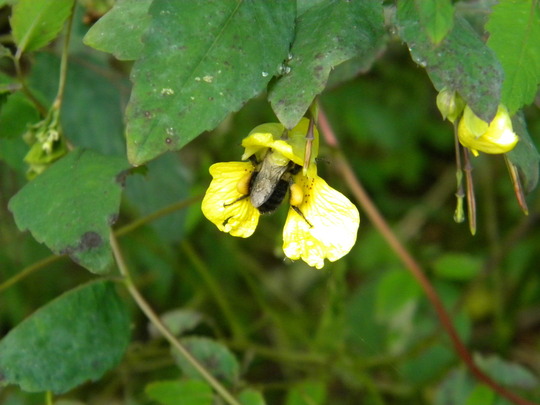 A busy bee at work.
|