|
March 2026


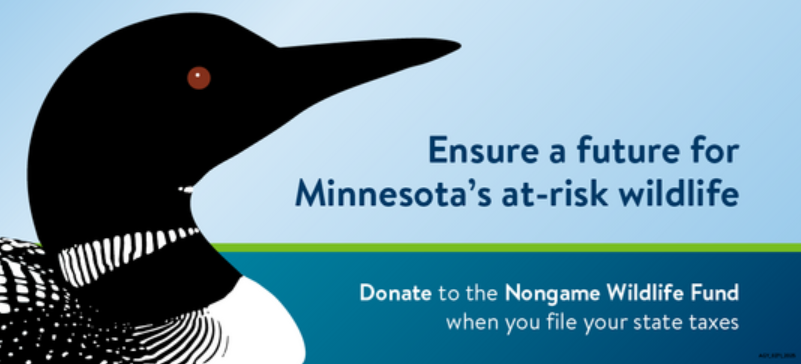 The Minnesota Department of Natural Resources (DNR) Nongame Wildlife Program is supported largely by voluntary contributions and grants. It does not receive proceeds from the sale of hunting or fishing licenses.
As a result, conservation efforts for songbirds, pollinators, turtles, bats and other vulnerable animals rely on funding from people who value Minnesota’s wildlife. One of the simplest ways to support this work is during state tax filing, when you can choose to contribute to the Nongame Wildlife Fund. These donations go directly toward field research, habitat conservation, public engagement programs and on-the-ground projects that benefit species across the state. Since the Minnesota tax checkoff’s establishment in 1980, and with the help of your donations, we were able to help restore bald eagle, trumpeter swan and river otter populations in Minnesota. Today, more than 500 wildlife species are considered rare, declining or vulnerable. Choosing to give at tax time helps ensure this important conservation work continues now and into the future.
How far can your dollar go? Each donation is tripled, thanks to a double-match from the Reinvest in Minnesota critical habitat license plate fund, so any amount you provide will make a difference for Minnesota’s wildlife and natural areas. Together, we’ll help wildlife thrive!
Learn more about how you can donate at mndnr.gov/donate.
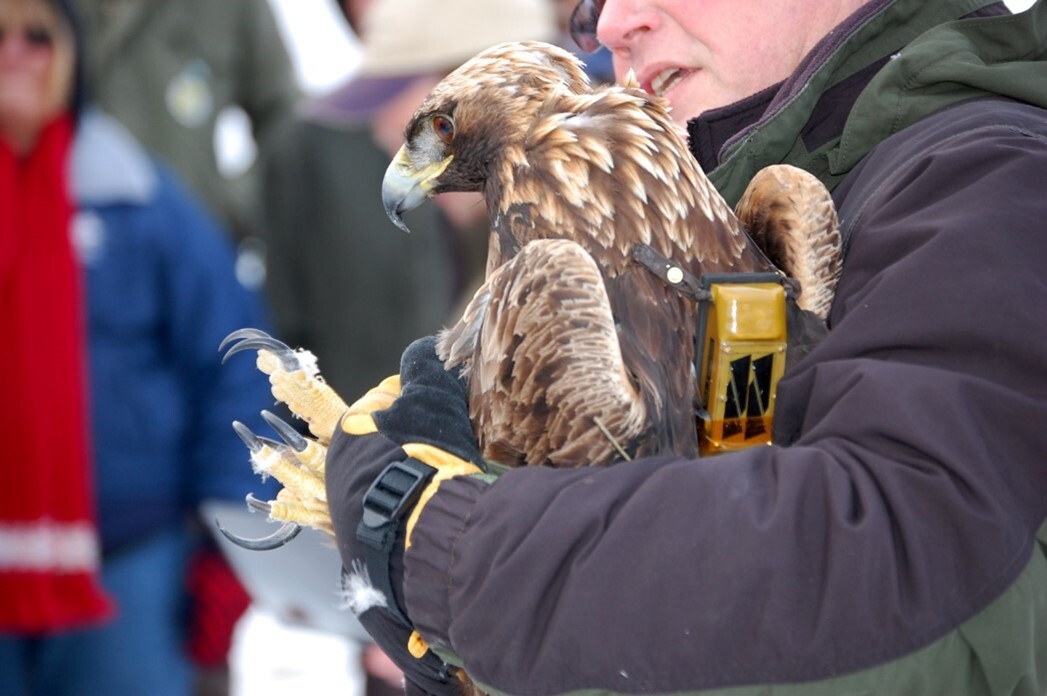 A golden eagle fitted with a transmitter at Camp Ripley.
Golden eagles in North America are primarily found in western states and western Canada. They do not breed in Minnesota; the nearest nesting population occurs in western North Dakota. Golden eagles are, however, observed across Minnesota during spring and fall migration, and some individuals winter here.
To better understand these visiting eagles, the DNR has partnered with Audubon Minnesota, the National Eagle Center, Central Lakes College and the Wisconsin Department of Natural Resources to study their habitat needs, prey use, breeding origins, migration routes and the conservation of critical winter habitats, while also expanding public awareness of the species.
Since 2015, the Nongame Wildlife Program has captured, fitted with transmitters and released golden eagles at Camp Ripley in Brainerd, Minnesota to track migration routes and habitat use in northern Minnesota. Five golden eagles have been fitted with transmitters so far, revealing remarkable journeys. Some birds travel more than 1,500 miles to breeding grounds as far north as Nunavut Territory, which is the northernmost territory of Canada.
Continuing to study these wintering visitors helps us better understand their full annual cycle. Information on habitat needs, migration pathways and population status supports more comprehensive conservation and management strategies for the species.
Camp Ripley staff observed golden eagles throughout the 2025–2026 winter, though none were successfully captured for transmitter fitting this season. Recently, Department of Military Affairs GIS staff also updated the Golden Eagle Project Viewer, an interactive tool that allows the public to follow eagle movements throughout the year.
Follow along as two golden eagles previously tagged by DNR Camp Ripley staff begin their northward migration this spring.
👉 https://experience.arcgis.com/experience/f7e2e989eede4b58b81acd9f633208c8

Even in winter, noxious weeds remain a concern across Minnesota. While snow and cold slow their growth, seeds and roots persist beneath the snow, ready to sprout when temperatures rise, crowding out native plants and reducing habitat quality for wildlife.
You can help. Winter is a great time for landowners and managers to plan noxious weed control efforts, map infestations and prepare for spring treatments. Early awareness and action help protect Minnesota’s natural landscapes and ensure healthy habitats for native wildlife when the snow melts.
If you see the following species growing where they were not planted, please report them through EDDMapS. Your observations improve risk assessments and help the Minnesota Department of Agriculture protect natural landscapes. If you’re managing any of these plants, sharing your experience is also very helpful.
Species of Concern for 2026–2027:

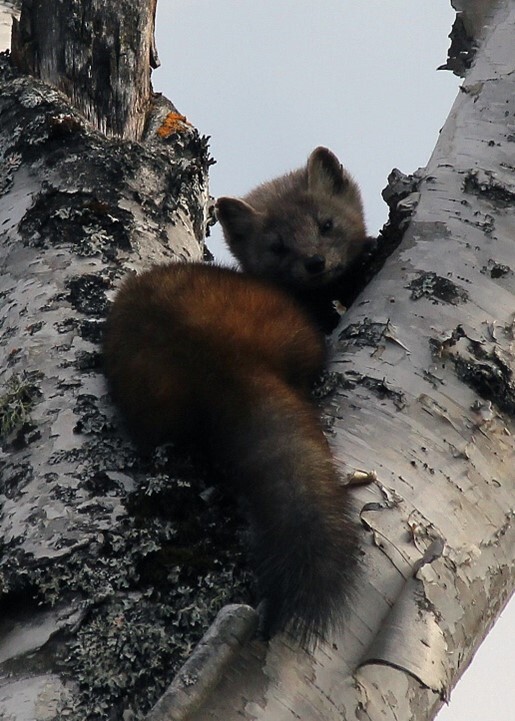 A marten in a tree, photo by George Kruse and shared with MN DNR
The American marten (Martes americana) is a small, elusive member of the weasel family that thrives in Minnesota’s northern forests. Known for its sleek, chocolate-brown fur and bushy tail, the marten is a skilled climber and hunter, feeding on small mammals, birds and insects.
In winter, martens use the subnivean space, the tunnels and cavities beneath the snow, for warmth and protection while hunting mice, voles and other small prey. They are most active at dawn and dusk and can even climb trees to find birds or caches of food. Deep snow not only helps insulate martens but also provides them with cover from predators.
In Minnesota, the American marten is considered a species of concern, relying on mature, continuous forests for survival. Conservation efforts focus on protecting these habitats and monitoring populations, helping ensure that martens continue to thrive in the state’s boreal ecosystems.
Fun Fact: A marten’s sharp claws and light frame let it “ski” across snow surfaces, making it a true winter acrobat in the boreal forest.

EagleCam
Just like any eager parents, we’re anxiously awaiting the arrival of bald eagle chicks.
We’re excited to share that at least one egg was laid around February 15 in the EagleCam nest. Bald eagles typically incubate their eggs for about 35 days, so we can anticipate hatching between March 21 and March 30. During this time, viewers can observe many fascinating behaviors as the adults take turns incubating, carefully settling onto the eggs and using their brood patch to keep them warm. You may also notice adults gently rolling the eggs with their beaks to ensure even development, rearranging sticks and grasses to maintain a well-insulated nest bowl and shielding the nest during wind or snow by spreading their wings.
FalconCam
The DNR FalconCam is live for the 2026 nesting season, with a new, upgraded camera providing a sharper, clearer view and, for the first time, sound.
One of the two adult falcons using the nest box has been identified by the Midwest Peregrine Society as the same female from last year: a 14-year-old female who fledged from St. Cloud, Minnesota, and has nested in this box since 2016. The male’s identity has not been confirmed yet. If it can be, that information will be added on the FalconCam webpage. Viewers tuning in can expect to see seasonal behaviors associated with nesting, such as courtship displays and nest preparation, and may hear occasional calls by the peregrine falcons.
The birds have dug a shallow bowl in the gravel, forming a nest, called a “scrape,” where they may soon lay eggs. If successful, viewers will have the opportunity to watch these remarkable raptors rear their chicks this spring. Last year, the pair laid their first egg on March 31, and eggs could appear around the same time this year. Peregrine falcons usually lay three to four eggs per season.
Each year, the webcam provides an intimate look at the lives of nesting peregrine falcons. The new camera enhances educational and research opportunities by providing a sharper, close-up view of nesting behaviors that are otherwise very challenging to observe.
The FalconCam live stream is available on the DNR website at mndnr.gov/falconcam and on the DNR YouTube channel. Viewers are encouraged to follow along throughout the season, to learn more about peregrine falcons and the lives of breeding birds.
Stay up to date on FalconCam activity by signing up for alerts on the FalconCam webpage and following the Minnesota Nongame Wildlife Program Facebook page for educational content throughout the nesting season.
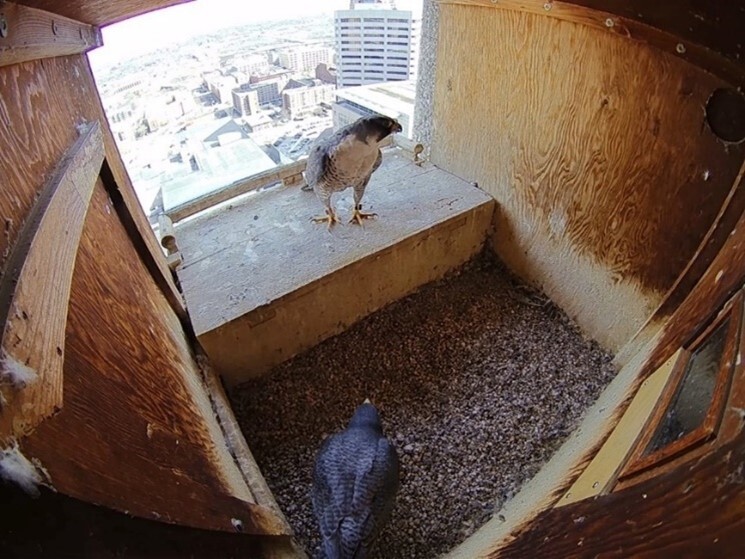 Two peregrine falcons in the nest box on March 9.

We’re excited to launch our 2026 Community Science project lineup! Join professional scientists and volunteers in helping Minnesota’s wildlife thrive. Whether you’re new or experienced, there’s a project for you.
Interested in getting involved? Visit our community science webpage and sign up via email to receive updates on upcoming community science opportunities.
🔍🦋 👉 Wildlife diversity and community science | Minnesota DNR
🐸Frogs and Toads
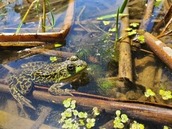
The Minnesota Statewide FrogWatch (formerly the Minnesota Frog and Toad Calling Survey) will start soon. From March through mid-August, volunteers can monitor frogs and toads, helping track populations that are key indicators of ecosystem health.
Photo caption: A mink frog.
|
🕊️Chimney swifts
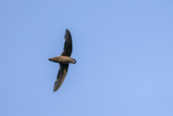
We’re continuing and expanding our chimney swift (pictured) roost project from May through August. These birds that catch insects on the wing are in decline. Volunteers help track roosts and report new locations, supporting their conservation across Minnesota.
|
🦋Regal Fritillaries (New!)
 |
|
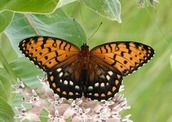
Volunteers will search for this prairie-endemic butterfly in formerly occupied areas in June and July. Your observations help update the state distribution map and guide future conservation efforts.
Photo caption: A regal fritillary.
|
🦇Bats (New!)
|
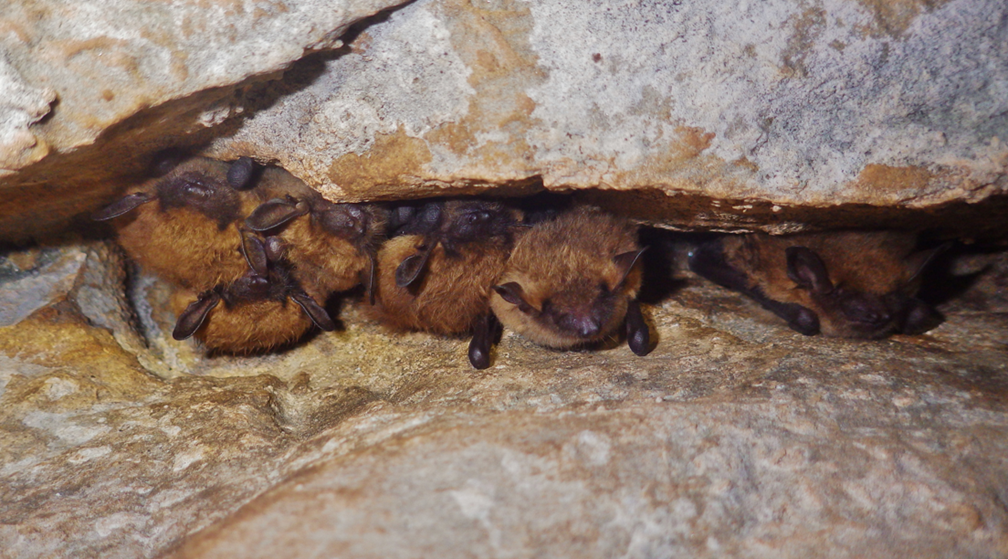
This year, we’re launching a bat research program. Volunteers can place recording devices to capture bat calls or watch maternity roosts from May through August, with increased focus in June and July. Observations help protect these important but threatened species.
Photo caption: Surveying a bat roost.
|
|
 |
🐸Cricket Frogs
 |
|
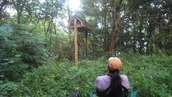
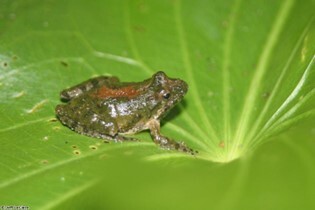
We are continuing our Blanchard’s Cricket Frog project in 2026. These tiny native frogs (pictured) are Minnesota’s only amphibian listed as endangered in Minnesota. Volunteers help document where cricket frogs are calling, contributing to an updated state distribution map and guiding future conservation efforts. This project will run in June and July. |
All projects include training, and everyone’s contribution makes a difference for Minnesota’s wildlife.

Bird by Bird
Nongame Wildlife’s Bird by Bird program is now in its third year, expanding from three to seven metro-area schools and reaching about 500 students with limited access to environmental education. Schools receive binoculars, feeders, curriculum and support from DNR staff who help deliver lessons, maintain feeders and guide bird walks. The curriculum ends the year with a bird-focused field trip to Carpenter Nature Center in Hastings.
Teachers report students are noticing and talking about birds more than ever. “The kids talk about the birds they saw at recess,” and “the kids notice every bird that flies past our window now,” report Bird by Bird teachers. Central to Bird by Bird’s mission is the development of a connection to the wildlife present in the places where students live and attend school, even in spaces we might not think of as “natural,” such as urban Minneapolis and St. Paul neighborhoods.
The program hopes to grow to 10 schools next fall. Do you know a school that would be a good fit for Bird by Bird?
Learn more at https://www.dnr.state.mn.us/eco/nongame/index.html
Nongame Wildlife helps bird murals take flight
 |
|
In 2025, local artists completed three mini-murals in downtown Hopkins highlighting threatened bird species in Hennepin County as part of the Audubon Mural Project, raising awareness about the challenges migratory birds face. This spring, Alice Smith Elementary joined the effort, with students creating four murals featuring species from the Audubon Vulnerable Birds List.
Photo caption: Clay-colored Sparrow and Field Sparrow, by Audrey Carver, Minneapolis, MN. Location: Hoagie's Family Restaurant, 824 Mainstreet, completed in 2025. City of Hopkins / Hopkins Center for the Arts. (2025). Public Art in Hopkins | Hopkins Arts Center, MN
|
|
To launch the project, over 400 students attended a presentation by Nongame Wildlife’s Education Coordinator, Benjamin Gieseke, about birds facing threats in Minnesota. Students learned about dark-eyed juncos, buffleheads and blackburnian warblers—and left inspired with simple actions to help birds, from keeping cats indoors to planting native species and reducing pesticide use.
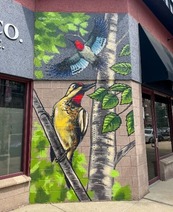
Photo caption: Red-headed Woodpecker and Yellow-bellied Sapsucker, by Adam Turman, Golden Valley, MN. Location: LTD Brewing, 723 Mainstreet, completed in 2025. City of Hopkins / Hopkins Center for the Arts. (2025). Public Art in Hopkins | Hopkins Arts Center, MN
|
|
 |
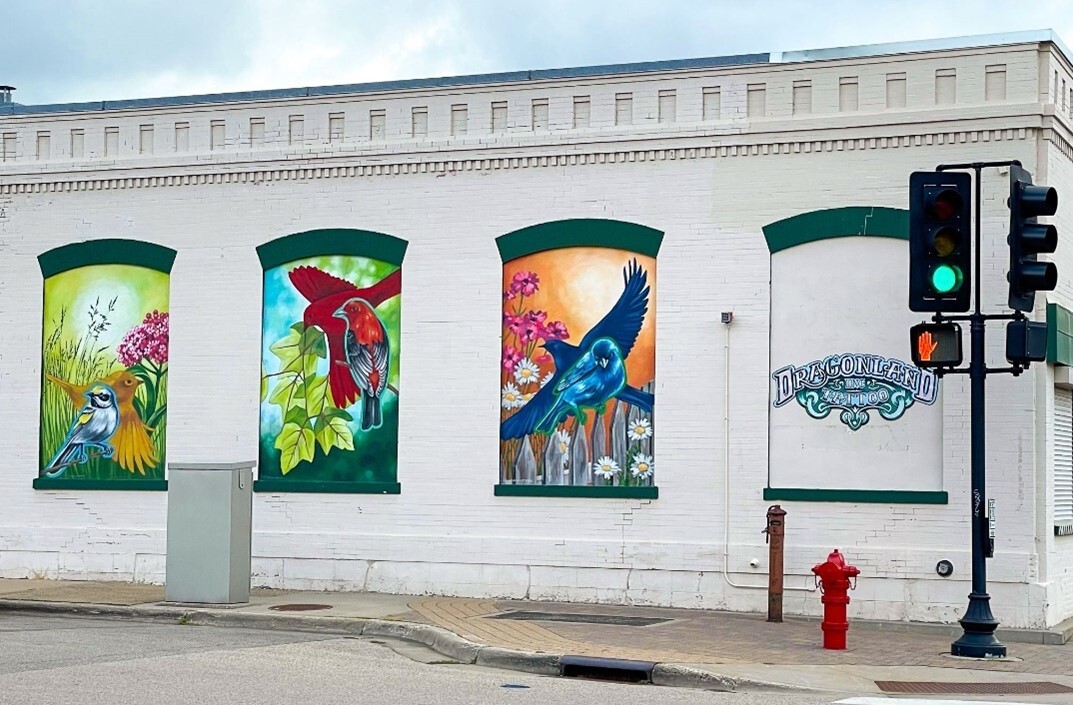 Golden-winged Warbler, Scarlet Tanager, and Indigo Bunting, by Kada Goalen, St. Paul, MN. Location: Dragonland Tattoo, 923 Mainstreet, completed in 2025. City of Hopkins / Hopkins Center for the Arts. (2025). Public Art in Hopkins | Hopkins Arts Center, MN

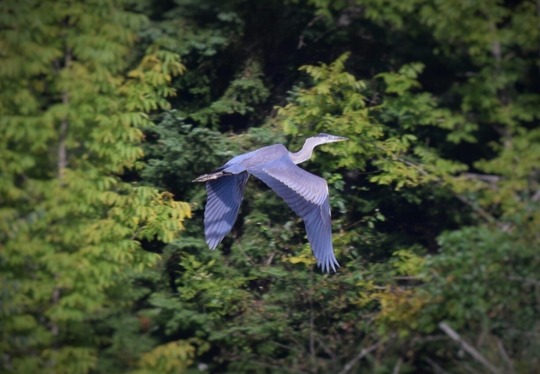 Great blue heron, photo by Doug Easthouse and shared with MN DNR
Spring in Minnesota means one of nature’s greatest spectacles: bird migration.
From March through May, millions of birds travel north along the Mississippi Flyway, stopping to rest and refuel in wetlands, forests, prairies and backyards across the state. Whether you’re an experienced birder or simply enjoy spotting wildlife on a walk, spring migration offers something exciting for everyone. Helpful reminder: You can help migrating birds by turning off unnecessary outdoor lights at night, which reduces disorientation and collisions during their journey.
In the Twin Cities metro area, Fort Snelling State Park and the Minnesota Valley National Wildlife Refuge are outstanding places to see migrating waterfowl, warblers and shorebirds. Theodore Wirth Park, the Eloise Butler Wildflower Garden and the Thomas Sadler Roberts Bird Sanctuary are also local favorites for catching colorful songbirds during peak migration in late April and May. Along the Mississippi River corridor, early mornings can bring a flurry of activity as birds move through riparian woodlands. The Twin Cities Bird Festival, happening Saturday May 2, is a great opportunity to learn more, join guided walks and connect with fellow birders throughout the metro area.
Across greater Minnesota, Frontenac State Park is a well-known migration hotspot along the Mississippi River blufflands. In western and southern Minnesota, places like Lac qui Parle Wildlife Management Area and Big Stone National Wildlife Refuge attract impressive numbers of waterfowl and shorebirds in April. Up north, as soon as the ice melts, loons, swans, cranes and eagles return to lakes and wetlands, signaling the season’s change.
For the best experience, head out early in the morning when birds are most active. Check recent sightings on eBird to see what’s being reported near you and bring binoculars if you have them. Most important, take time to look and listen—spring migration is happening all around us, even in urban neighborhoods.
This spring, step outside and see who’s passing through.
|