 April 2026
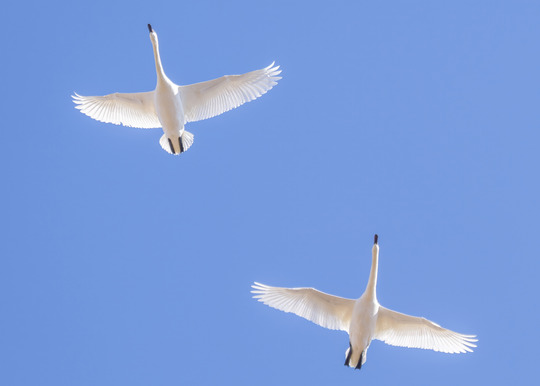 📷: Gregory Gerhart, Glendalough State Park
Look Up! Spring Birding Starts Now 🪶
Birds are all around us—on the water, in the trees, and overhead as the seasons change. Spring is one of the best times to start birding, as migration brings a wide variety of species through Minnesota. This month, we’re inviting you to try birdwatching at a Minnesota state park or trail. Whether you’re new to birding or curious to learn more, it’s a great time to step outside and see what you can find.
  Not Just for the Birds 🐦
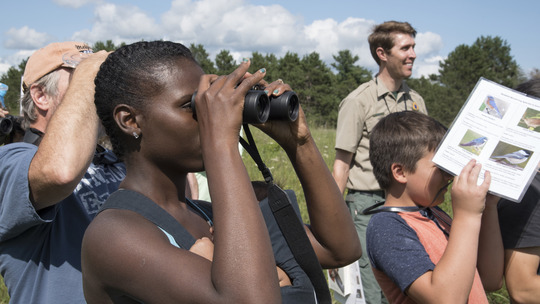
Birdwatching is one of the fastest-growing outdoor activities in the nation.
In Minnesota, birding can be as simple as stepping outside and looking up. You might hear a chickadee before you see it, catch a flash of color in the trees, or spot an eagle riding the wind along a lakeshore. Birdwatching is easy to start and hard to stop!
Little-to-no gear needed!
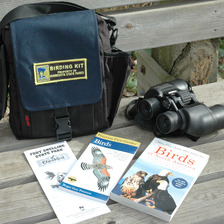
Birding is one of the fastest-growing outdoor activities in the country, with more than 96 million Americans taking part. Part of the appeal is how easy it is to begin. No specialized gear is required: a pair of binoculars are helpful, but not required. Most state parks even offer birding kits with binoculars and bird guides available to borrow for free! Each Minnesota state park and recreation area also has a free, customized bird checklist tailored to the season and species you’re most likely to see there. It’s an easy way to turn your visit into a scavenger hunt looking for feathered friends.
Take your time
There's no need to hurry when birdwatching. You can walk a trail, stop at an overlook, or simply sit on a bench and let the birds come to you. That flexibility makes birding a great option for visitors of all ages, including those looking for a slower, more relaxed way to enjoy the outdoors.
Birdwatch in any season
There's no need to wait until the fleeting summer months to start birding. There's always something to see! Spring and fall bring swarms of migrating birds passing through the state. Summer fills the woods with sound and activity. And winter offers a chance to spot hardy species against a quiet, snowy backdrop.
Birding events
If you're not quite ready to go birding on your own, or maybe you're interested in getting some expert tips, join us at a bird-focused program at a state park or recreation area! These fun, guided events happen year-round and highlight everything from spring migration and nesting birds to winter residents and backyard species. Whether you’re new to birding or already know your warblers from your woodpeckers, there’s always something new to discover!
|
 |
 Meet the Birds
Get to know a few of the most common bird groups.
Minnesota is fortunate to have all kinds of birds, each with their own habitats, behaviors, and migration patterns. To help you get started on your birding journey, we're highlighting just a few of the most common groups you'll see fluttering among the trees and tallgrass.
Songbirds 🎶
Their bright colors and familiar calls help bring spring to life.
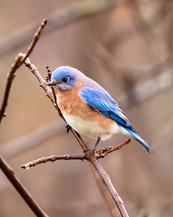
From the gentle fluting of a wood thrush to the sharp jeering of a blue jay, songbirds can be found perched in your backyard or nestled in the branches of a forest in a state park. Scientifically, songbirds are actually part of a suborder of birds called Passeri (under the order passerines), with birds in this suborder called oscines. What makes songbirds special are their precise control of their syrinx, a specialized vocal organ that allows them to produce intricate and dramatic ballads. These flighty tunes help songbirds defend their territory and woo a mate, with many male songbirds doing most of the singing. You’ll find an abundance of warblers, finches and sparrows at Frontenac State Park, or travel further south to Myre Big Island State Park for its diverse population of orioles, swallows and thrushes.
📷: Rachel Lokken, Eastern Bluebird
|
Shorebirds 🏞️
Slender, long-legged birds adapted for wading, probing, and constant movement.
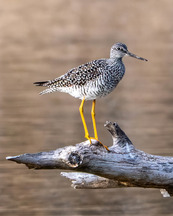
Shorebirds are a diverse group of birds that are usually found near water, from sandy beaches and rocky coastlines to freshwater wetlands and flooded agricultural lands. Their size, bill shapes, and leg lengths are each uniquely adapted to access their preferred foods in their specific habitats. In Minnesota, you’ll find migratory shorebirds along lakeshores like at Lake of the Woods in northern Minnesota. In fact, the white sand beaches of Zippel Bay State Park, which borders a small section of Lake of the Woods, are a great place to see up to 27 shorebird species, including the least sandpiper, plovers, and killdeer! Birders should also flock to Big Bog State Recreation Area, a designated Important Birding Area by the Audubon Society, to view shorebirds near the world-famous Red Lake Peatlands.
📷: Gregory Gerhart, Greater Yellowlegs
|
Waterfowl 🦆
Water-loving birds built for swimming, diving, and life on the water.
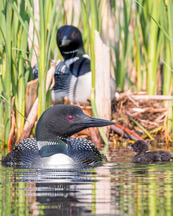
Waterfowl are amazingly adapted to both the skies and water. These aquatic, swimming birds—such as ducks, geese, and swans—stay near a water source throughout the year to live, feed, and nest. Their webbed feet are set back on the body, helping them swim more efficiently, while their powerful flight muscles allow them to travel great distances. In southern Minnesota, watch for stunning waterfowl like the wood duck or northern shoveler at Rice Lake State Park. And on the western edge of the state, Big Stone Lake State Park offers a mix of lake, marsh, and prairie habitat—creating ideal conditions for spotting migrating waterfowl like mallards and blue-winged teals.
📷: Daniel Cronk, Common Loon
|
Birds of Prey 🦅
Powerful hunters soaring above forests, fields, and cliffs.
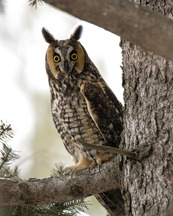
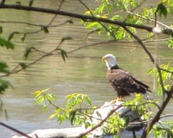
With keen eyesight, sharp talons, and hooked beaks, birds of prey are also known as raptors, which comes from the Latin term “rapere,” meaning “to seize or grab.” Because of this definition, birds of prey are not necessarily scientifically linked, but rather defined by their predatory lifestyle. Hawks, eagles, owls, and even vultures are considered birds of prey. Watch for them when you’re outdoors—you might find an observant great horned owl watching you in the trees at Savanna Portage State Park, where a large population of small mammals provides a ready supply of food, or see a resident bald eagle soaring above you along the lakeshore at Cascade River State Park.
📷: Dave Ches, Long-Eared Owl
|
 It's Migration Season 🪽
The Mississippi Flyway is the Midwest migration highway.
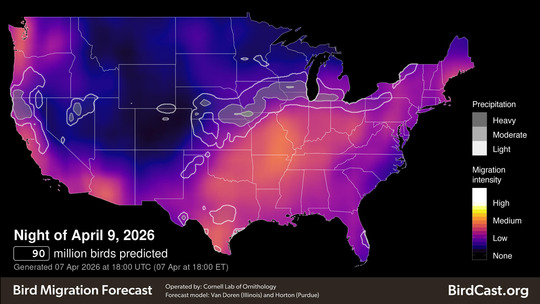
One of the most remarkable seasonal events in North America is underway—spring migration! At its peak, more than 350 million birds across the country will take to the skies in a single night. Here in Minnesota, the height of migration typically arrives in early to mid-May.
Many migrating birds follow well-established routes as they move north (or south). Stretching from the U.S. Gulf Coast to northern Canada, the Mississippi Flyway serves as a critical migratory corridor. And lucky for us, Minnesota sits right in the heart of this route. While Minnesota is a nesting ground for many species, it’s also a temporary stop for others continuing into Canada, making our state parks and trails some of the best places to witness the journey.
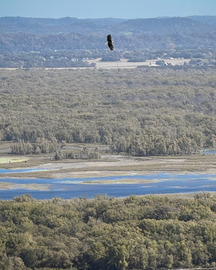
Many birds spend a significant part of their lives traveling along the flyway. Each spring, millions of birds navigate using the sun, familiar weather patterns, and even Earth’s magnetic field—following the same routes their ancestors have used for generations...just to turn tail and head south in the fall.
If you’re curious about what’s happening overhead, tools like BirdCast—developed by the Cornell Lab of Ornithology and partner universities—can help track migration in real time. The free website shows when birds are moving through your area and even estimates how many are flying each night!
|
 Birding Hot Spots in State Parks 🔥
Check out some of the best birding in the state.
|
Lake Shetek State Park
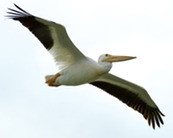
Did you know the Ojibwe word for pelican is shetek? Each summer and fall, Lake Shetek State Park is graced by a squadron of pelicans at the headwaters of the Des Moines River.
|
|
 |
|
Glendalough State Park
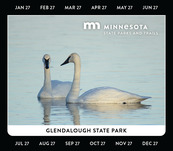
After near extinction in the 1930s, trumpeter swan restoration efforts in Minnesota have been a major success. The swans frequently breed and nest in many state parks, including Glendalough—featured on this year's state park vehicle permit.
|
|
 |
|
Lac qui Parle State Park
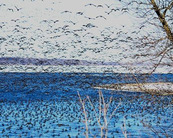
Long ago, the Dakota people named a slender lake along the Minnesota River Mde Iyedan, meaning “the lake that speaks.” The name was later translated into French as Lac qui Parle. Visit in the spring or fall and you'll understand the name. The lake is a stopover for thousands of migratory Canada geese and other waterfowl. You'll hear a chorus of honking, quacking, and other vocalizations.
|
|
 |
|
Root River State Trail
The Root River State Trail offers an easy way to combine walking, riding, or rolling with birdwatching. Follow the trail along the Root River and keep an eye out for great blue herons and wood ducks near the water, along with red-tailed hawks and bald eagles soaring above or perched among the trees.
|
|
 |
 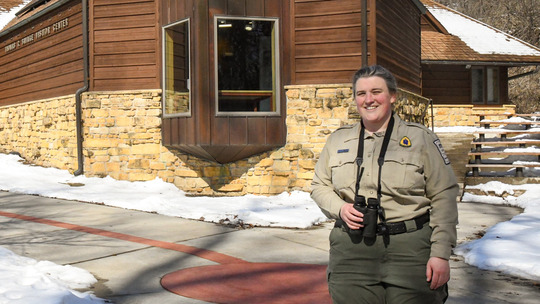 Tweet Talk with Amy Mester
Fort Snelling State Park naturalist shares her story.
For those ready to take up a new hobby, Amy Mester, an interpretive naturalist at Fort Snelling State Park, knows a thing or two about staying curious and creative.
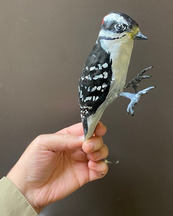
Amy has many skills and hobbies: drawing, crafting, baking, birding, and outdoor recreation. If you visit the Fort Snelling State Park Visitor Center, you even might spot one of Amy’s life-size papier-mâché birds or reference her illustrated owl identification chart.
Although the outdoors has always been a core part of her life, having grown up in Michigan, Amy's talents lie in the arts. She received an Associate Degree in Fine Arts from Grand Rapids Community College and later earned a Bachelor of Fine Arts from the School of the Art Institute of Chicago. Her studies blended art and science, with a focus on natural history and scientific illustration. During college, she worked closely with archived specimens at the Field Museum of Natural History, studied animal movement at the Lincoln Park Zoo, and painted in Chicago’s conservatories—experiences that changed her approach to understanding nature through an artistic lens.
“I’ve always had an affinity for the outdoors,” Amy shared. “So much of my life has been spent exploring, camping, and observing my surroundings.”
After moving to Minnesota, Amy spent several years as a historical interpreter at Historic Fort Snelling, where she developed a deeper understanding of Indigenous history and how the landscape has evolved over time. That perspective now informs her work as a state park naturalist, where natural and cultural history intersect.
Amy joined the Minnesota DNR in 2019 as a seasonal naturalist and later became a full-time, year-round naturalist in 2024. Today, she blends her backgrounds in art, theater, and environmental education to create state park programs that connect people to the outdoors. “I love having a non-linear path,” she says. “It shows that unique experiences and creative thinking can be real assets.”
With spring in the air, Amy is currently using her talents to run birding programs at Fort Snelling State Park. Amy only recently became a birder after joining the park full-time, adding to her list of rewarding hobbies. Now, she jokes, she may look through binoculars almost as often as she uses her own eyes.
|
Use Your Phone to Identify Birds 📲
Mobile apps make bird identification fun and easy.
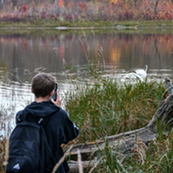
Since you will likely have your phone in your pocket anyway, downloading a mobile bird identification app is a great way to carry a field guide with you with for no added weight. Mobile apps can be very useful to help you identify and log the birds you find. Some apps can match nearby bird songs and calls to likely species, greatly increasing your ability to identify birds that are out of sight. There are multiple free options available to the public such as Merlin Bird ID or Audubon.
|
|