|
Feb. 5, 2026
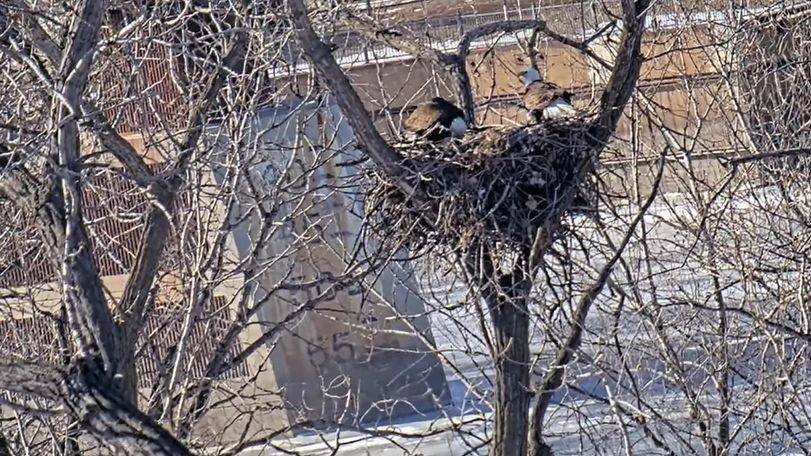 EagleCam pair enhancing the nest, Jan. 28, 2026.
The EagleCam pair has been spending more time at the nest, enhancing it by adding grasses and new sticks. This is a sign that they are preparing the nest for egg-laying.
Over the coming weeks, you will likely see more courtship displays between the pair and increasing activity at the nest. In past seasons, EagleCam pairs have laid their eggs in mid-February. Watch for an adult sitting in the bowl of the nest and not leaving-that is most likely the female and a sign that she has laid an egg.
Female bald eagles typically lay one to three eggs over the course of several days and begin incubating the first egg as soon as it is laid. Eagles usually lay their eggs two or three days apart, but they can lay eggs up to five days apart. Both parents share incubation duties.
Eagle eggs usually hatch after 34-39 days of incubation, so if this EagleCam season follows years past, there should be signs of a chick in the nest as early as mid-March.
Watch live on the DNR website and on the DNR YouTube channel.
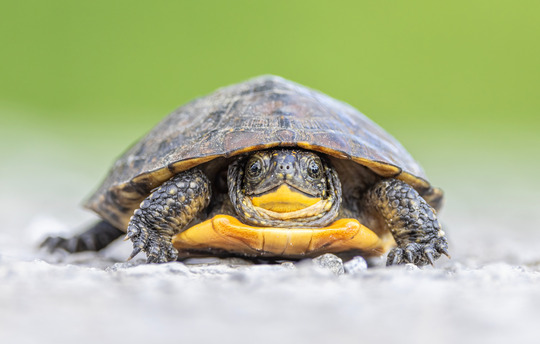 A Blanding’s turtle, one of the many at-risk wildlife species that need your support.
Your Minnesota state tax return can support the EagleCam and help rare and vulnerable wildlife.
Contributions to the Nongame Wildlife Fund provide field research and conservation of rare and vulnerable wildlife, as well as educational programs like the EagleCam and FalconCam. Any amount you contribute to the Nongame Wildlife Fund is double-matched, thanks to funds from Minnesota’s critical habitat license plates.
The Nongame Wildlife Fund tax checkoff can be found on Form M1 Individual Income Tax or Form M1PR Homestead Credit Refund. If filing on paper, simply look for the loon to invest in the future of Minnesota’s at-risk wildlife. The program and EagleCam can also be supported online anytime at mndnr.gov/donate.
|