|
Sept. 26, 2024
In this edition of Deer Notes, find tools for archery hunters, tree stand tips, how to share your wildlife observations, when to wear blaze clothing, dates for the youth and early antlerless seasons, how you can join offal research, hunting questions answered and an invitation to share your photos.
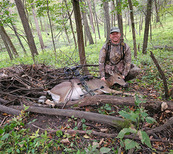
DNR has tools for archery deer hunters
Leaves are changing, the air is crisp and Minnesota’s archery deer season is open — it’s a great time of year! If you’ve been out hunting already or still are getting ready, the Minnesota DNR has online tools and area wildlife staff ready to support your hunting season.
Check out the DNR’s deer hunting webpage for important information about regulations, bag limits and chronic wasting disease sampling information.
The DNR Information Center and area wildlife staff can answer questions about deer hunting seasons. Contact the DNR Information Center by email or by calling 888-646-6367 or find wildlife area office contact information on DNR wildlife area office webpages.
You can also learn more about population management, season information, and tips for a successful hunt through recorded deer season webinars. And detailed information for every DPA, including hunters per square mile in 2023, public hunting ground, and land cover types, is available through the interactive deer map by selecting “DPA Details.”
“First doe of the 2024 season” photo courtesy of Paul Burr
|
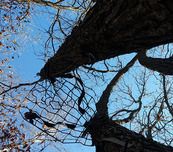
Archery hunting tree stand tips
Deciding where to set your tree stand can be a daunting task, especially during archery season when deer need to be close enough to take that ethical shot. While some luck is always involved in setting a stand, there are a few things to keep in mind when choosing a tree that can increase your odds of having a successful hunt.
First, put yourself in an area deer regularly use to travel by looking for heavily used trails. Pay close attention to places with thicker cover that will make deer feel more comfortable when traveling. Keep in mind some trails may be used more or less depending on the time of year, so look for fresh sign such as deer tracks and droppings. Finding multiple trails, or trails that intersect, will also increase your odds of seeing deer. Consider both the prevailing wind direction and how you will access the location when hunting. You don’t want to walk over places you expect deer to be, and you certainly don’t want your scent blowing in that direction either.
Next, try to find a tree that’s within comfortable bow range for you, and consider how well you will blend into the background when you’re in your stand. Choosing a wide tree, or one with natural cover such as nearby branches can help break up your outline and prevent you being seen by a deer. Remember to make sure you have plenty of shooting opportunities around you.
Most importantly, always make safety a priority when out in the field. Falls from tree stands are one of the most common types of hunting accidents, so make sure to check out the DNR webinar on tree stand safety and DNR safety information.
|

Deer hunters: Please share deer and wildlife sightings with this online log
With archery deer season open, now is an ideal time for hunters to use the Minnesota DNR’s online log for deer and other wildlife sightings. The DNR uses the information to supplement population estimates, which are an important tool for managing wildlife.
Using a mobile device or desktop computer, deer hunters can enter information on the DNR website about wildlife they see while in the field, including deer, turkey, bear, fisher and other species.
Hunters are encouraged to fill out a report after each hunt even if they don’t see any deer that day. Filling out a report, even if no deer are observed, is important as it allows for an accurate estimate of the number of deer observed per hour of field observations, which provides a useful comparison to deer density modeling results. The log will remain open through the end of the year.
Doe photo courtesy of Heidi Mansager
|
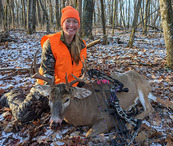
When blaze orange or pink is required
Archery hunters, here’s a reminder that blaze orange or blaze pink clothing is required during the youth and early antlerless seasons from Thursday, Oct. 17, through Sunday, Oct. 20, and during any other open firearms season.
Also, deer hunters, including archery hunters, who are hunting deer in a fabric or synthetic ground blind on public land must have a blaze safety covering on top of the blind that is visible from all directions or a patch made of blaze material that is at least 144 square inches (12x12 inches) on each side of the blind.
Photo courtesy of Randy Roemer of his daughter Chandler Roemer
|
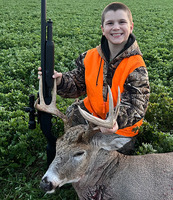
Youth deer season returns Oct. 17-20
Minnesota’s youth deer season will take place statewide Thursday, Oct. 17, through Sunday, Oct. 20. The season coincides with statewide teacher workshops, so many Minnesota students don’t have school during the youth season.
To participate, youth must be 10-17 years old and have a deer license. Participant numbers are not limited and there is no special permit, so parents should purchase or obtain a regular deer hunting license for each youth who will be hunting. Youth may not tag antlerless deer or legal bucks taken by another individual. An adult parent, guardian or mentor must accompany youth ages 10-13.
Adults may not hunt, unless they are in an area open during the early antlerless season and have a valid license. Complete youth season details are available on the Minnesota DNR youth deer season webpage.
“First deer” photo courtesy of Kyler Zimmer
|
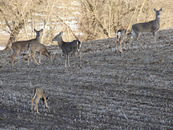
Early antlerless-only season is Oct. 17-20
Hunters can participate in an early antlerless-only deer season from Thursday, Oct. 17, through Sunday, Oct. 20. The season increases opportunities for hunters in deer permit areas where deer populations are above population goals or where there is an increased risk of chronic wasting disease. Permit areas open during the hunt are 214, 215, 218, 219, 221, 222, 223, 225, 227, 229, 236, 341, 605, 642, 643, 645, 646, 647, 648, 649, 661 and 701.
The Minnesota DNR offers this opportunity to hunters to manage local deer herds. The bag limit is three antlerless deer and deer taken during the early antlerless-only season do not count against the statewide bag limit. Youth may not tag antlerless deer or legal bucks taken by another individual.
Before participating, hunters should review the specific license and permit requirements available on page 88 of the Minnesota Hunting and Trapping Regulations.
|
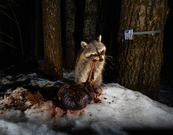
Join wildlife research on offal
The Offal Wildlife Watching Project with the University of Minnesota Extension is aimed at better understanding how hunter-provided deer gut piles (also called offal) are used by Minnesota wildlife.
The project asks volunteer hunters to set up remote cameras on the offal they leave in the field to capture images of wildlife visitors for one complete month. The project also relies on volunteers to help classify and identify wildlife in the many thousands of captured images each hunting season at Zooniverse.org.
The project is currently seeking more deer hunter participants from throughout Minnesota. Hunter participants are welcome to use their own trail cameras or borrow project camera equipment to use (shipping costs covered). Prospective participants can get more information and register at offal@umn.edu. Questions can be directed to Program Coordinator, Grace Milanowski at offal@umn.edu or 612-626-0109. You can also follow the project on Facebook, Instagram and X.
Photo courtesy of Ryan Pennesi
|
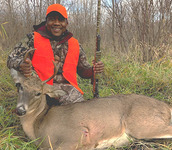
Common hunting questions and answers
Here are a few answers to common questions asked to Minnesota DNR staff about hunting:
- Hunting deer with bait continues to be illegal statewide in Minnesota.
- The shotgun zone remains the same as last year (location is available in the deer permit area map on the DNR hunting regulations page).
- Yes, an archery hunter can choose to harvest an antlerless deer with an archery license in a deer permit area designated as lottery. There is no need for archery hunters to apply for a lottery permit in these DPAs.
|
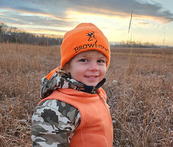
Deer and hunting photos welcome
This is a great time of year to take some photos of some of the amazing sights we get to see in the Minnesota outdoors, whether from hunting, watching wildlife or just getting some fresh air. Do you have a photo of Minnesota deer, scenery, habitat or hunting success you’d like to share? Anyone can share photos using the DNR photo uploader! We may use them in future Deer Notes, our webpages or other communications.
“In the field with Dad” photo courtesy of Matthew Strand
|
|