|
|
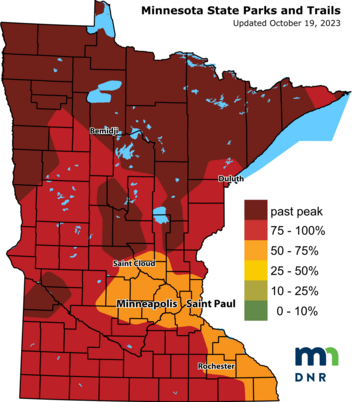
Click on the map for a complete fall color report from around the state.
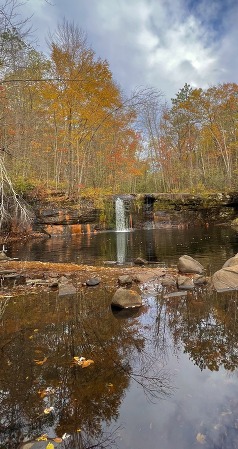
You can't go wrong with fall. And a little magic.
As the days shorten yet the weather stays pleasant, pull on a sweatshirt and take a twilight hike in a Minnesota state park or trail. There’s something magical about the deepening blue autumn sky as day drifts into night and the nocturnal creatures begin their night rounds.
There's something magical about the reflections on quiet waters, and the bright colored foliage against overcast skies.
There's something magical about walking in nature, with leaves rustling under your feet or surrounded by bright red sumac.
Fall colors, on leaves and skies, are magical all over Minnesota right now. Make sure you get outside to make the most of the last autumn days!
PHOTO: Mazbeen Palsetia, taken 10-15-23 at Banning State Park.
|
|
|

The Driftless Area is known for its deeply carved river valleys, caves and elevations ranging from 603 to 1,719 feet.
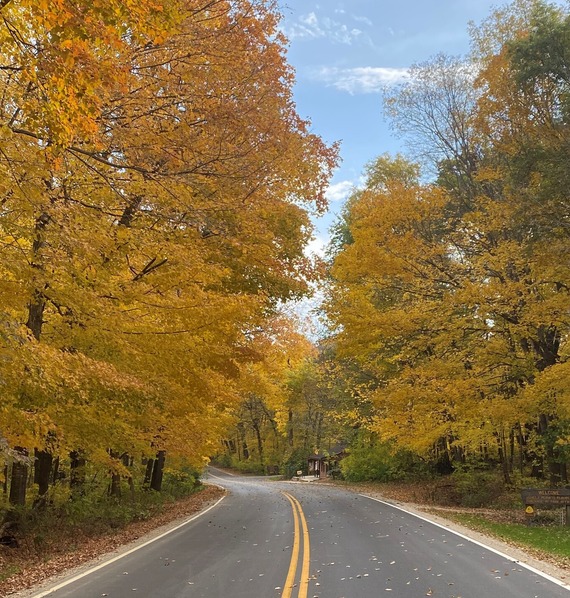 Take a drive through Forestville/Mystery Cave State Park to view the beautiful fall foliage. PHOTO: Trev, taken 10-18-23
Start your trip at Forestville/Mystery Cave State Park, the premier karst destination in southeast Minnesota, with Mystery Cave and Big Spring being two of the major highlights. Follow the Big Spring Trail alongside Canfield Creek to its source, the Big Spring.
Take the scenic tour at Mystery Cave, the longest cave in Minnesota, to see unique features such as raft cones, folia, botryoides and keyhole passages. The scenic tour is stroller- and wheelchair-accessible and it's offered between mid-May and late October (book your spot on one of the last tours of the year, happening this weekend.)
Next, head north to take the Historic Bluff Country National Scenic Byway (highway 16) to travel east towards the Mississippi River. This gorgeous fall drive will take you along the Root River Valley, past bluffs and charming towns.
Explore along the river on The Great River Road, another National Scenic Byway, with the Mississippi to the east and the Richard J. Dorer Memorial Hardwood State Forest to the west. Tops for motorized trail riding, horseback riding and mountain biking, the forest offers something for everyone.
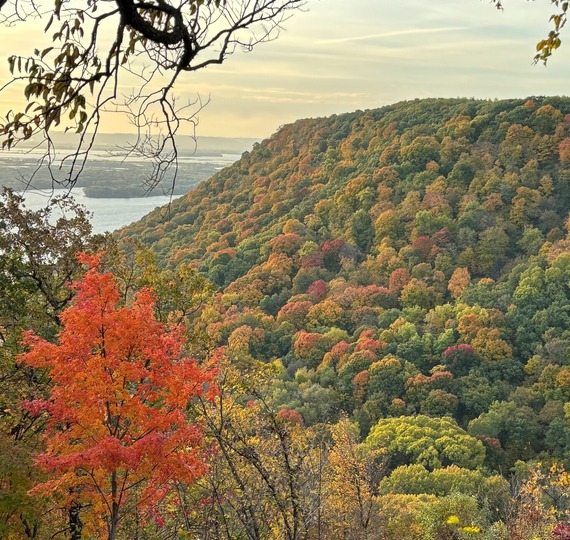 PHOTO: Anne Selness, taken 10-18-23 at Great River Bluffs State Park.
Your next stop is Great River Bluffs State Park, a park dedicated to the protection and restoration of natural resources, and containing King's and Queen's Bluffs SNA (Scientific and Natural Area). Hike the interpretive King's Bluff Trail (3.5 miles roundtrip) for views of the surrounding bluffs and the Mississippi River. Walnut and birch leaves have dropped, and maples are brilliant oranges, reds and yellows. Oaks are beginning to turn. This will be a prime weekend for colors!
Looking for more hiking opportunities? We got stairs for you! Visit John A. Latsch State Park on your way north and take the more than 300 steps to the top of Mt. Charity. There are still bursts if color from maples, but it's now time for oaks to show their crimson tints, while aspens add golden hues to the landscape. The Mississippi is known for being a byway for migrating birds: Look for pelicans and gulls.
|
|

From forest to prairie to a crystal clear spring-fed lake, this park offers a variety of scenery.
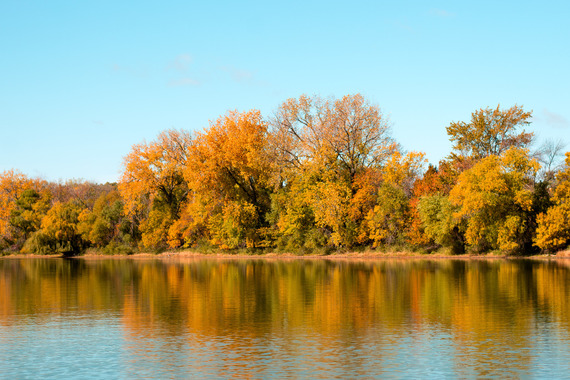 PHOTO: Laura Holmes, taken 10-16-23
Bird watchers gravitate to Myre-Big Island State Park each fall for the amazing waterfowl migration. Hikers head off to the Glacial Esker, a landform of gravel and sand ridges that were deposited as glaciers melted. Fall is the best Esker-exploring season since summer’s mosquitos are behind you. Come for the birds and a picnic, stay for a geology lesson on the Esker.
The remnant maple and basswood forest offers various shades of green. On these cool and rainy days you'll notice dark brown bark makes the leaves glow. A few of the maples are just starting to turn red, while many have lost most of their leaves.


Each summer and fall, the shetek visits its namesake lake, headwaters of the Des Moines River, at Lake Shetek State Park.
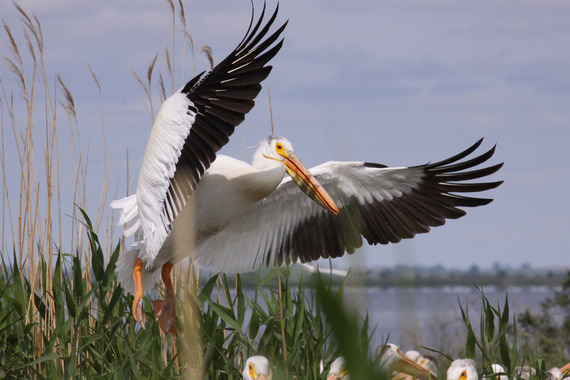 Look for pelicans and shorebirds from the Eastlick Marsh observation deck at Lake Shetek State Park. Keep your distance and use binoculars or a spotting scope. Pelicans have been known to abandon their eggs and chicks if people get too close. PHOTO: Carrol Henderson
From April through October, American White Pelicans build nests and raise their young in Minnesota; some remain year-round. To see one is to remember it. The foraging bird is one of North America’s largest bird species, with a body as long as 5 feet and a wingspan that can be up to 9.5 feet!
White pelicans have white plumage, black-tipped wings revealed when they take flight, and orange bill and webbed feet fade.

 A golden path
The Paul Bunyan State Trail is the longest of Minnesota's state trails and the longest continuously rail-trail in the United States. It travels 115 miles connecting two state parks, Crow Wing and Lake Bemidji, where this photo was taken.
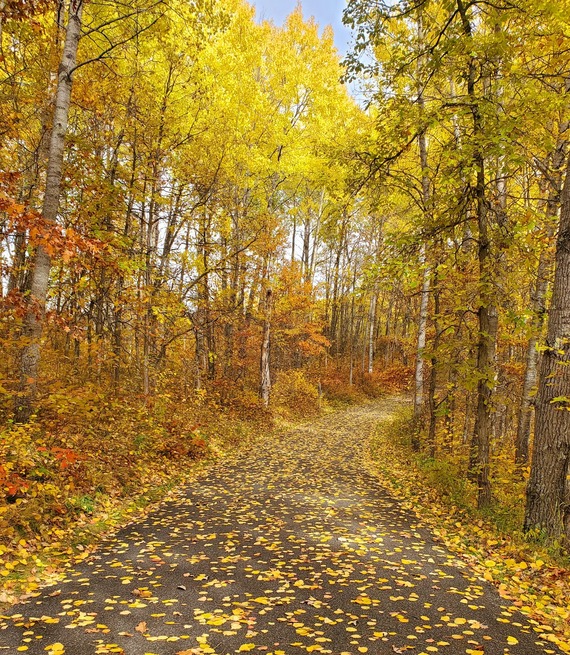 Things are looking bright at Paul Bunyan State Trail's trailhead! PHOTO: Christa Drake, 10-18-23
Share your favorite Minnesota state park, trail and recreation area fall photos and stories. Upload your photo to our website for a chance to be featured in the weekly Fall Color Update and our social media channels.

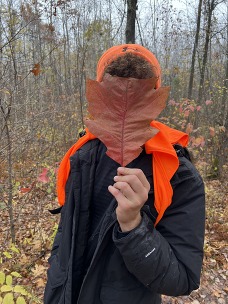
Some Minnesota state parks hold managed deer hunts as a way to help control the deer population in the parks. The DNR's goal is to ensure healthy natural communities.
Access to state parks varies during these hunts. Some state parks remain open to all visitors, some have limited public access, and some are open only to hunters with special permits. Before visiting a state park this fall, be sure to check the park's website, and look in the alerts and notices section for hunting information. While at the park, look for signs related to hunting and follow them. For safety tips and a list of all state park hunts, visit mndnr.gov/parkhunts.
|
|
|
|
|
|