|
March 1, 2023
In this issue, we invite you to talk with us about deer and other wildlife, and find deer season results, a wrap-up of chronic wasting disease testing and what’s being done to slow the spread of CWD.
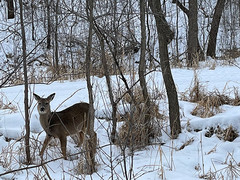
DNR invites conversation about wildlife, habitat and hunting
We’re inviting you to talk about deer and other wildlife, hunting and habitat topics with wildlife managers throughout the state on Thursday, March 2. Wildlife managers will be available in local area offices or by phone from 10 a.m. to 6 p.m. that day.
To participate, visit the DNR website to find the list of area offices and telephone numbers for your area wildlife manager. Area managers always welcome calls, so if you can’t call during the dedicated time, please do so at your convenience. Unable to call or stop by? Share your thoughts through an online questionnaire that is available through March 23. Additionally, written comments may be submitted to Barb Keller, Fish and Wildlife Division, Minnesota Department of Natural Resources, 500 Lafayette Road, St. Paul, MN 55155.
We’re welcoming conversation about deer, other wildlife, hunting and habitat, to discuss specific topics that the DNR’s deer advisory committee should be aware of, or thoughts and feedback about deer population management. Comments will help inform DNR staff with season-setting decisions this spring, which will reflect management designations for the 2023 fall deer hunting season.
Photo courtesy of Kellie Gunderman
|
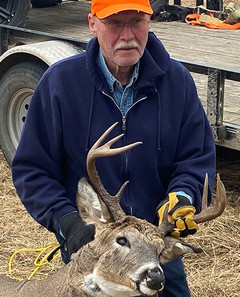
Harvest results available
Hunters harvested about 172,000 deer during the 2022 deer hunting season, a lower total harvest than in recent years. Total harvest was down 7% compared to the 2021 season and 10% less than the five-year average deer harvest for Minnesota. Some bullets about the season:
- Lower deer numbers in northern Minnesota and poor weather during opening weekend in some parts of the state likely contributed to lower firearms A season harvest.
- Weather was better during later seasons including firearms B and muzzleloader seasons. The number of deer harvested during muzzleloader season was the highest reported since 2007 and was 10% higher than the 2021 season harvest.
- Archery season harvest was about 1% lower than the 2021 season. Most archery season harvest occurred prior to the firearms season and peaked in late October and early November.
A final deer harvest report and reports from past seasons are available on the DNR website.
“Nice eight-point buck Tom!” photo courtesy of Steve Thorp
|
Where we did not find CWD
Chronic wasting disease remains a serious and persistent threat to Minnesota’s deer herd health, but sampling efforts revealed some good news – three consecutive years of disease surveillance in deer permit areas 157, 159, 213, 225 and 273 yielded no detections of the disease in wild deer.
Consistent with the DNR’s CWD management plan, these zones were established due to the detection of CWD in captive deer facilities. Following these three consecutive years of no detections in wild deer, successful hunters in these DPAs will no longer need to submit samples for testing.
We greatly appreciate hunters’ help monitoring these areas over the past few years!
|
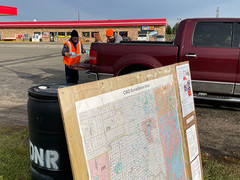
And where we did find CWD
CWD was detected in 26 hunter-harvested deer through the 2022 fall seasons. Of these, 73% were from the southeast, a region that continues to see persistent CWD infections in wild deer.
CWD was detected in two hunter-harvested bucks in DPA 184 in the Bemidji area. DPA 184 is part of a CWD surveillance zone established due to the detection of CWD in a captive deer facility and illegal dumping of infected captive deer carcasses on public land.
After the discovery of this fall’s CWD detections in wild deer, the DNR held a late disease management hunt to learn more about the presence of CWD in the area. An additional 102 deer were harvested by hunters, with no additional CWD detected.
|
Actions in response to CWD
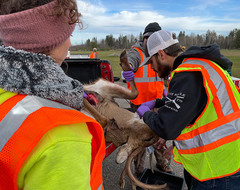
In DPA 184, CWD was detected in two bucks, which contributed to the DNR’s decision to not conduct targeted agency culling in DPA 184 this winter. The DNR uses targeted culling in areas within two miles of a CWD detection in deer, particularly does. An adult doe has a smaller home range and a tighter social group than bucks. If a doe has CWD, the likelihood that her social group also has it is high. When we find a doe with CWD, that serves as anchor point for culling efforts – we can apply it to very small, specific areas to fight the disease. Conversely, bucks have larger home ranges and detecting CWD in two bucks does not allow the DNR to establish an effective anchor point for a culling effort.
In the southeast, culling efforts started Jan. 23 and will continue through late March. Targeted culling will take place in the city of Grand Rapids (part of DPA 679) and the south metro (DPA 605) from Feb. 27 to March 10, focusing on locations where CWD has been detected in the past.
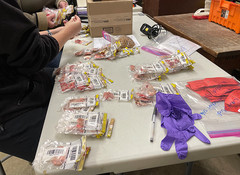
All deer culled are processed and the venison is frozen until test results are received. Venison from deer with a not-detected CWD result is distributed to cooperating landowners and those signed up through DNR Share the Harvest program.
|
Thank you for joining the fight against CWD
Hunters and conservation partners are critical in helping control CWD and maintaining the health of Minnesota’s deer herd. Thank you deer hunters, taxidermists, processors, tribal nations, and deer conservation partners (Minnesota Conservation Federation, Minnesota Deer Hunters Association, Bluffland Whitetails and Backcountry Hunters & Anglers) that helped collect or submit samples for testing.
CWD information, test results and more can be found at the DNR CWD page.
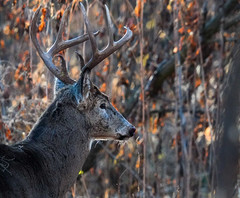
Photo courtesy of amnordby, iNaturalist
|
|