|
Oct. 13, 2022
In this issue, reminders about the statewide youth deer season, early antlerless season in select deer permit areas, CWD information, non-toxic ammo requirements in some special hunts, and ways to get out and learn more.
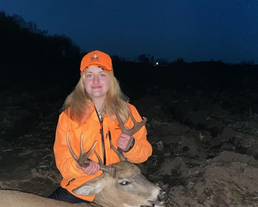
Statewide youth deer season returns Oct. 20-23
Minnesota’s youth deer season will take place statewide Thursday, Oct. 20, through Sunday, Oct. 23. The season coincides with statewide teacher workshops, so many Minnesota students don’t have school during the youth season. To participate, youth must be 10-17 years old and have a deer license. An adult parent, guardian, or mentor must accompany youth ages 10-13. Find other important regulations and information about the season on the DNR youth deer season webpage.
Reminder: Other hunters and trappers out during these hunt dates, including archery deer hunters, are required to wear blaze orange. Check the blaze orange requirements on page 33 of the Minnesota Hunting and Trapping Regulations.
|
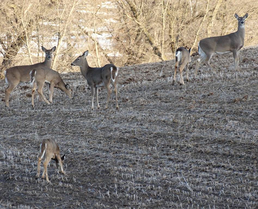
Early antlerless deer season is Oct. 20-23 in selected DPAs
Hunters can participate in an early antlerless-only deer season from Thursday, Oct. 20, through Sunday, Oct. 23. The season increases opportunities for hunters in areas where deer populations are above population goals or where there is an increased risk of chronic wasting disease. Permit areas open during the hunt are 209, 213, 214, 215, 218, 219, 221, 222, 223, 225, 227, 229, 236, 240, 277, 341, 342, 343, 604, 605, 643, 645, 646, 647, 648, 649, 661 and 701.
The DNR offers this opportunity to hunters in an effort to manage local deer herds. In changes this year, the bag limit has been reduced from five to three antlerless deer and hunters are no longer required to obtain an early antlerless permit to participate in the early antlerless season.
To participate, hunters must hunt in one of the 28 open deer permit areas and use a deer license that matches the weapon used during the season (for example, using a firearm for a firearms season license or archery equipment for an archery license). Hunters have the option of using their regular season parent license or can use early antlerless permits, bonus permits, or disease management permits (only in 600 series permit areas) to fill the limit.
Full information on the early antlerless season is available on page 84 of the Minnesota Hunting and Trapping Regulations.
|
Reminder about deer carcass movement restrictions
Deer hunters, as you enjoy deer seasons and make plans for hunting, here’s a reminder about deer carcass movement restrictions.
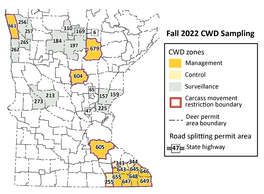
Carcass movement restrictions are in place for 14 deer permit areas located in southeastern and north-central Minnesota and the south metro area. DPAs 604, 605, 643, 645, 646, 647, 648, 649, 655, 661 and 679 together form the chronic wasting disease management zone. Hunters are not allowed to bring whole deer carcasses outside the management zone until a “not detected” test result is received. DPAs 255, 343 and 344 form a control zone and whole deer carcasses cannot be moved out of a control zone or the adjacent management zone until a “not-detected” test result is received. Hunters are allowed to move whole deer carcasses in between contiguous management zone DPAs or from a control zone DPA into the management zone.
If hunters do not submit their deer for sampling or want to transport it outside these zones before getting a test result, they must debone or quarter their deer, properly disposing of the head and spinal column inside the zones. The DNR provides dumpsters for hunters to use to help facilitate carcass disposal.
These restrictions are part of a comprehensive strategy to keep Minnesota’s deer, elk and moose healthy by limiting the spread of disease. Find details for the DPA you hunt in by visiting the DNR chronic wasting disease webpage and using the “find your requirements for your DPA” tool.
The map shows boundaries of carcass movement restrictions in red, around DPAs that are in a CWD management or control zone.
|
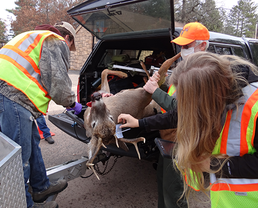
Find CWD sampling information
Chronic wasting disease sampling is occurring in eight distinct areas throughout the state where CWD has been found in captive or wild deer in Minnesota or an adjacent state. And even outside these distinct areas, Minnesota hunters can get their deer sampled for CWD.
As you make your deer hunting plans, check the CWD requirements and sampling options for your deer permit area by visiting the DPA lookup tool, available on the DNR chronic wasting disease webpage along with other information and resources.
|
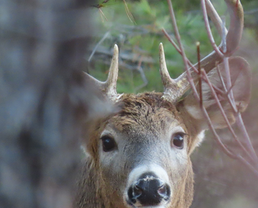
Please share your wildlife observations online
With archery deer season underway and hunters scouting for the upcoming firearms deer season, now is a great time for hunters to use the DNR’s online log for deer and wildlife sightings. The DNR uses the results to compare what hunters report to population estimates that are a baseline for managing wildlife.
Hunters can enter information on the DNR website about wildlife they see while hunting including deer, turkey, bear, fisher and other species. Hunters also will be able to report specific information about any deer they harvest, including antler size.
Photo courtesy of Tom Dougherty
|
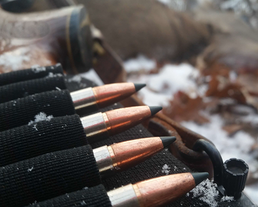
Non-toxic ammo requirements in place for some special hunts
Hunters may only possess and use nontoxic ammunition when participating in a special hunt or disease management hunt in a Minnesota state park or Scientific and Natural Area. Bullets, slugs, muzzleloader ammunition and other single projectiles must be made entirely of non-toxic material approved by the U.S. Fish and Wildlife Service. For more details, check page 89 of the Minnesota Hunting and Trapping Regulations.
|
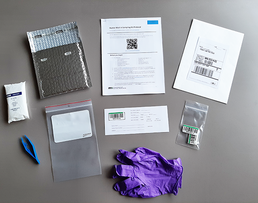
DNR webinars cover CWD information, tundra swans
We’ve got webinars coming up on CWD testing requirements and other CWD-related information, as well as the tundra swan migration. Registration is free for these webinars.
The first webinar is at noon Wednesday, Oct. 19. Logan Neu, with the DNR wildlife health program, will highlight changes to Minnesota deer hunting permit areas and new hunting opportunities, CWD testing requirements and options, and other important information related to deer hunting in areas with confirmed or suspected cases of CWD.
The second webinar is at noon Wednesday, Oct. 26. Mary Stefanski, Winona district manager for the U.S. Fish and Wildlife Service, will share the fascinating migration of tundra swans, their life story and how you can view them up close before they head south for the year. The tundra swan migration is a highlight of the fall on the Upper Mississippi River National Wildlife and Fish Refuge. At its peak, which usually occurs the second week of November, there can be as many as 50,000 swans on the refuge primarily between Wabasha and Brownsville.
|
|